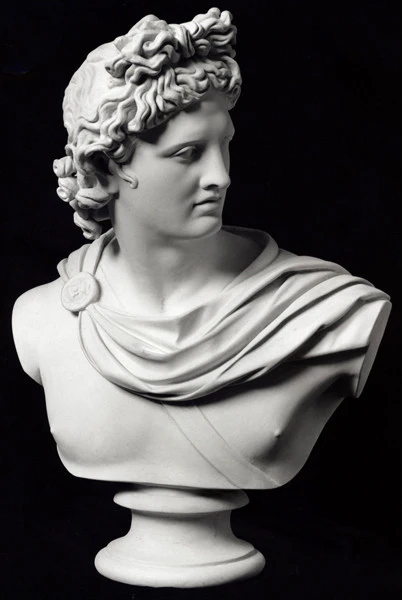
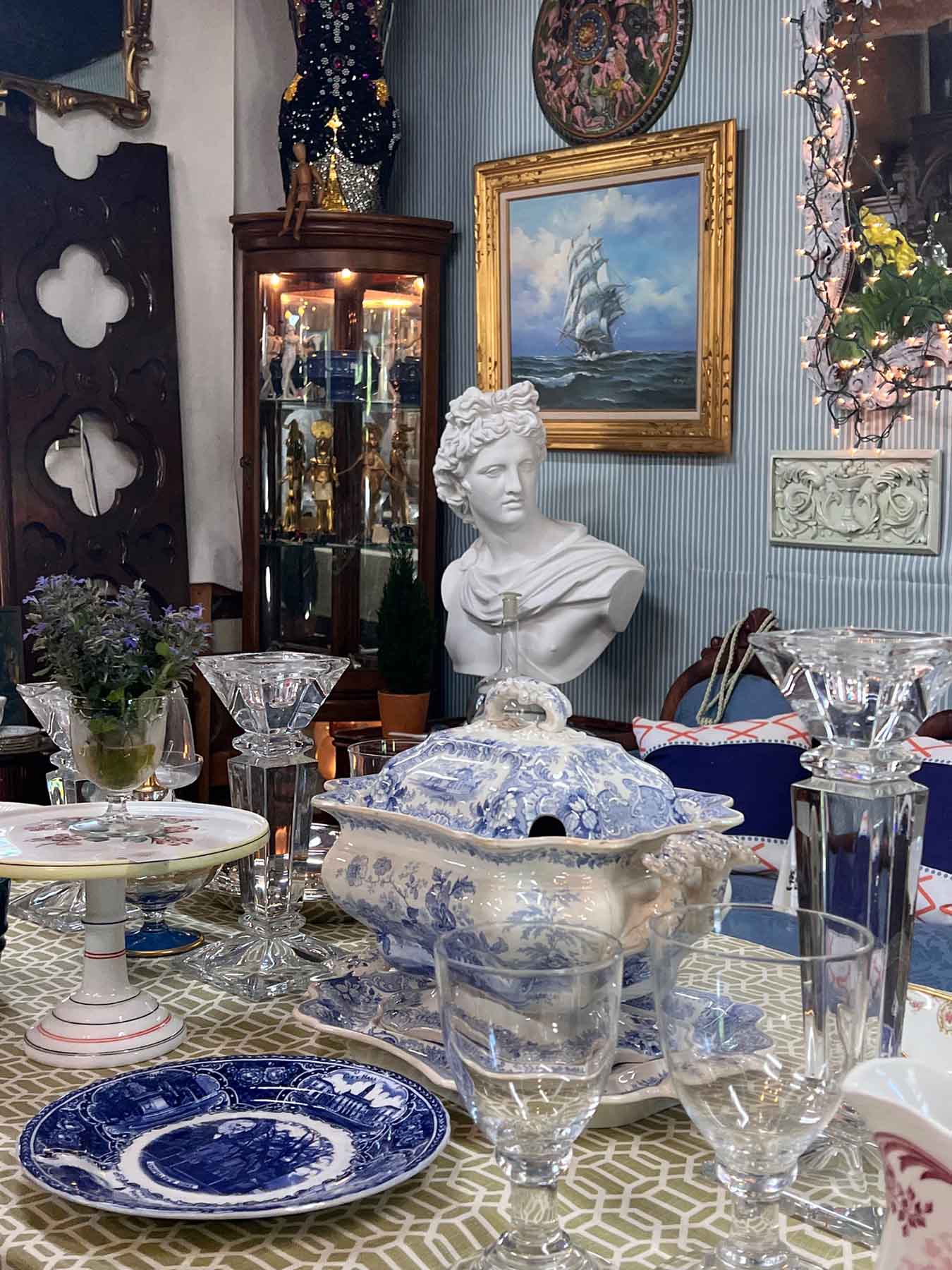
Apollo Belvedere - Item #168
32 Inches High x 23 Inches Wide x 12.5 Inches Deep
The sculpture is a Roman marble copy of a Greek bronze original, likely made in the 4th century B.C.E. It is attributed to Leochares, one of the master sculptors of Hellenistic Greece. He and fellow sculptor Skopas created the Mausoleum of Halicarnassus which was one of the Seven Wonders of the World. Discovered in Rome, the statue belonged to Cardinal Giuliano della Rovere who, once elected Pope Julius II, transferred it to the Vatican circa 1508. For a time, it stood in the Belvedere Gallery, from which it gets its name.
The bust in reduced size can be found here, and a reproduction of the full-size head can be found here.
Artist: Attributed to Leochares
Museum: Pio Clementino Museum, Vatican Museums, Vatican City
Time Period: Ancient Greek, 4th century B.C.E./Ancient Roman, 2nd century C.E.
1911 Catalog ID # - 4014
Sources:
"5 Apollo Belvedere." UCL Art Museum 'Anatomy' Teaching Pack, University College London, https://www.ucl.ac.uk/museums-static/obl4he/anatomy/5_apollo_belvedere.html.
"Apollo del Belvedere." Musei Vaticani, https://catalogo.museivaticani.va/index.php/Detail/objects/MV.1015.0.0?lang=en_US.
"Belvedere Apollo." Musei Vaticani, https://www.museivaticani.va/content/museivaticani/en/collezioni/musei/museo-pio-clementino/Cortile-Ottagono/apollo-del-belvedere.html.
Collins, Neil. "Leochares." Art Encyclopedia. Visual-arts-cork.com, 2024, http://www.visual-arts-cork.com/sculpture/leochares.htm.
Original: $1,460.00
-65%$1,460.00
$511.00More Images
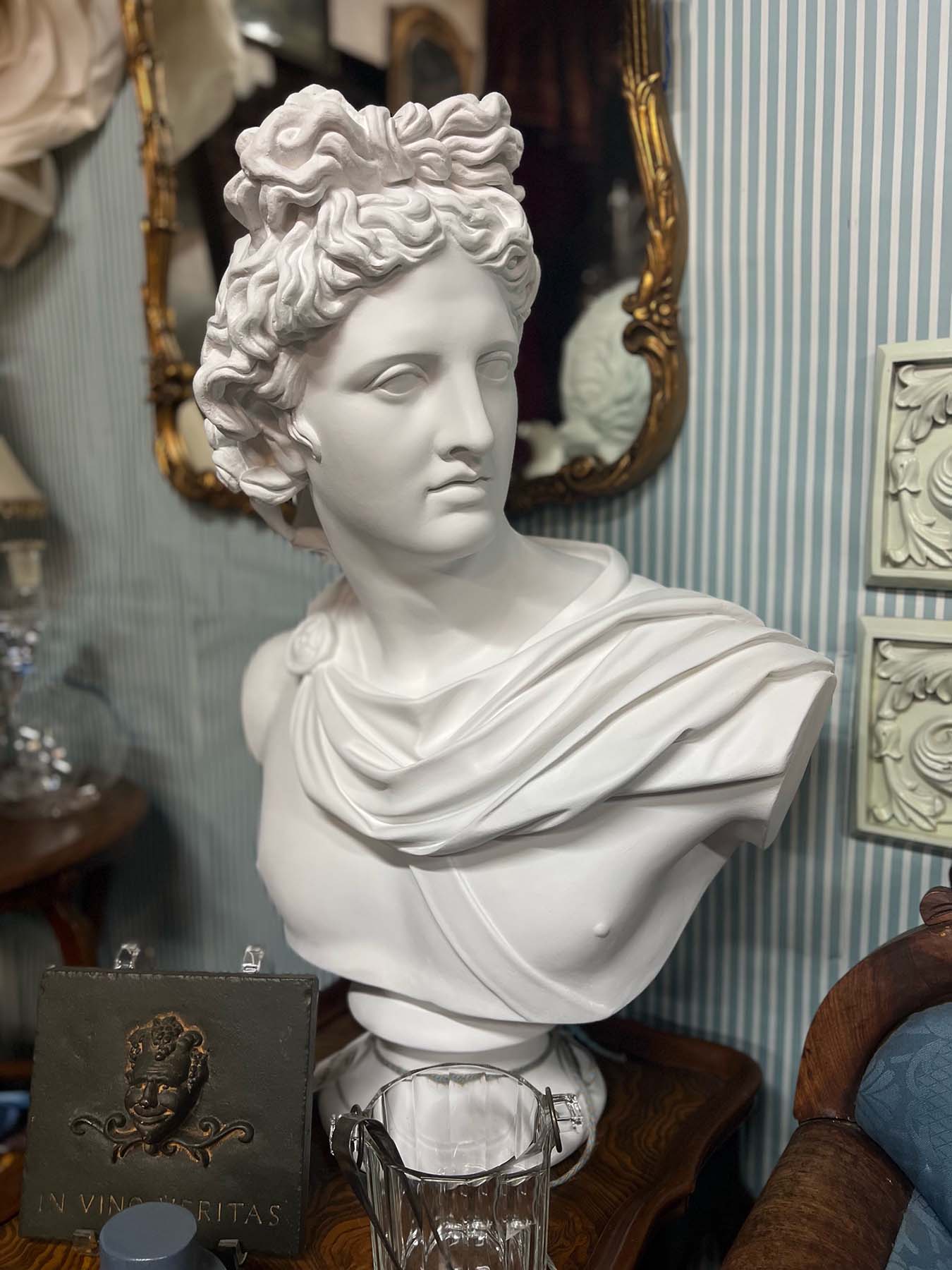
Apollo Belvedere - Item #168
32 Inches High x 23 Inches Wide x 12.5 Inches Deep
The sculpture is a Roman marble copy of a Greek bronze original, likely made in the 4th century B.C.E. It is attributed to Leochares, one of the master sculptors of Hellenistic Greece. He and fellow sculptor Skopas created the Mausoleum of Halicarnassus which was one of the Seven Wonders of the World. Discovered in Rome, the statue belonged to Cardinal Giuliano della Rovere who, once elected Pope Julius II, transferred it to the Vatican circa 1508. For a time, it stood in the Belvedere Gallery, from which it gets its name.
The bust in reduced size can be found here, and a reproduction of the full-size head can be found here.
Artist: Attributed to Leochares
Museum: Pio Clementino Museum, Vatican Museums, Vatican City
Time Period: Ancient Greek, 4th century B.C.E./Ancient Roman, 2nd century C.E.
1911 Catalog ID # - 4014
Sources:
"5 Apollo Belvedere." UCL Art Museum 'Anatomy' Teaching Pack, University College London, https://www.ucl.ac.uk/museums-static/obl4he/anatomy/5_apollo_belvedere.html.
"Apollo del Belvedere." Musei Vaticani, https://catalogo.museivaticani.va/index.php/Detail/objects/MV.1015.0.0?lang=en_US.
"Belvedere Apollo." Musei Vaticani, https://www.museivaticani.va/content/museivaticani/en/collezioni/musei/museo-pio-clementino/Cortile-Ottagono/apollo-del-belvedere.html.
Collins, Neil. "Leochares." Art Encyclopedia. Visual-arts-cork.com, 2024, http://www.visual-arts-cork.com/sculpture/leochares.htm.
Product Information
Product Information
Shipping & Returns
Shipping & Returns
Description
32 Inches High x 23 Inches Wide x 12.5 Inches Deep
The sculpture is a Roman marble copy of a Greek bronze original, likely made in the 4th century B.C.E. It is attributed to Leochares, one of the master sculptors of Hellenistic Greece. He and fellow sculptor Skopas created the Mausoleum of Halicarnassus which was one of the Seven Wonders of the World. Discovered in Rome, the statue belonged to Cardinal Giuliano della Rovere who, once elected Pope Julius II, transferred it to the Vatican circa 1508. For a time, it stood in the Belvedere Gallery, from which it gets its name.
The bust in reduced size can be found here, and a reproduction of the full-size head can be found here.
Artist: Attributed to Leochares
Museum: Pio Clementino Museum, Vatican Museums, Vatican City
Time Period: Ancient Greek, 4th century B.C.E./Ancient Roman, 2nd century C.E.
1911 Catalog ID # - 4014
Sources:
"5 Apollo Belvedere." UCL Art Museum 'Anatomy' Teaching Pack, University College London, https://www.ucl.ac.uk/museums-static/obl4he/anatomy/5_apollo_belvedere.html.
"Apollo del Belvedere." Musei Vaticani, https://catalogo.museivaticani.va/index.php/Detail/objects/MV.1015.0.0?lang=en_US.
"Belvedere Apollo." Musei Vaticani, https://www.museivaticani.va/content/museivaticani/en/collezioni/musei/museo-pio-clementino/Cortile-Ottagono/apollo-del-belvedere.html.
Collins, Neil. "Leochares." Art Encyclopedia. Visual-arts-cork.com, 2024, http://www.visual-arts-cork.com/sculpture/leochares.htm.