Cherubs and Satyrs Rejoicing - Item #535
4.5 Inches High x 6.25 Inches Wide x .625 Inches Deep
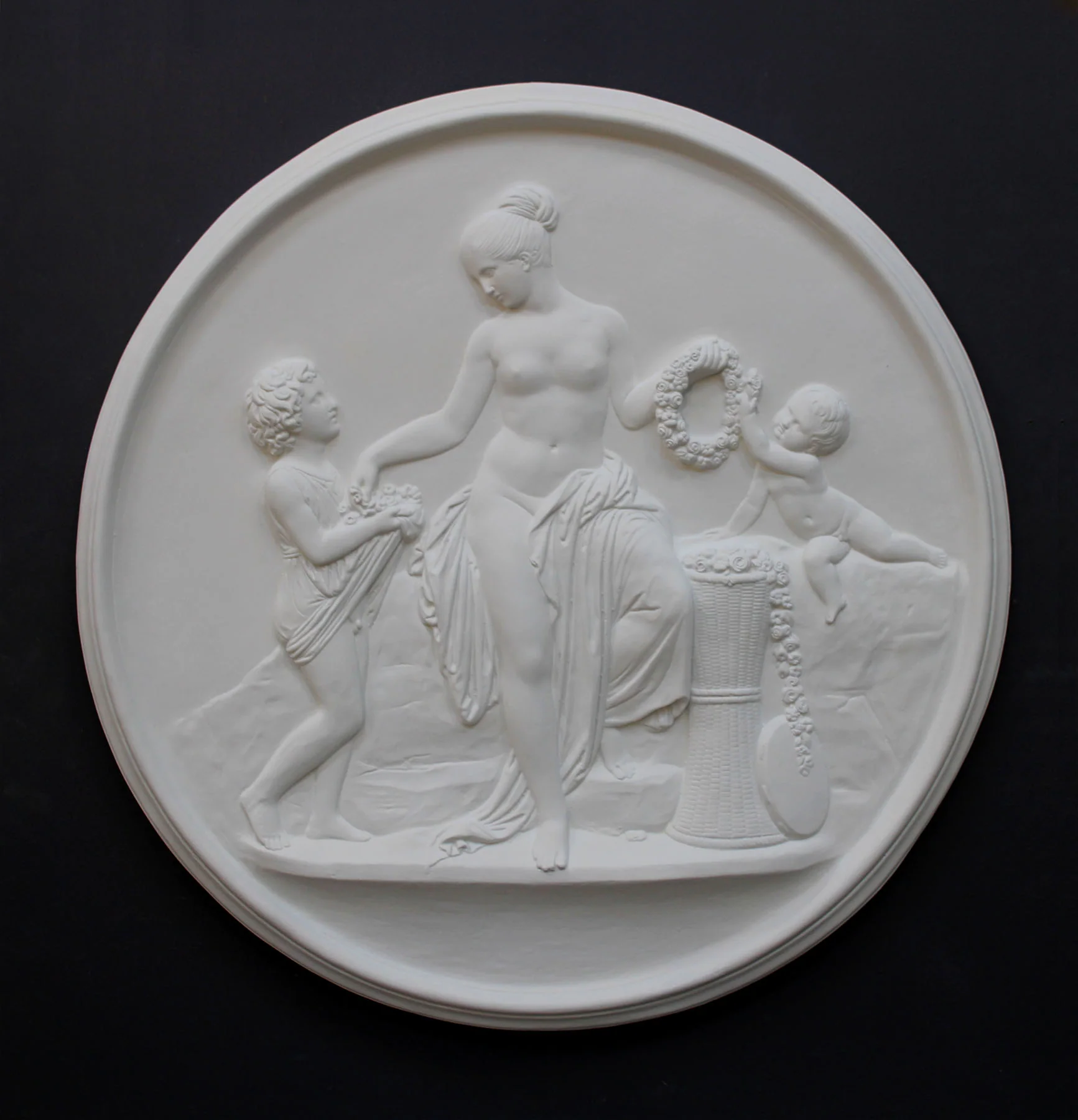
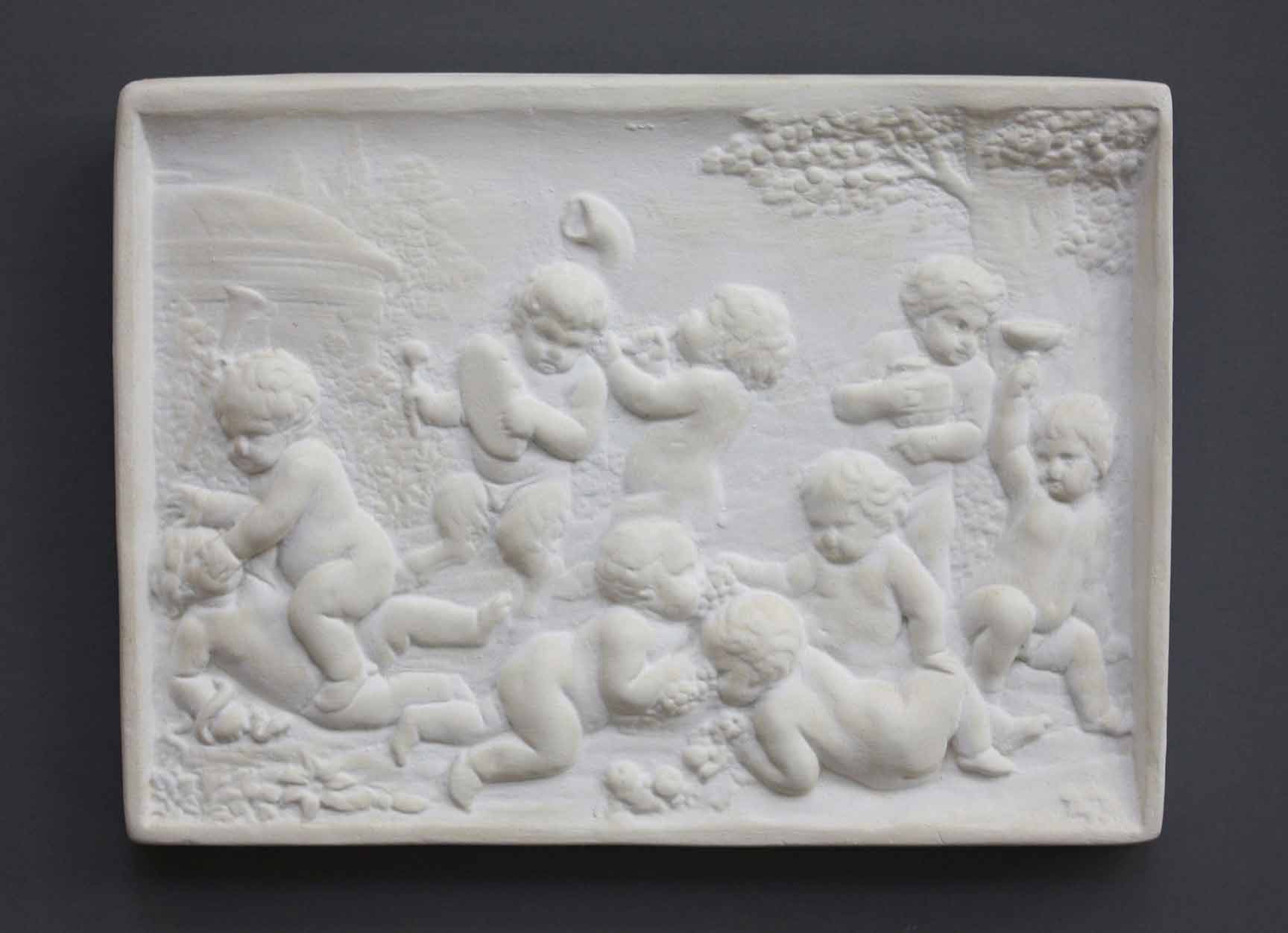
According to our antique P.P. Caproni and Brother catalogs, this sculpture is from a Neoclassical series of reliefs called "Feast of Bacchus." The Roman god Bacchus, or Dionysus in Greek, was the god of wine, agriculture, and ecstasy. The two figures playing instruments near the center of the piece are satyrs or fauns, as evidenced by their goat legs. The cherubs around them eat grapes, drink, and wrestle. A domed building is visible among the vegetation in the background.
Artist: Attributed to da Bologna
Museum: Unknown
Time Period: Renaissance or Modern
1911 Catalog ID # - 11046B
Original: $70.00
-65%$70.00
$24.50Cherubs and Satyrs Rejoicing - Item #535
4.5 Inches High x 6.25 Inches Wide x .625 Inches Deep
According to our antique P.P. Caproni and Brother catalogs, this sculpture is from a Neoclassical series of reliefs called "Feast of Bacchus." The Roman god Bacchus, or Dionysus in Greek, was the god of wine, agriculture, and ecstasy. The two figures playing instruments near the center of the piece are satyrs or fauns, as evidenced by their goat legs. The cherubs around them eat grapes, drink, and wrestle. A domed building is visible among the vegetation in the background.
Artist: Attributed to da Bologna
Museum: Unknown
Time Period: Renaissance or Modern
1911 Catalog ID # - 11046B
Product Information
Product Information
Shipping & Returns
Shipping & Returns
Description
4.5 Inches High x 6.25 Inches Wide x .625 Inches Deep
According to our antique P.P. Caproni and Brother catalogs, this sculpture is from a Neoclassical series of reliefs called "Feast of Bacchus." The Roman god Bacchus, or Dionysus in Greek, was the god of wine, agriculture, and ecstasy. The two figures playing instruments near the center of the piece are satyrs or fauns, as evidenced by their goat legs. The cherubs around them eat grapes, drink, and wrestle. A domed building is visible among the vegetation in the background.
Artist: Attributed to da Bologna
Museum: Unknown
Time Period: Renaissance or Modern
1911 Catalog ID # - 11046B