Doryphoros Head - Item #437
14 Inches High x 9 Inches Wide x 11.625 Inches Deep
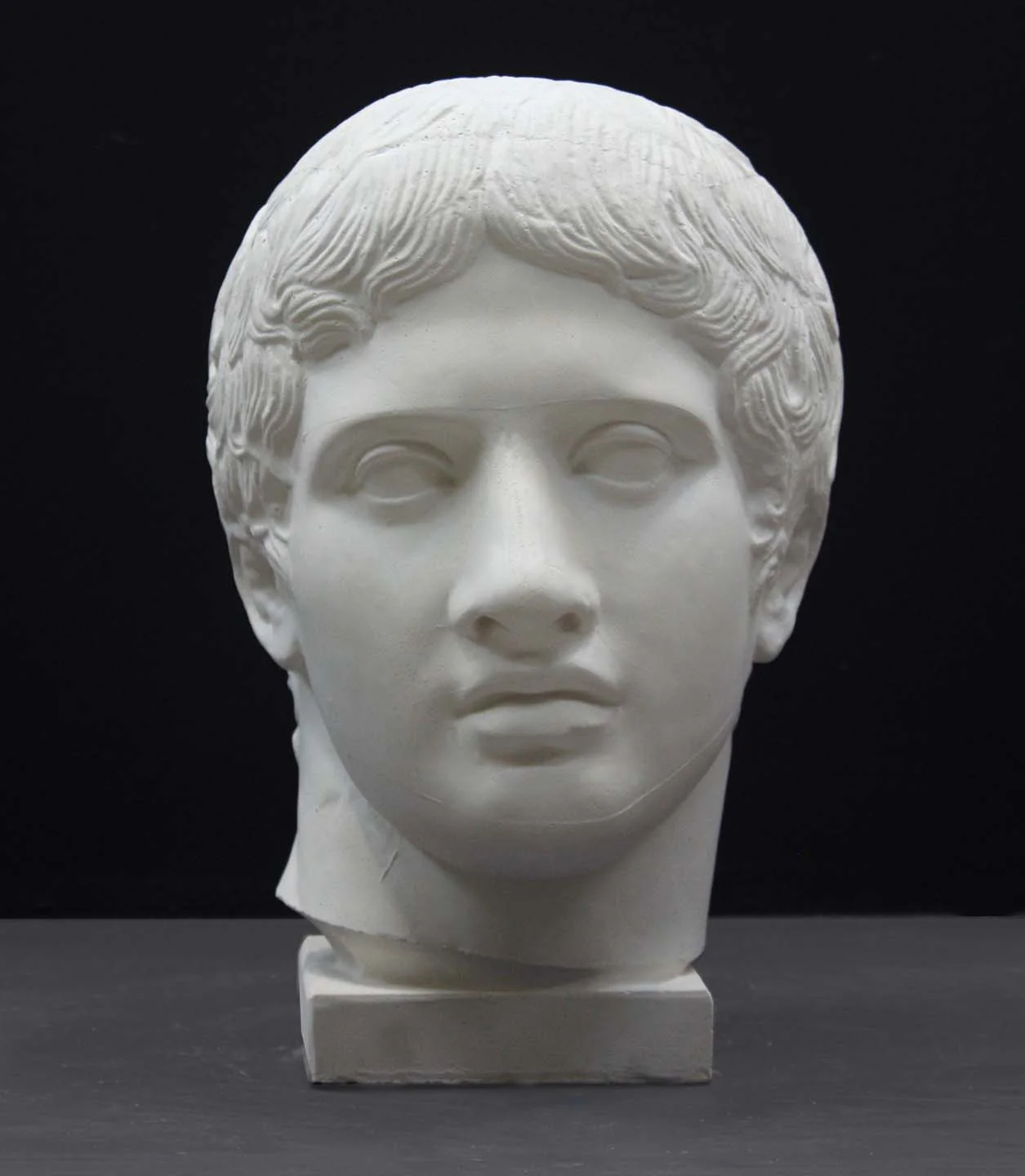
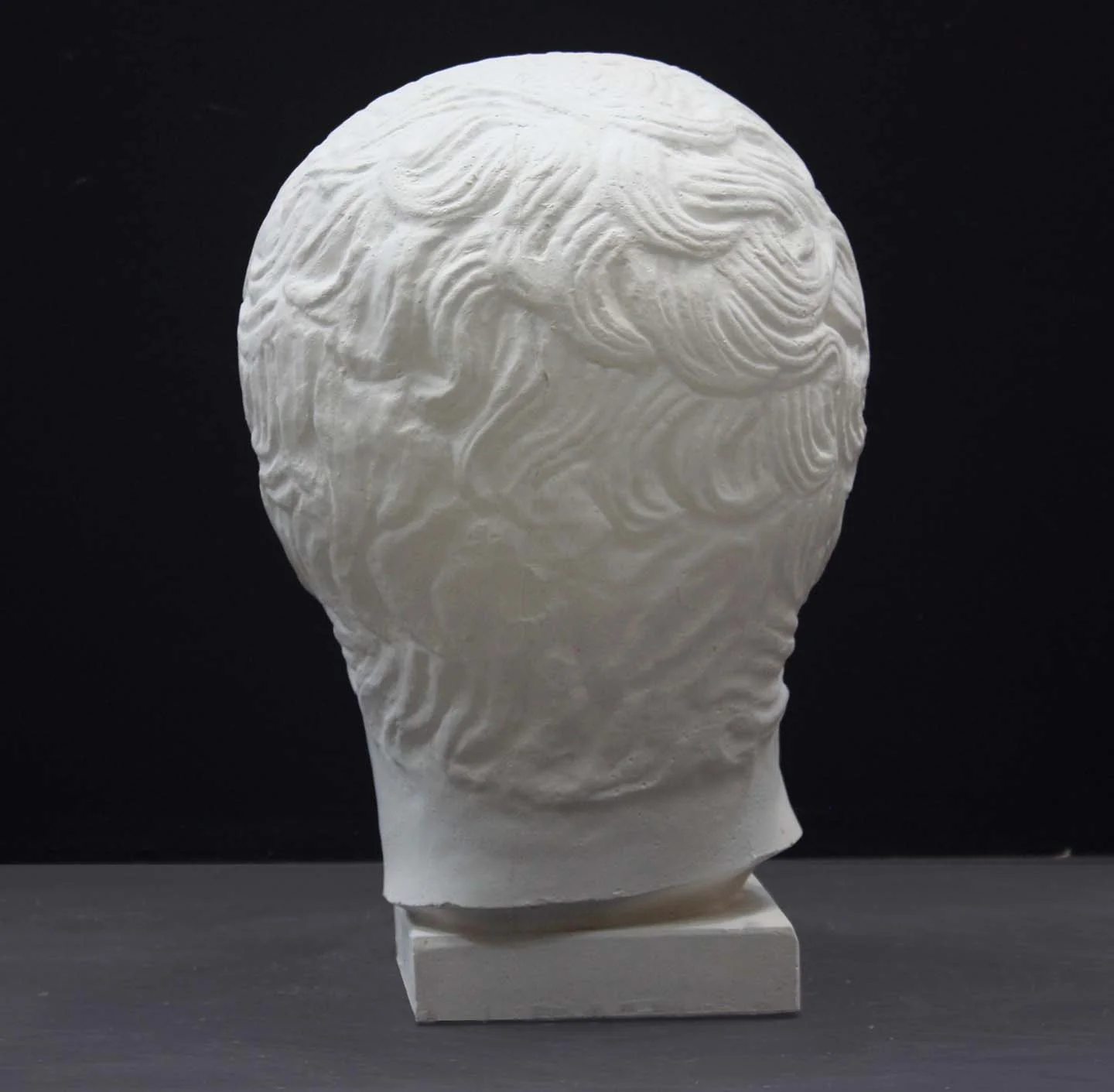
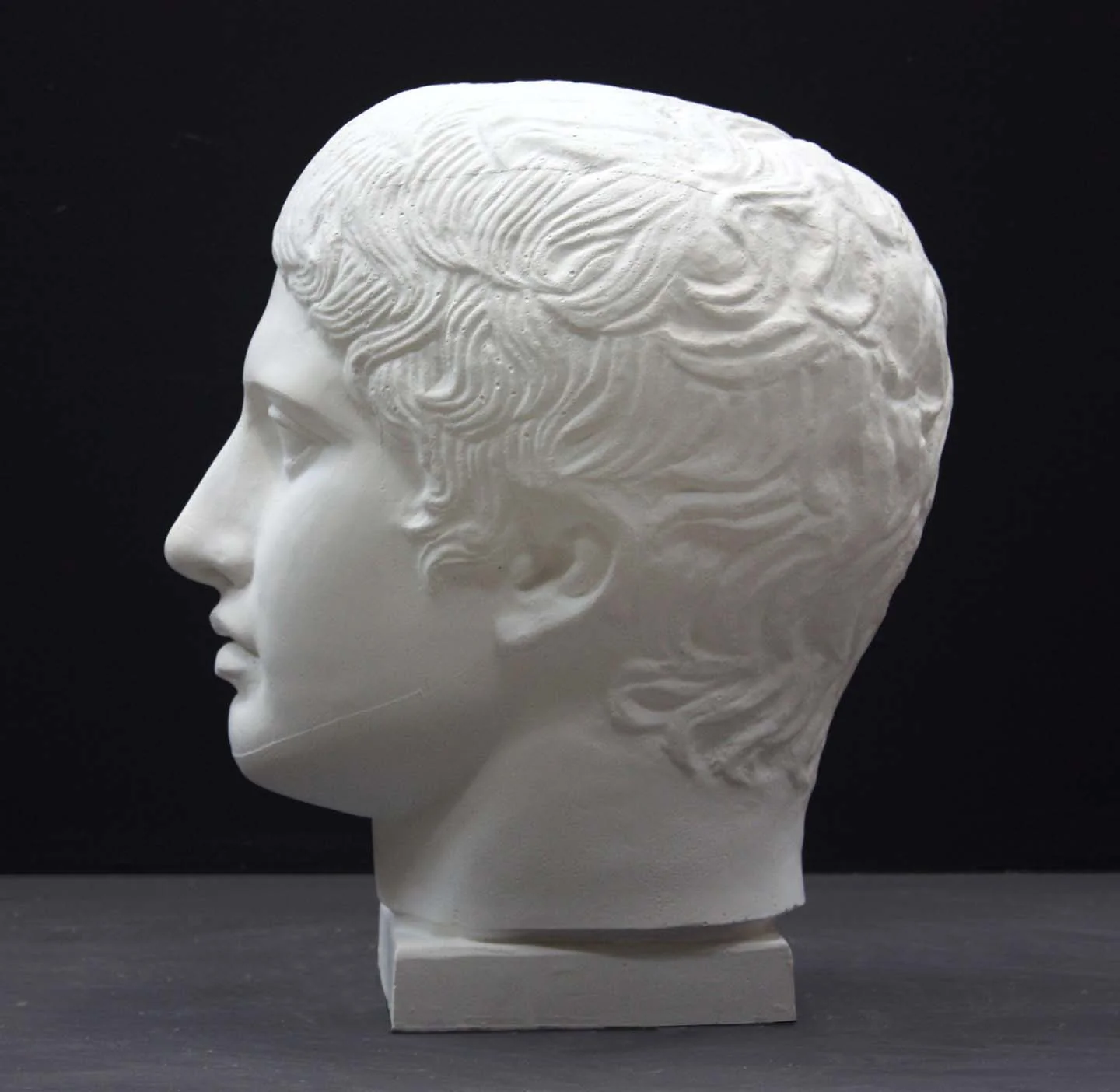
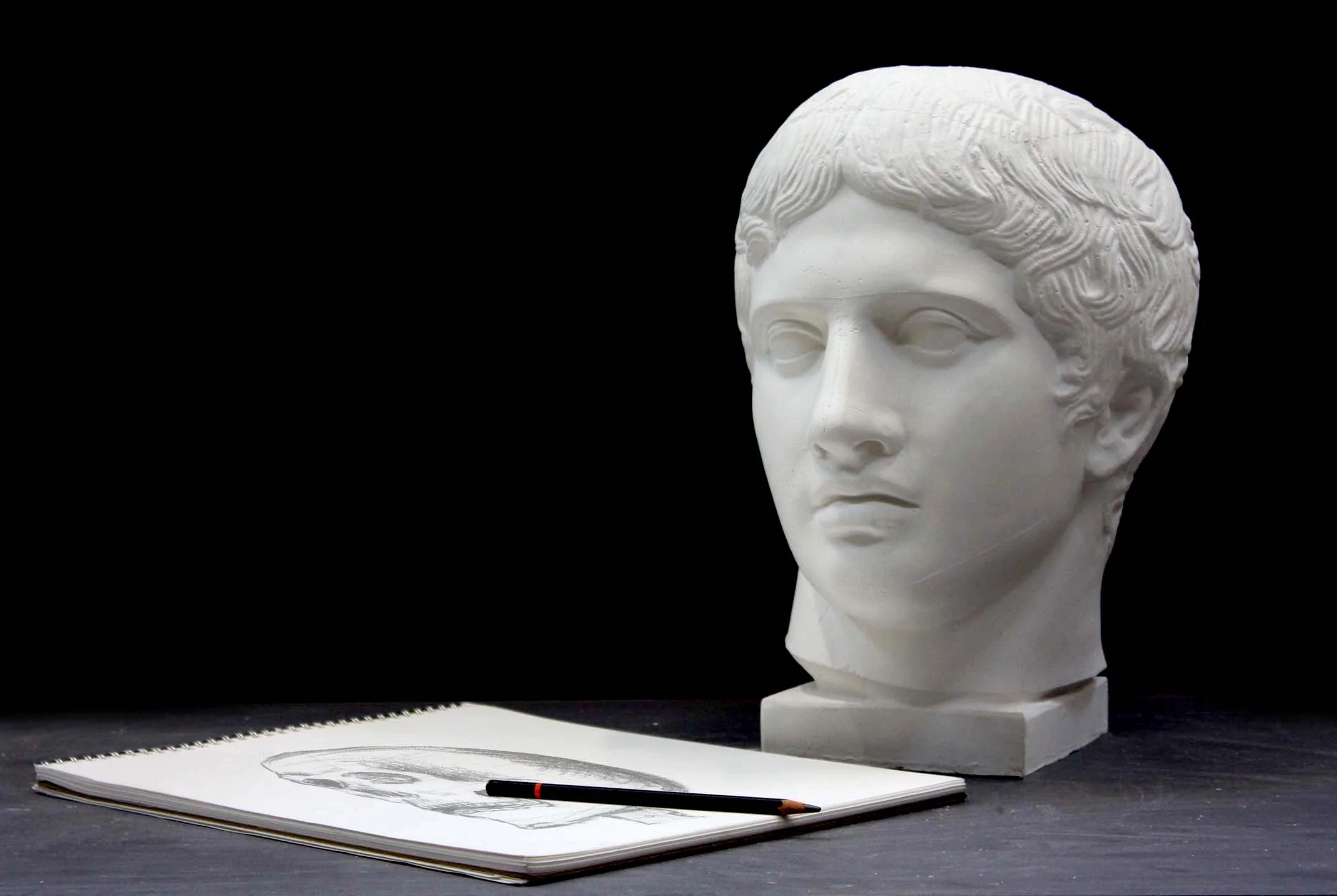
Life-size bust. The famous statue of the Doryphoros is a Roman marble copy of a Greek bronze original. There are several Roman copies in existence, but the most intact one is in the National Archaeological Museum of Naples. This copy was discovered in the ancient city of Pompeii in a gymnasium, signifying its theorized purpose there as inspiration to the athletes. Polykleitos created the Doryphoros, or spear-bearer, in order to determine the ideal proportions and characteristics of the human body and to portray it as beautiful and strong. The Doryphoros stands in contrapposto, and the legs counter the arms in being tensed or relaxed. The clenched left hand would have held a spear. Polykleitos - and the other Classical sculptors - broke away from the symmetrical, rigid, front-facing sculptures of the past, giving us the slight S-shaped curve of this statue. The turn of the head to the right contributes to the curve. Polykleitos used math and ideas of perfection to create a figure in which the body is completely balanced, and he presented it to his contemporaries and followers as the ideal for future representations of the human body. On the cast in our collection, we have left intact the seam lines created during the old moldmaking process used in the past.
Artist: Polykleitos
Museum: National Archaeological Museum, Naples
Origin: Pompeii
Time Period: Ancient Greek, c. 450 B.C.E./Ancient Roman, 2nd-1st century B.C.E.
Sources:
"Doryphoros." Museum number 181. Museum of Classical Archaeology Databases. University of Cambridge, UK, https://museum.classics.cam.ac.uk/collections/casts/doryphoros-0.
Harris, Beth, and Steven Zucker. "Polykleitos, Doryphoros (Spear Bearer) (video)." Khan Academy, https://www.khanacademy.org/humanities/ap-art-history/ancient-mediterranean-ap/greece-etruria-rome/v/polykleitos-doryphoros-spear-bearer.
"Sculptures of Roman Campania." Museo Archeologico Nazionale di Napoli, https://www.museoarcheologiconapoli.it/en/room-and-sections-of-the-exhibition/sculptures-of-roman-campania/.
Original: $320.00
-65%$320.00
$112.00More Images

Doryphoros Head - Item #437
14 Inches High x 9 Inches Wide x 11.625 Inches Deep
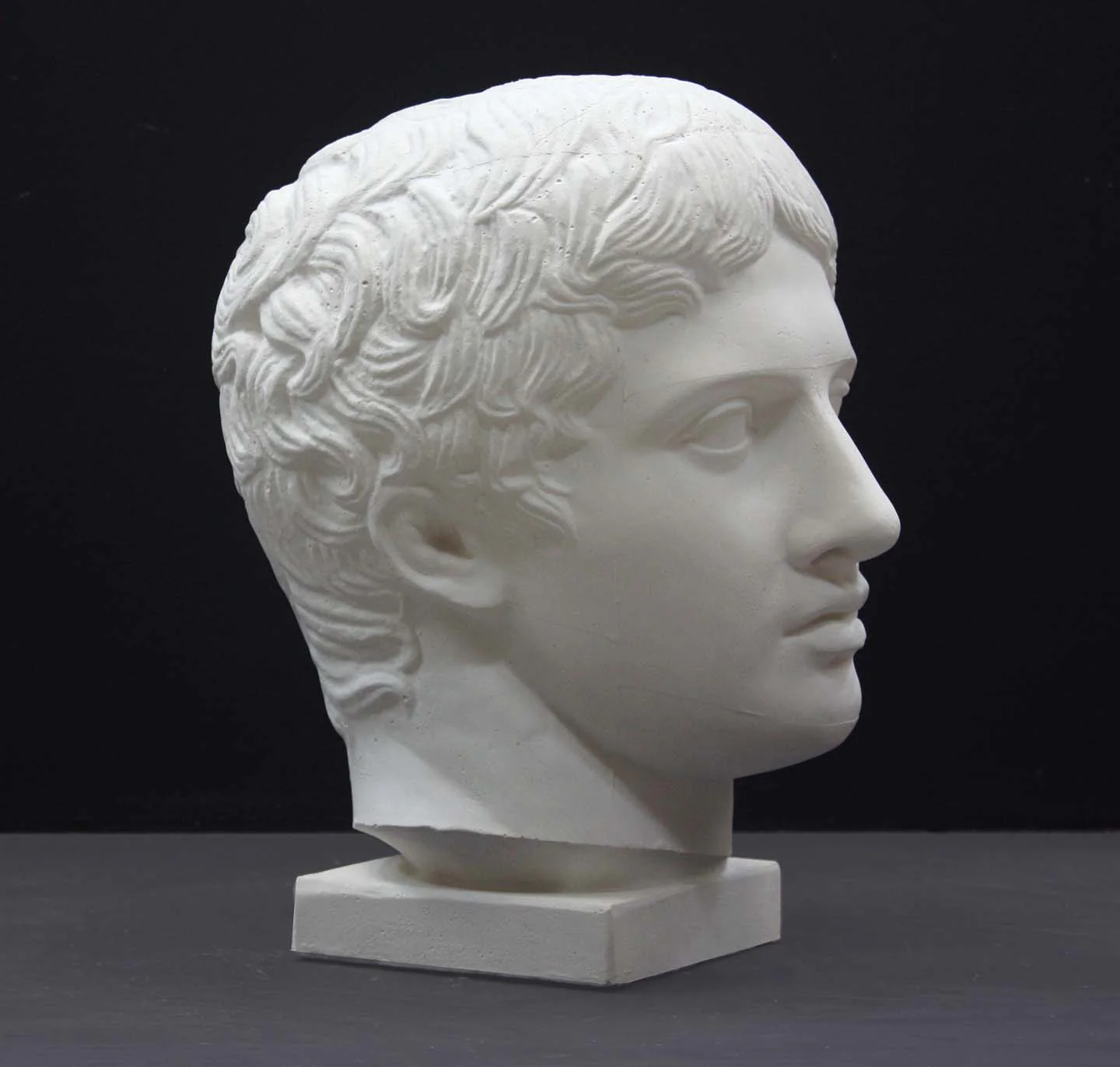
Life-size bust. The famous statue of the Doryphoros is a Roman marble copy of a Greek bronze original. There are several Roman copies in existence, but the most intact one is in the National Archaeological Museum of Naples. This copy was discovered in the ancient city of Pompeii in a gymnasium, signifying its theorized purpose there as inspiration to the athletes. Polykleitos created the Doryphoros, or spear-bearer, in order to determine the ideal proportions and characteristics of the human body and to portray it as beautiful and strong. The Doryphoros stands in contrapposto, and the legs counter the arms in being tensed or relaxed. The clenched left hand would have held a spear. Polykleitos - and the other Classical sculptors - broke away from the symmetrical, rigid, front-facing sculptures of the past, giving us the slight S-shaped curve of this statue. The turn of the head to the right contributes to the curve. Polykleitos used math and ideas of perfection to create a figure in which the body is completely balanced, and he presented it to his contemporaries and followers as the ideal for future representations of the human body. On the cast in our collection, we have left intact the seam lines created during the old moldmaking process used in the past.
Artist: Polykleitos
Museum: National Archaeological Museum, Naples
Origin: Pompeii
Time Period: Ancient Greek, c. 450 B.C.E./Ancient Roman, 2nd-1st century B.C.E.
Sources:
"Doryphoros." Museum number 181. Museum of Classical Archaeology Databases. University of Cambridge, UK, https://museum.classics.cam.ac.uk/collections/casts/doryphoros-0.
Harris, Beth, and Steven Zucker. "Polykleitos, Doryphoros (Spear Bearer) (video)." Khan Academy, https://www.khanacademy.org/humanities/ap-art-history/ancient-mediterranean-ap/greece-etruria-rome/v/polykleitos-doryphoros-spear-bearer.
"Sculptures of Roman Campania." Museo Archeologico Nazionale di Napoli, https://www.museoarcheologiconapoli.it/en/room-and-sections-of-the-exhibition/sculptures-of-roman-campania/.
Product Information
Product Information
Shipping & Returns
Shipping & Returns
Description
14 Inches High x 9 Inches Wide x 11.625 Inches Deep
Life-size bust. The famous statue of the Doryphoros is a Roman marble copy of a Greek bronze original. There are several Roman copies in existence, but the most intact one is in the National Archaeological Museum of Naples. This copy was discovered in the ancient city of Pompeii in a gymnasium, signifying its theorized purpose there as inspiration to the athletes. Polykleitos created the Doryphoros, or spear-bearer, in order to determine the ideal proportions and characteristics of the human body and to portray it as beautiful and strong. The Doryphoros stands in contrapposto, and the legs counter the arms in being tensed or relaxed. The clenched left hand would have held a spear. Polykleitos - and the other Classical sculptors - broke away from the symmetrical, rigid, front-facing sculptures of the past, giving us the slight S-shaped curve of this statue. The turn of the head to the right contributes to the curve. Polykleitos used math and ideas of perfection to create a figure in which the body is completely balanced, and he presented it to his contemporaries and followers as the ideal for future representations of the human body. On the cast in our collection, we have left intact the seam lines created during the old moldmaking process used in the past.
Artist: Polykleitos
Museum: National Archaeological Museum, Naples
Origin: Pompeii
Time Period: Ancient Greek, c. 450 B.C.E./Ancient Roman, 2nd-1st century B.C.E.
Sources:
"Doryphoros." Museum number 181. Museum of Classical Archaeology Databases. University of Cambridge, UK, https://museum.classics.cam.ac.uk/collections/casts/doryphoros-0.
Harris, Beth, and Steven Zucker. "Polykleitos, Doryphoros (Spear Bearer) (video)." Khan Academy, https://www.khanacademy.org/humanities/ap-art-history/ancient-mediterranean-ap/greece-etruria-rome/v/polykleitos-doryphoros-spear-bearer.
"Sculptures of Roman Campania." Museo Archeologico Nazionale di Napoli, https://www.museoarcheologiconapoli.it/en/room-and-sections-of-the-exhibition/sculptures-of-roman-campania/.