Hercules and One of the Hours or Seasons - Item #410
20.25 Inches High x 22.25 Inches Wide x 1.5 Inches Deep
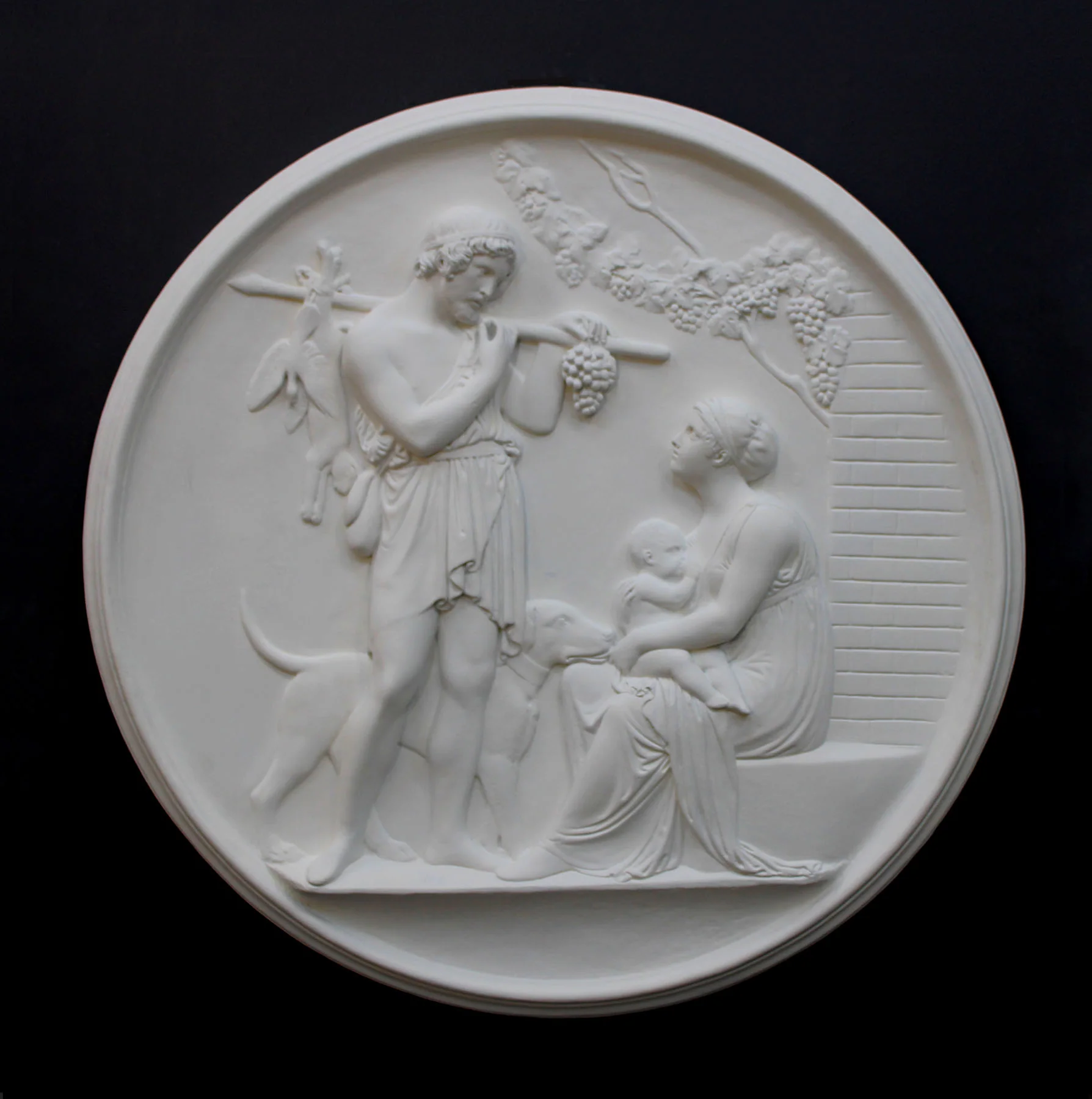
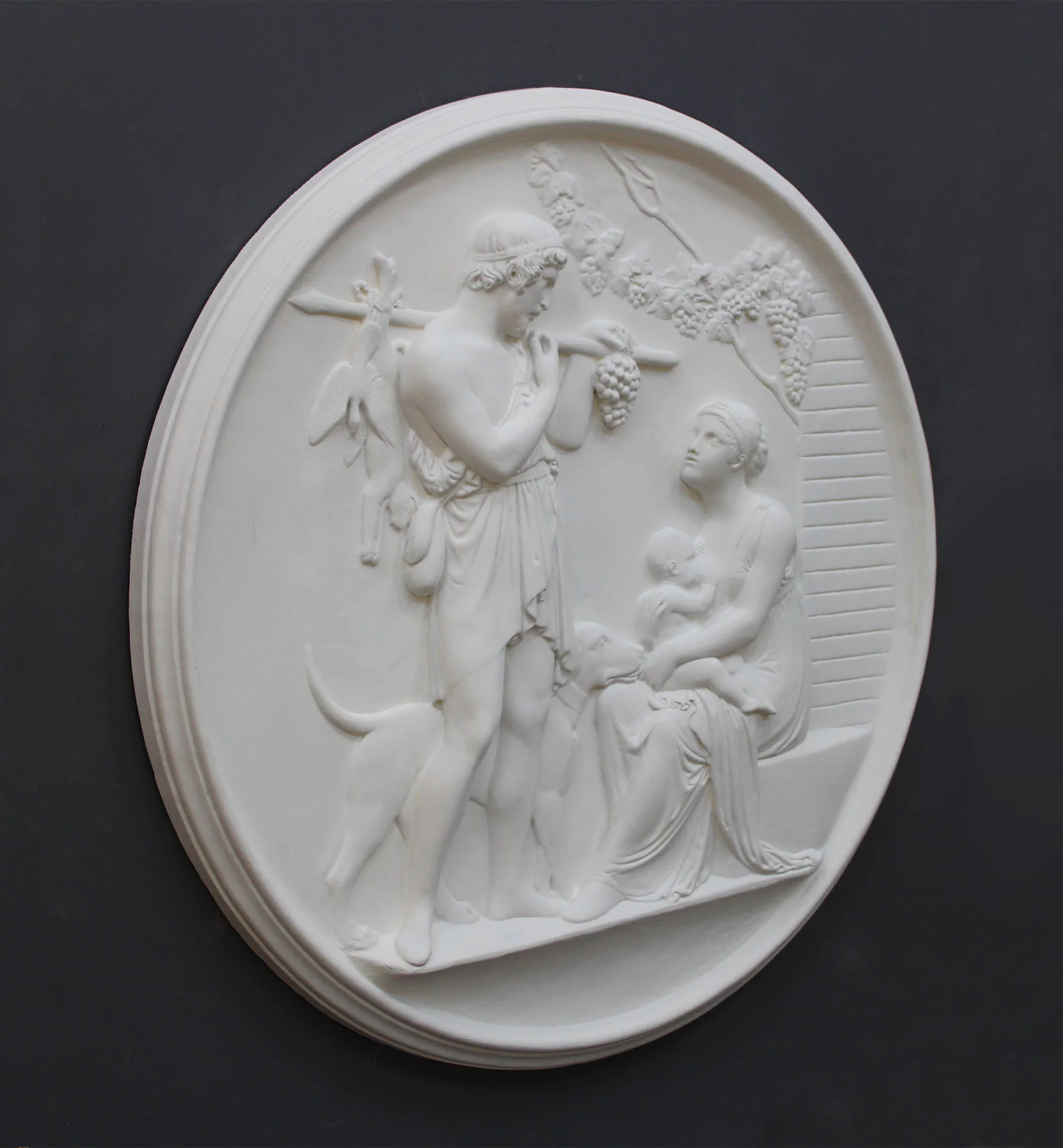
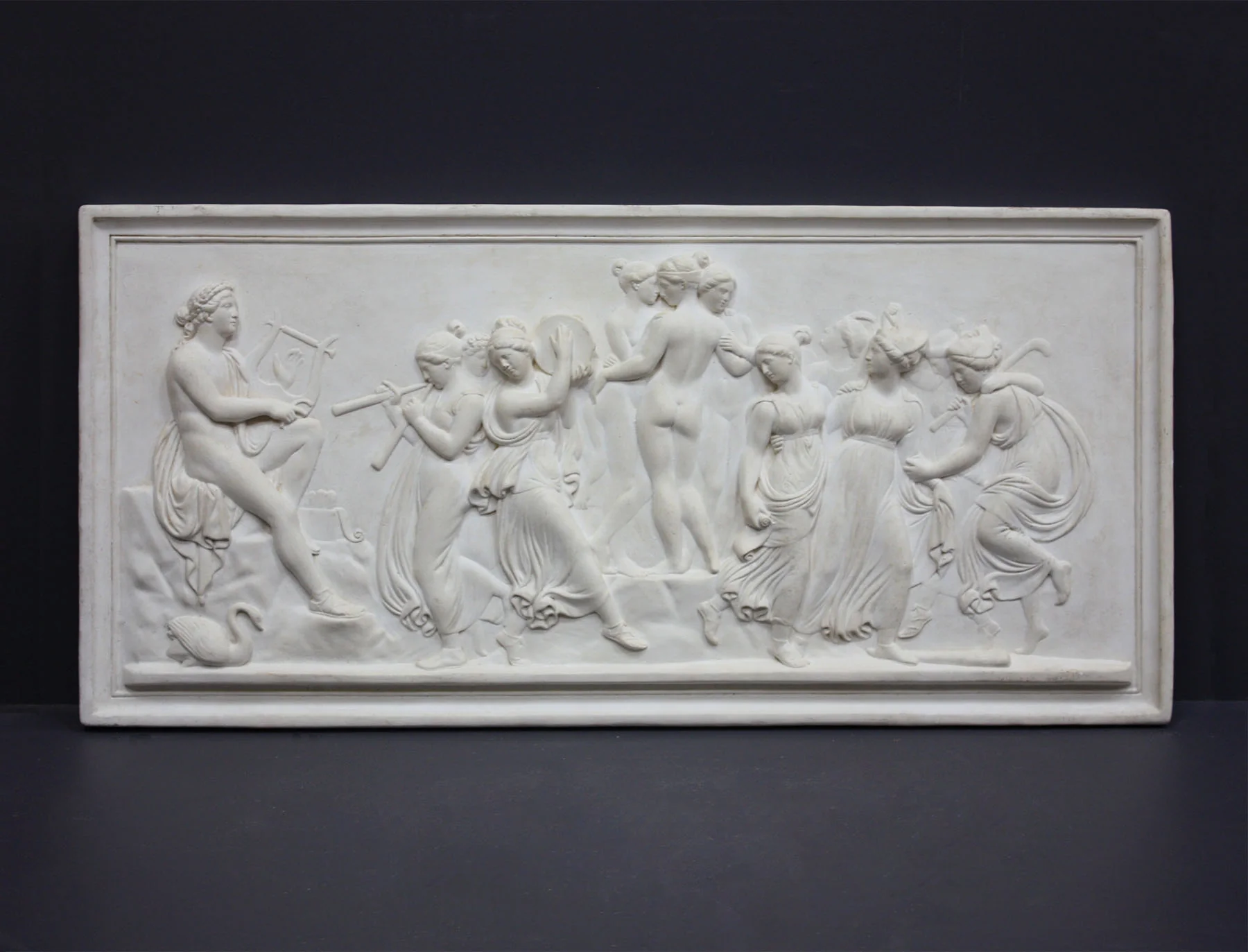
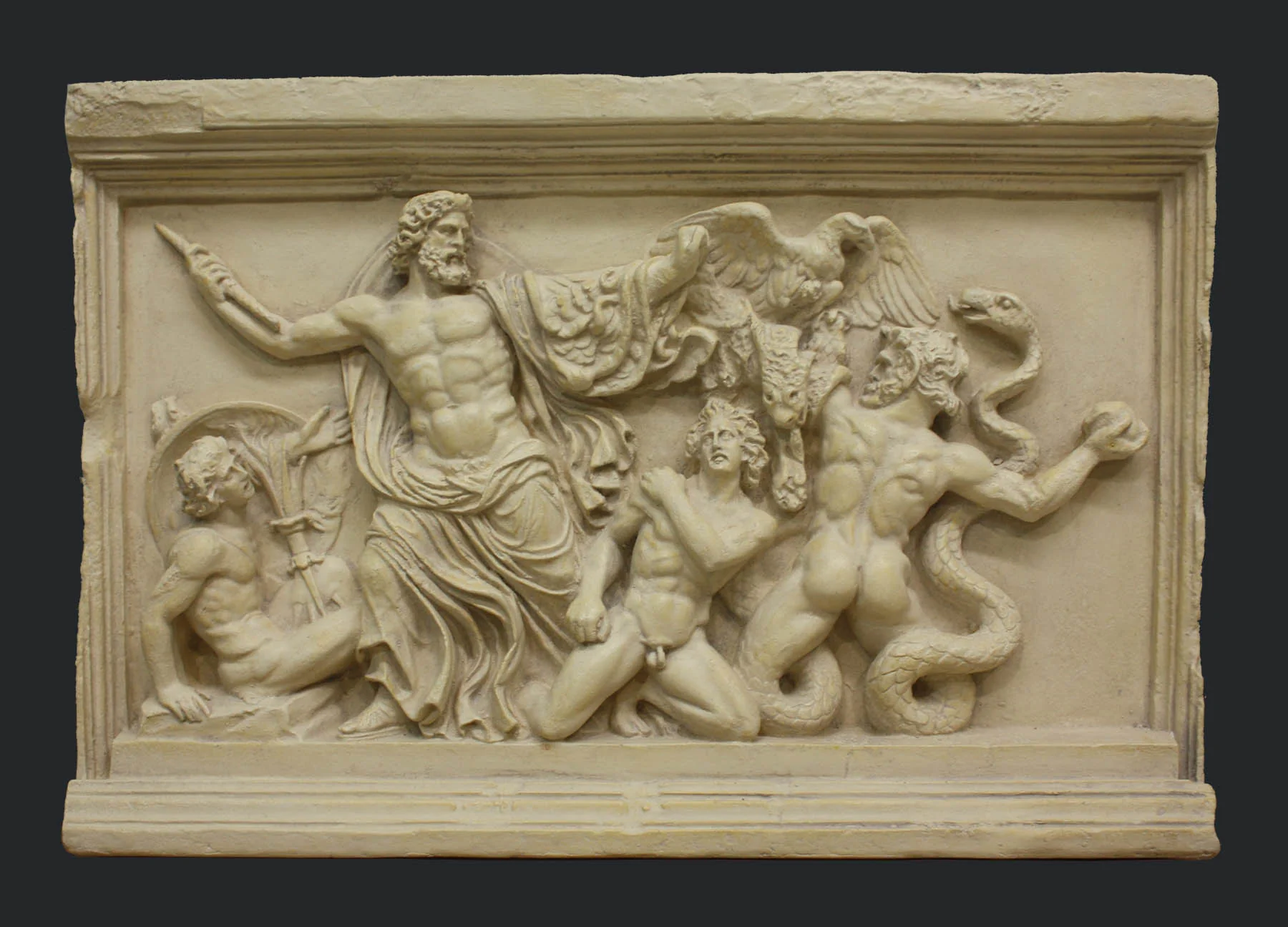
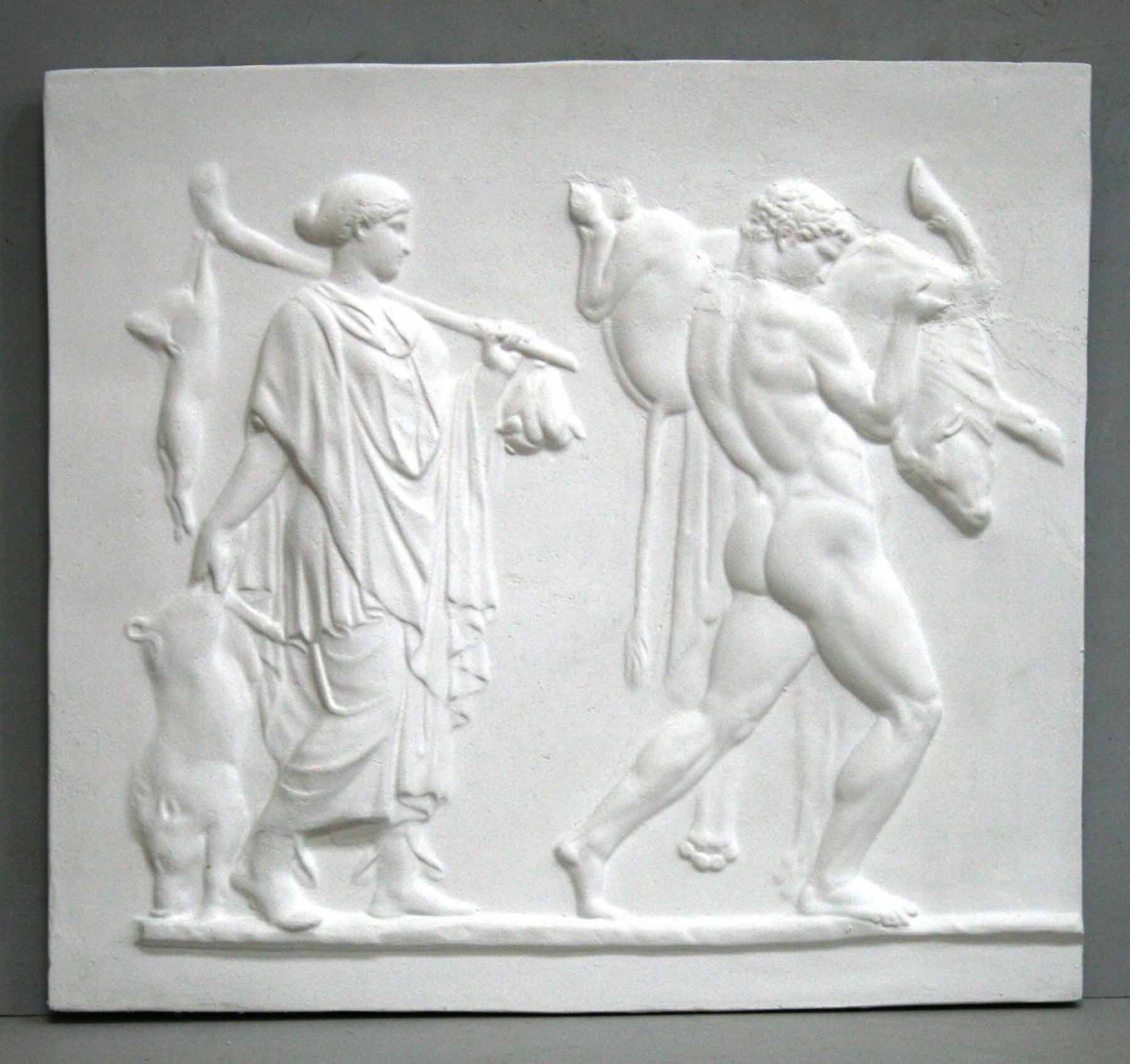
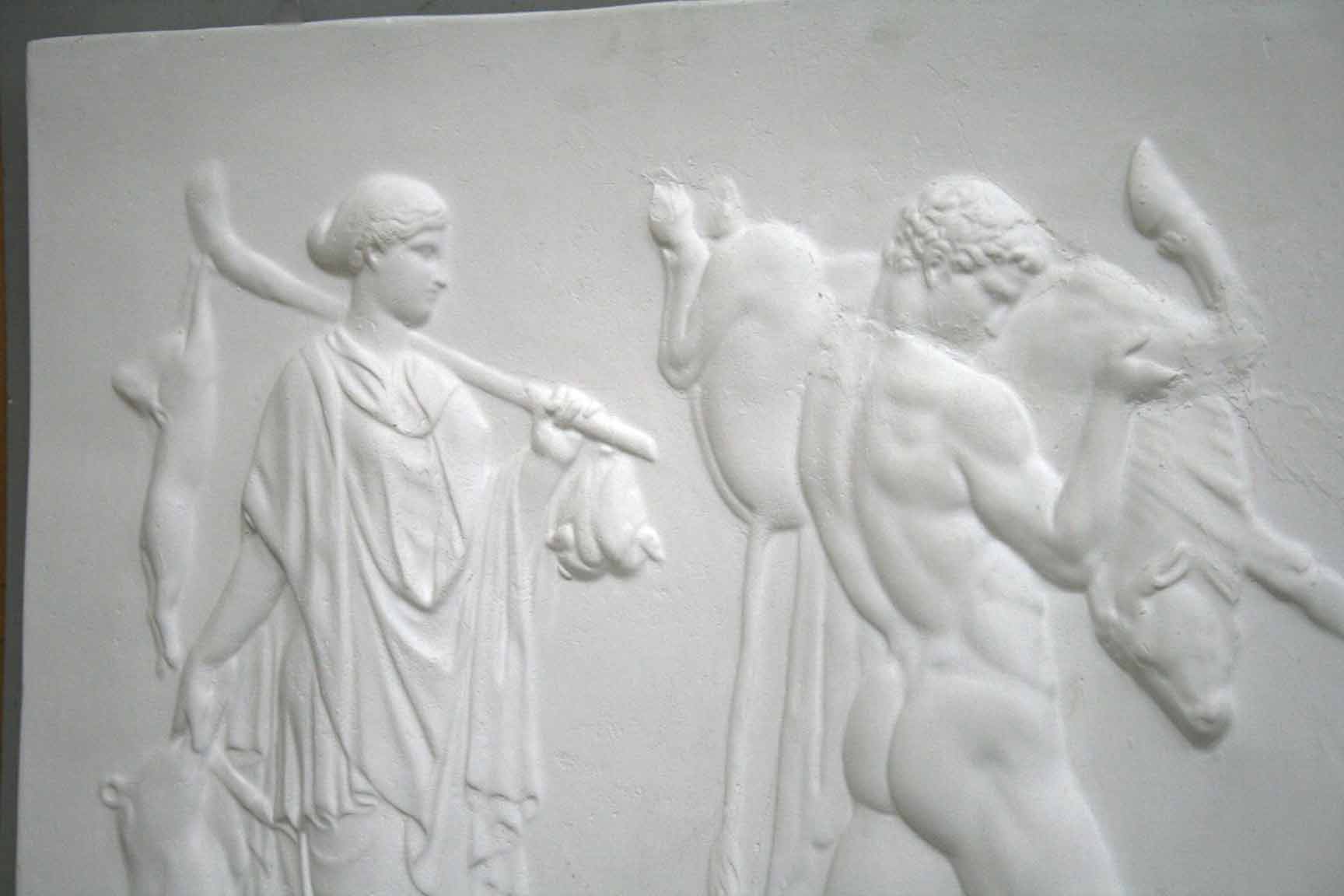
The second panel in the two-panel relief of the "Marriage of Peleus and Thetis." Immortals and mortals alike were invited, all bearing gifts. Hercules, identifiable by the lion skin hanging down on his left, and the female figure carry animals. The piece is known as one of the Campana reliefs, which were terracotta reliefs mass-produced by the Romans circa 50 BCE to 150 CE. When they were discovered centuries later, they became a part of the Campana collection, named after the 19th century Italian collector Giampietro Campana. His collection was comprised of ancient Greek and Roman art and artifacts, and he was the first to publish information on the reliefs. Today, many Italian museums and museums with Roman holdings own examples of the Campana reliefs. This relief was first offered as a plaster cast by P.P. Caproni and Brother in 1894 with a companion piece which portrayed Peleus and Thetis.
Time Period: Ancient Roman, 50 B.C.E.-150 C.E.
1911 Catalog ID # - 7058
Sources:
"Relief." Museum number 1805,0703.328. The British Museum, https://research.britishmuseum.org/research/collection_online/collection_object_details.aspx?objectId=465528&partId=1&searchText=1805%2c0703.328&page=1.
Yuen, Toby. "Campana Reliefs." Encyclopedia of the History of Classical Archaeology, edited by Nancy Thomson de Grummond, Routledge, 1996, section "C." Google Books, https://books.google.com/books?id=UuE4CQAAQBAJ&printsec=frontcover&source=gbs_ge_summary_r&cad=0#v=onepage&q&f=false.
Original: $440.00
-65%$440.00
$154.00More Images
Hercules and One of the Hours or Seasons - Item #410
20.25 Inches High x 22.25 Inches Wide x 1.5 Inches Deep
The second panel in the two-panel relief of the "Marriage of Peleus and Thetis." Immortals and mortals alike were invited, all bearing gifts. Hercules, identifiable by the lion skin hanging down on his left, and the female figure carry animals. The piece is known as one of the Campana reliefs, which were terracotta reliefs mass-produced by the Romans circa 50 BCE to 150 CE. When they were discovered centuries later, they became a part of the Campana collection, named after the 19th century Italian collector Giampietro Campana. His collection was comprised of ancient Greek and Roman art and artifacts, and he was the first to publish information on the reliefs. Today, many Italian museums and museums with Roman holdings own examples of the Campana reliefs. This relief was first offered as a plaster cast by P.P. Caproni and Brother in 1894 with a companion piece which portrayed Peleus and Thetis.
Time Period: Ancient Roman, 50 B.C.E.-150 C.E.
1911 Catalog ID # - 7058
Sources:
"Relief." Museum number 1805,0703.328. The British Museum, https://research.britishmuseum.org/research/collection_online/collection_object_details.aspx?objectId=465528&partId=1&searchText=1805%2c0703.328&page=1.
Yuen, Toby. "Campana Reliefs." Encyclopedia of the History of Classical Archaeology, edited by Nancy Thomson de Grummond, Routledge, 1996, section "C." Google Books, https://books.google.com/books?id=UuE4CQAAQBAJ&printsec=frontcover&source=gbs_ge_summary_r&cad=0#v=onepage&q&f=false.
Product Information
Product Information
Shipping & Returns
Shipping & Returns
Description
20.25 Inches High x 22.25 Inches Wide x 1.5 Inches Deep
The second panel in the two-panel relief of the "Marriage of Peleus and Thetis." Immortals and mortals alike were invited, all bearing gifts. Hercules, identifiable by the lion skin hanging down on his left, and the female figure carry animals. The piece is known as one of the Campana reliefs, which were terracotta reliefs mass-produced by the Romans circa 50 BCE to 150 CE. When they were discovered centuries later, they became a part of the Campana collection, named after the 19th century Italian collector Giampietro Campana. His collection was comprised of ancient Greek and Roman art and artifacts, and he was the first to publish information on the reliefs. Today, many Italian museums and museums with Roman holdings own examples of the Campana reliefs. This relief was first offered as a plaster cast by P.P. Caproni and Brother in 1894 with a companion piece which portrayed Peleus and Thetis.
Time Period: Ancient Roman, 50 B.C.E.-150 C.E.
1911 Catalog ID # - 7058
Sources:
"Relief." Museum number 1805,0703.328. The British Museum, https://research.britishmuseum.org/research/collection_online/collection_object_details.aspx?objectId=465528&partId=1&searchText=1805%2c0703.328&page=1.
Yuen, Toby. "Campana Reliefs." Encyclopedia of the History of Classical Archaeology, edited by Nancy Thomson de Grummond, Routledge, 1996, section "C." Google Books, https://books.google.com/books?id=UuE4CQAAQBAJ&printsec=frontcover&source=gbs_ge_summary_r&cad=0#v=onepage&q&f=false.