Idolino Head - Item #436
10.75 Inches High x 6.75 Inches Wide x 8.75 Inches Deep
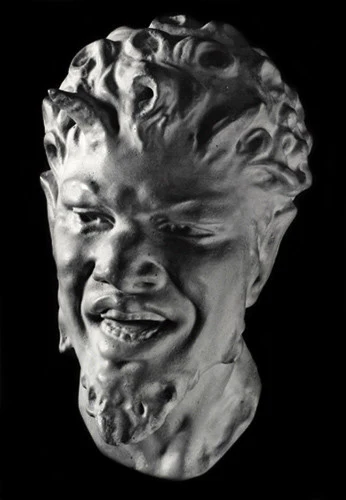
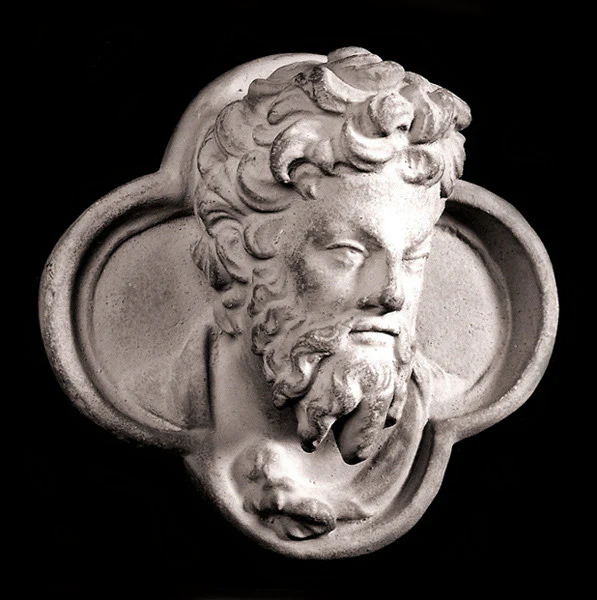
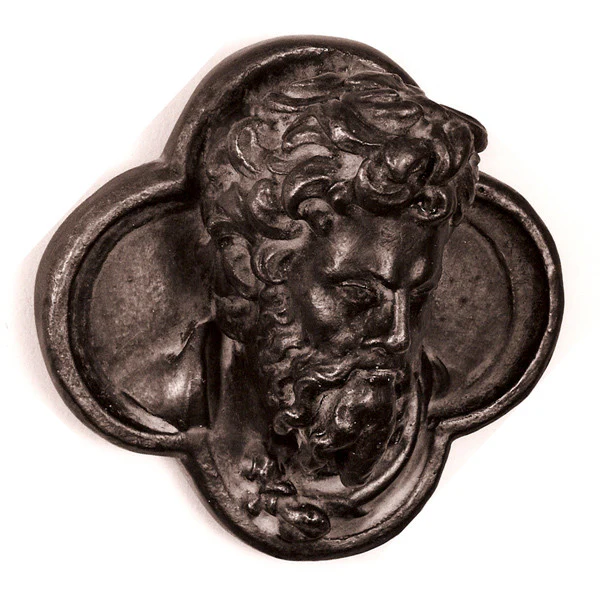
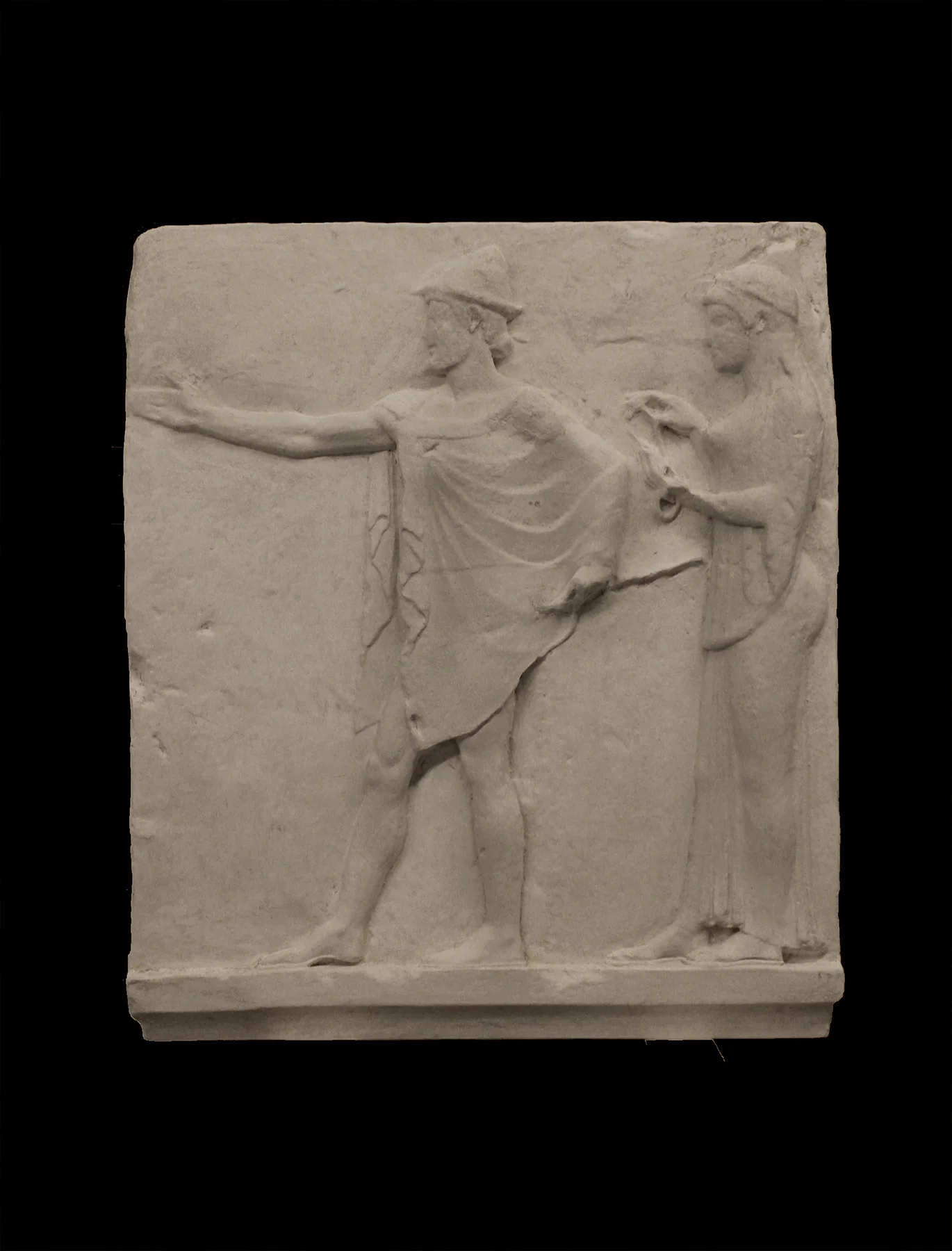
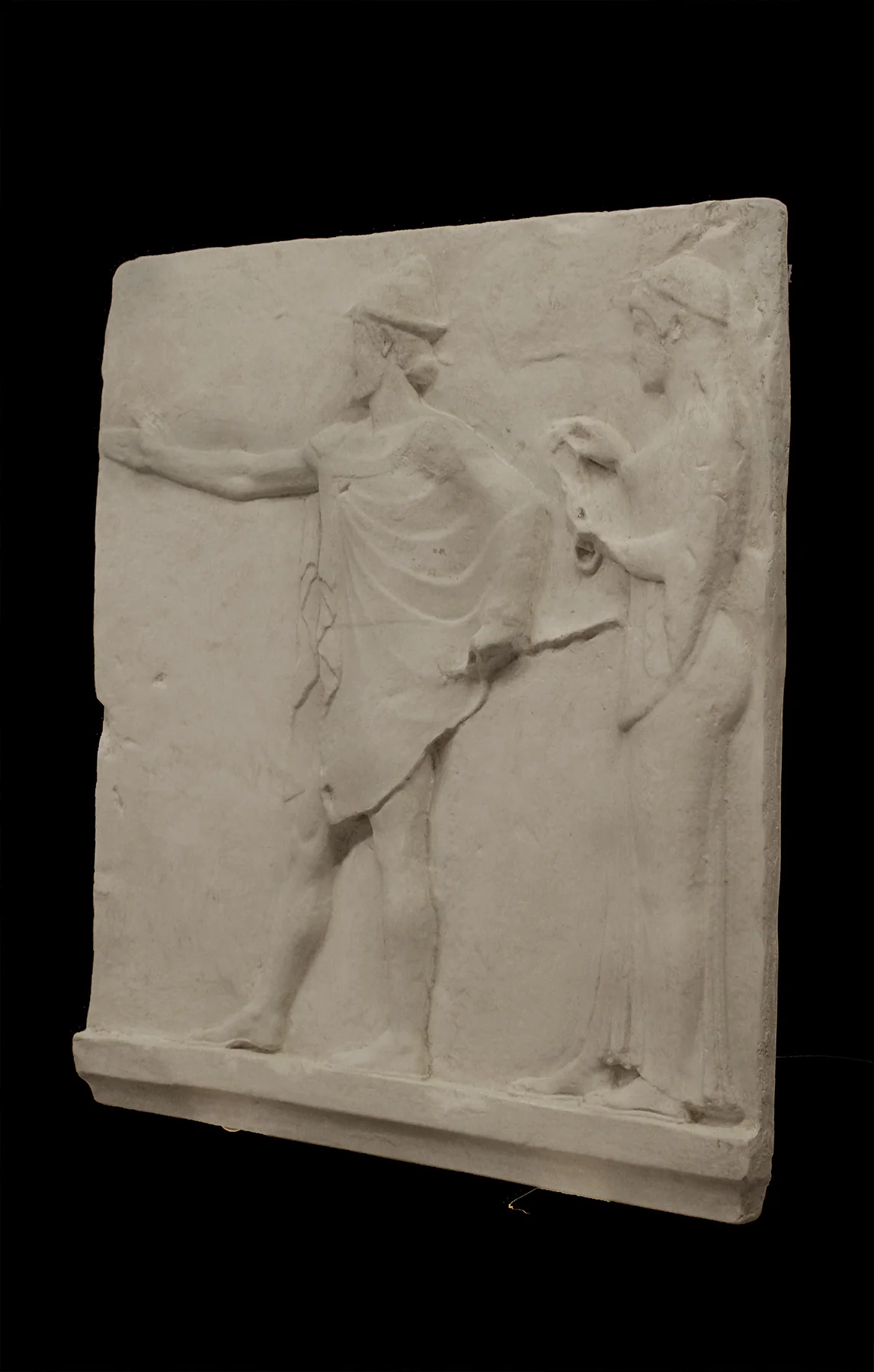
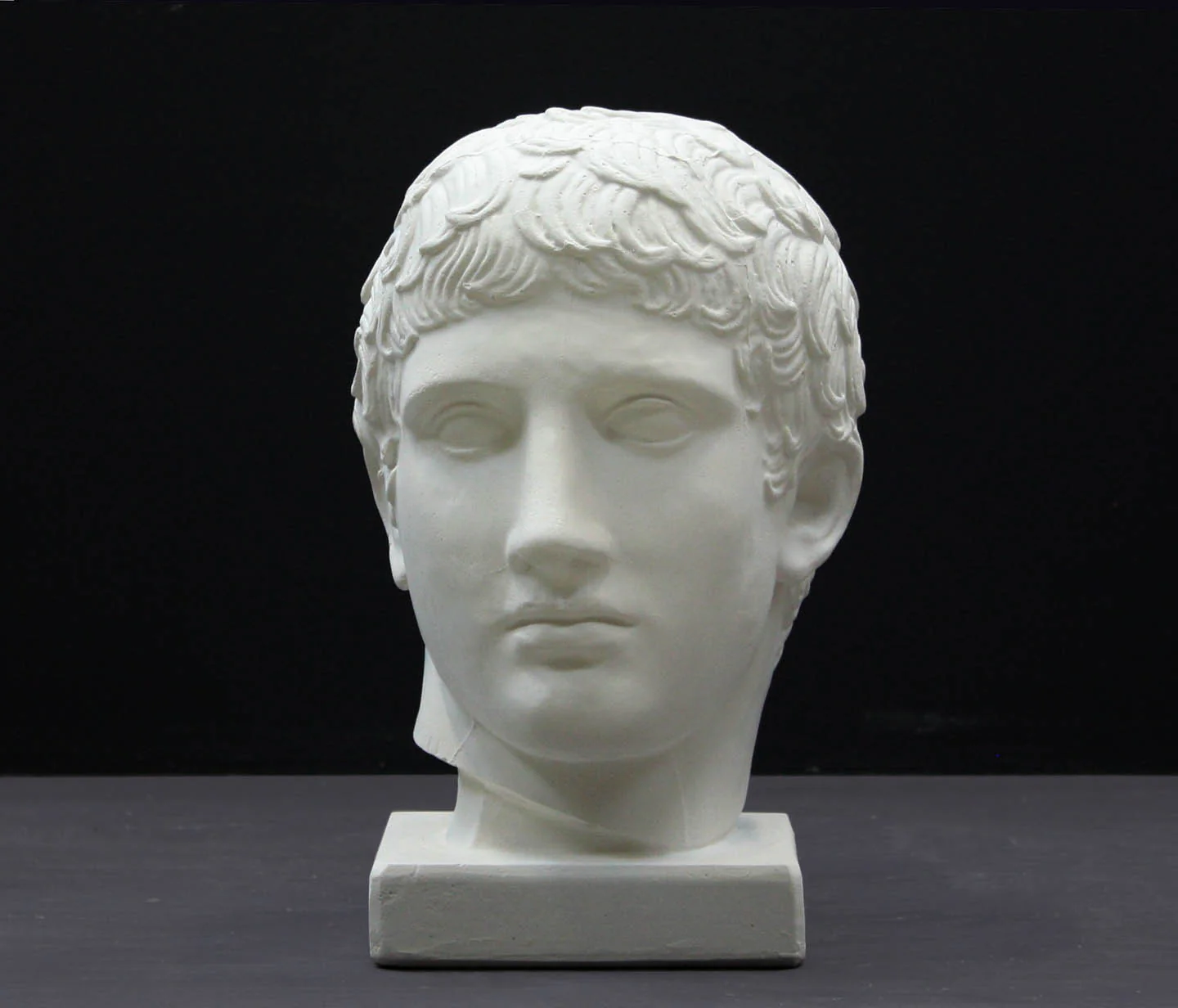
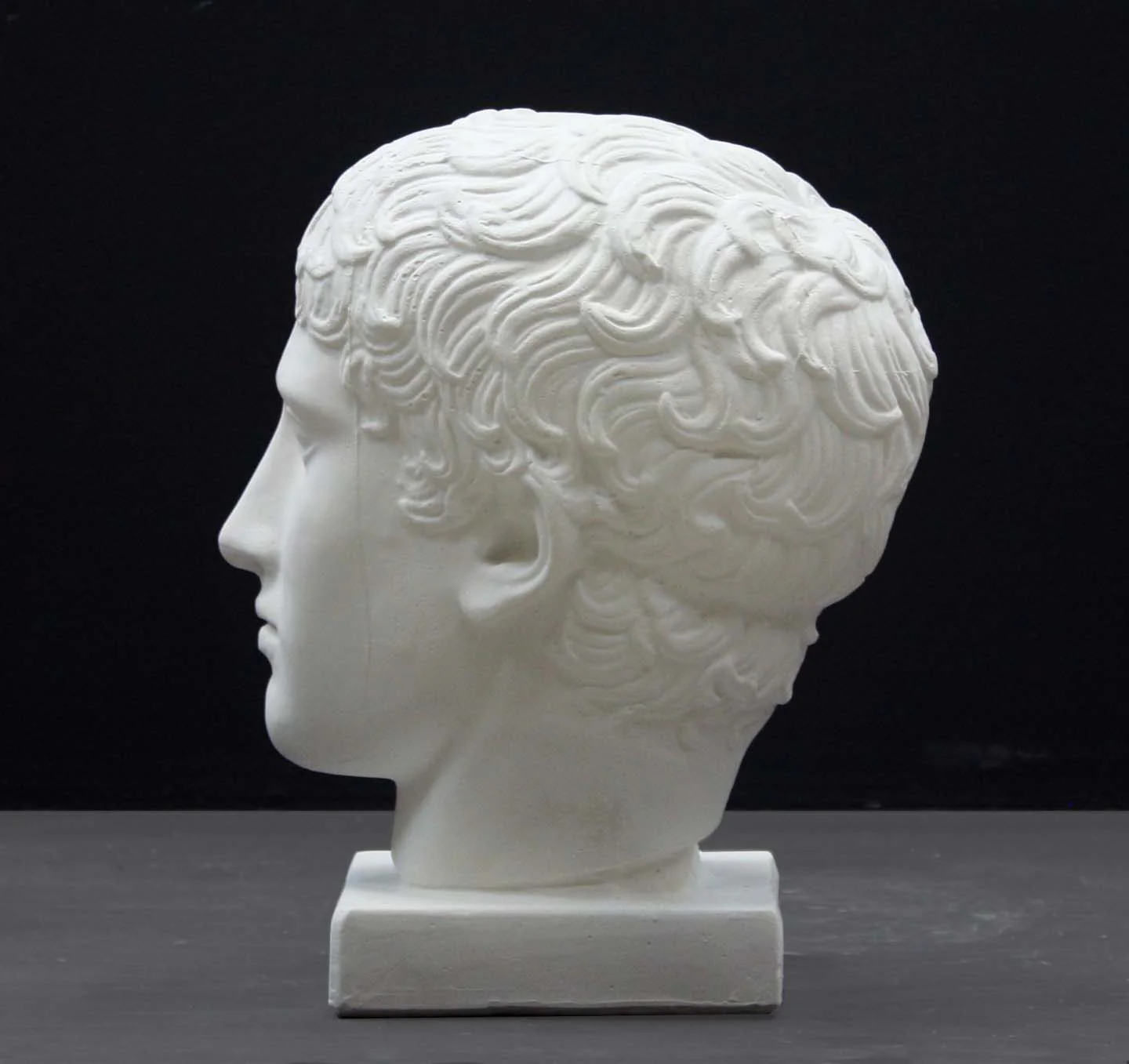
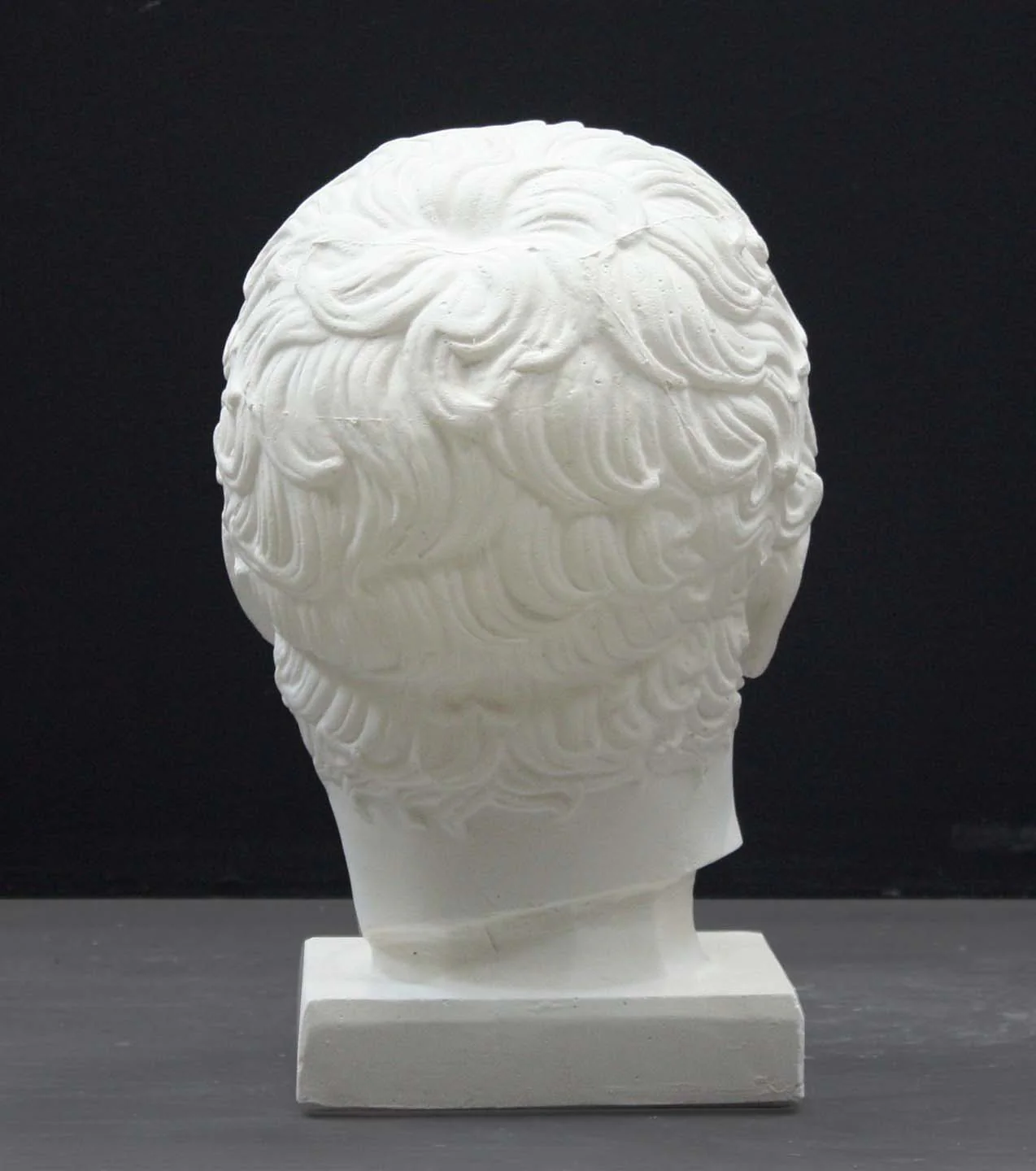
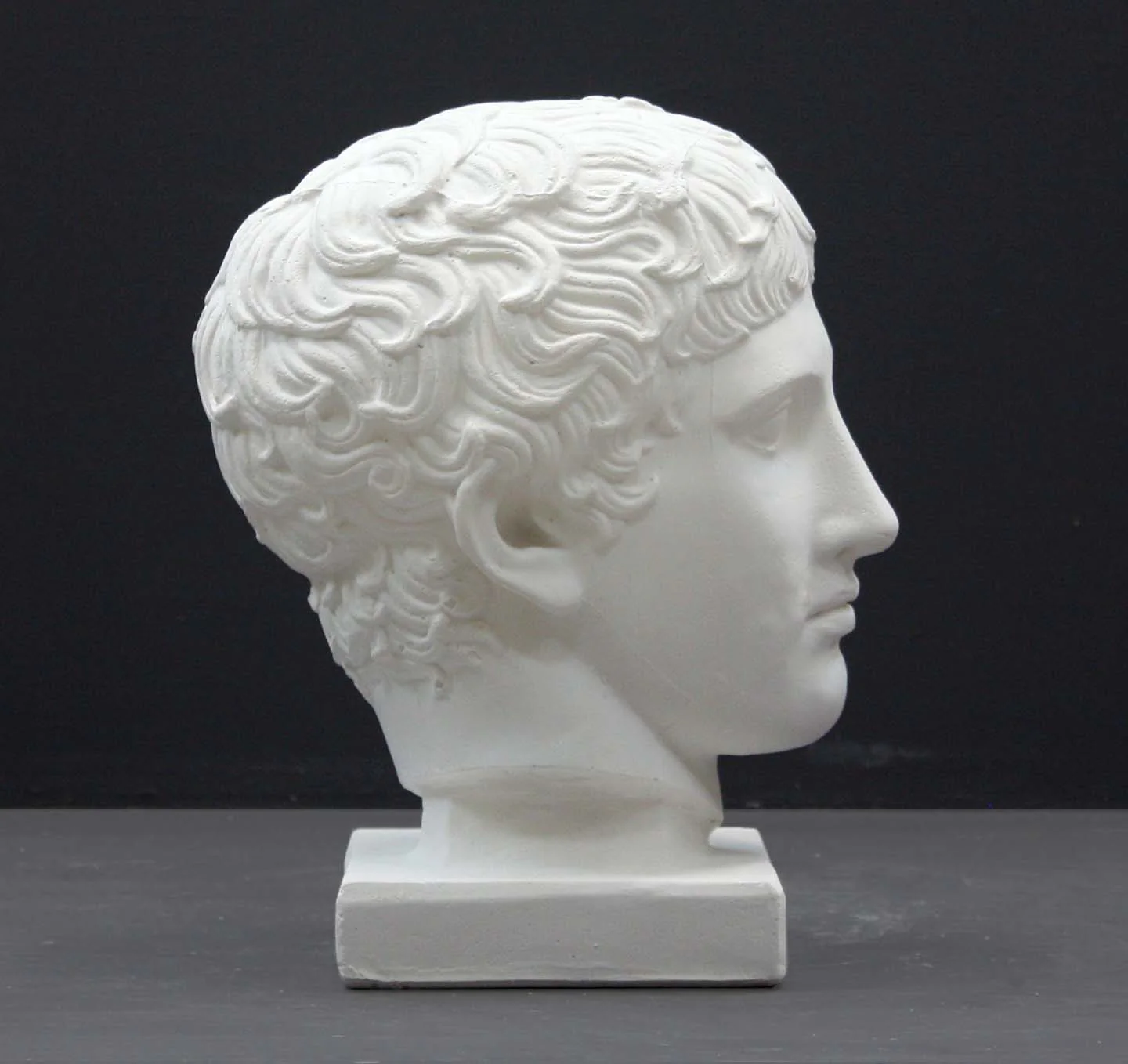
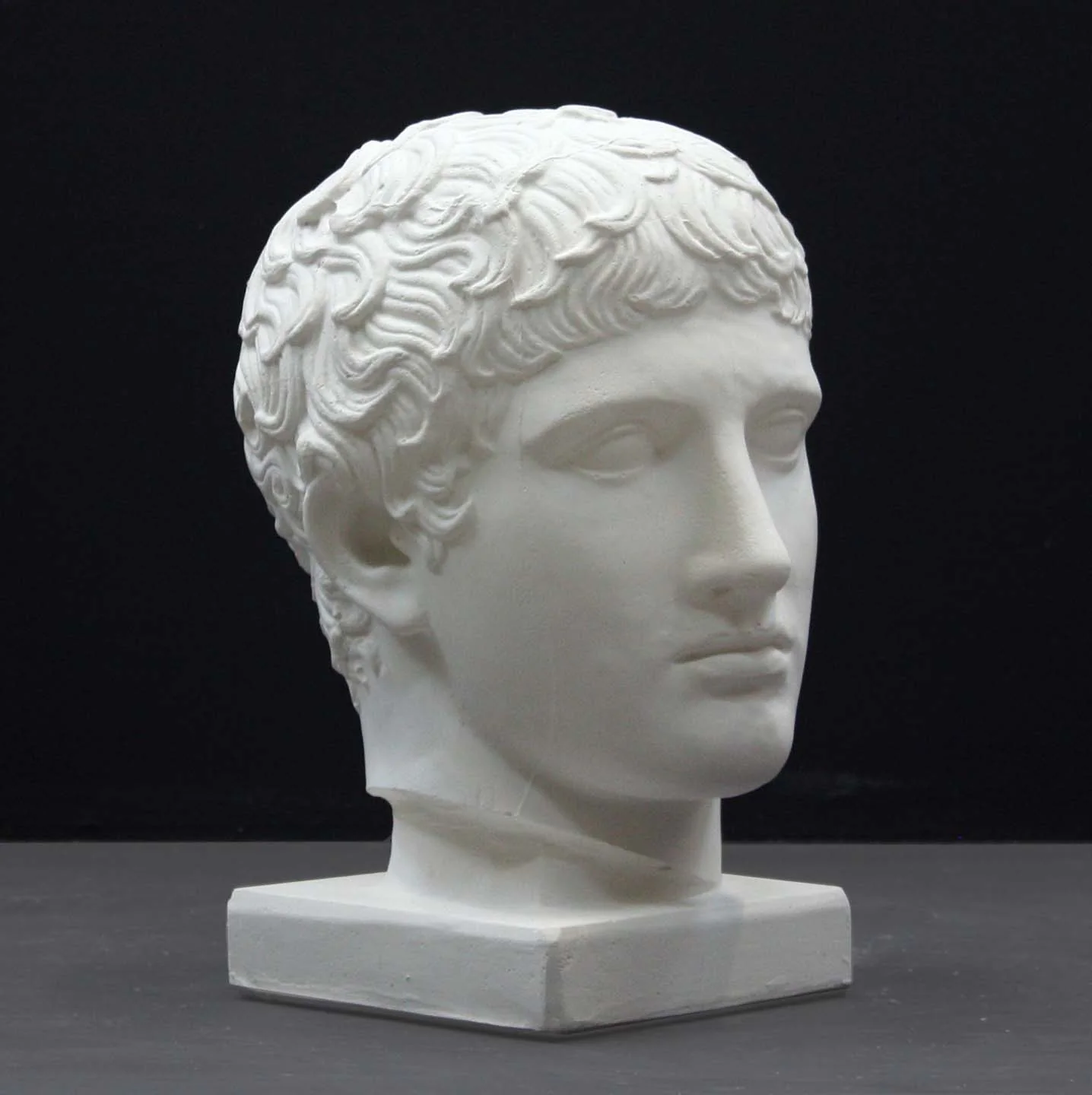
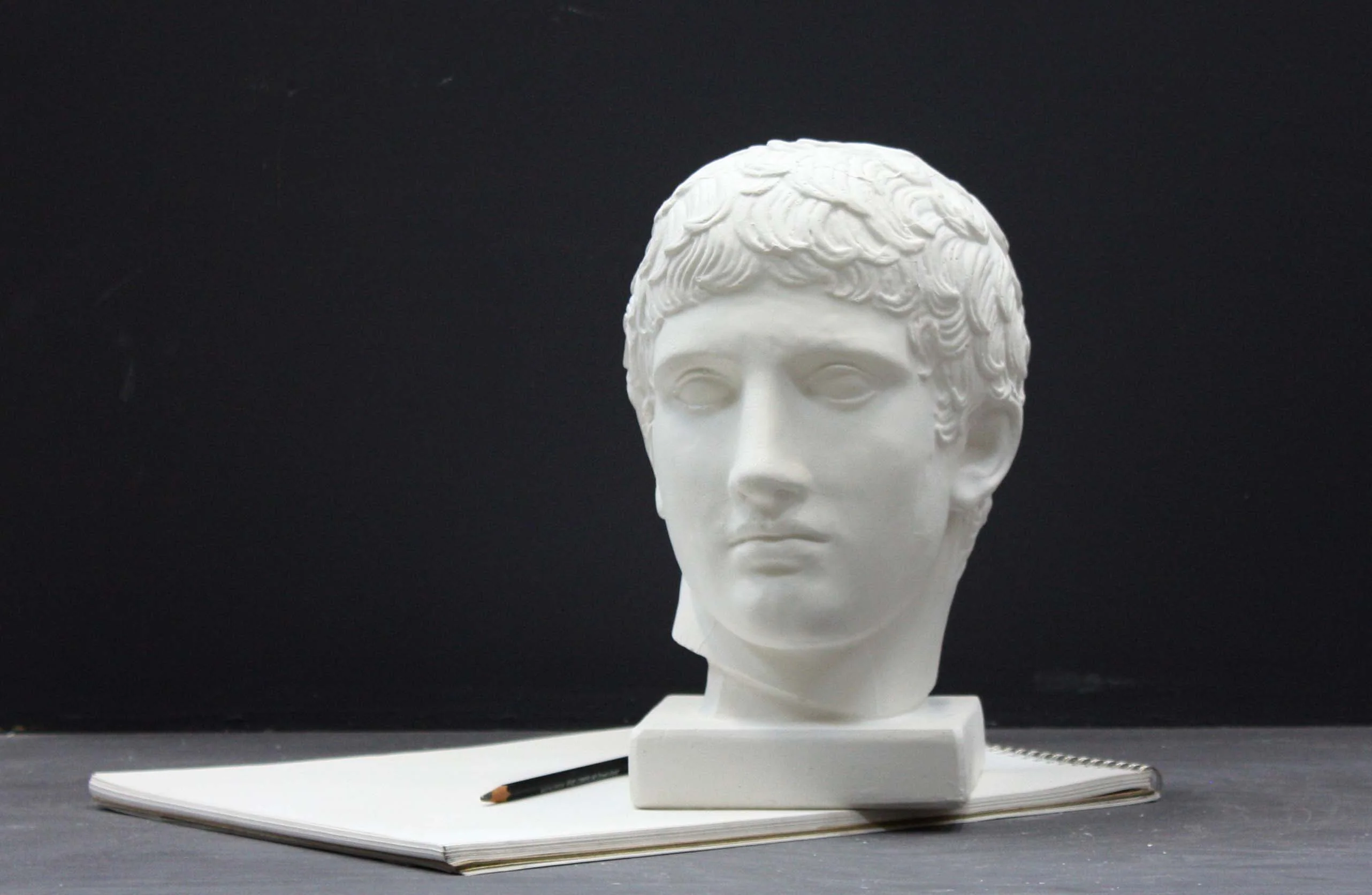
This is the head from the figure known as Idolino. The statue was given the name "Idolino," which means "little idol" or "youth," in the 19th century. The original bronze is a Roman work based on Classical Greek styles, such as the style of the sculptor Polykleitos. The head was given the most detail and attention, however. The statue was discovered in Pesaro, Italy in 1530 and at that time, was holding grape leaves in one hand, probably meant as a support for a tray. Due to the leaves feature and the lack of definition in the body compared to the head, it is thought by scholars that this figure was one of many statues created as supports for oil lamps in the homes of wealthy Romans. At the nape of the neck is a horizontal indentation, possibly where a head piece once adorned the sculpture.
Artist: Unknown
Museum: Archaeological Museum, Florence
Origin: Pesaro, Italy
Time Period: Ancient Roman, c. 30 B.C.E.
Sources:
"The Idol (or Idolino)." Museum number NT 109005. National Trust Collections, http://www.nationaltrustcollections.org.uk/object/109005.
"Idolino." Museum number 197. Museum of Classical Archaeology Databases. University of Cambridge, UK, https://museum.classics.cam.ac.uk/collections/casts/idolino.
"The 'Idolino.'" National Gallery of Art, https://www.nga.gov/features/introduction-to-greek-bronzes/the-idolino.html.
Mattusch, Carol C. "When a Statue Is Not a Statue." Artistry in Bronze: The Greeks and Their Legacy, XIXth International Congress on Ancient Bronzes, October 2015, Los Angeles, CA, edited by Jens M. Daehner, Kenneth Lapatin, and Ambra Spinelli, J. Paul Getty Museum and the Getty Conservation Institute, November 2017, http://www.getty.edu/publications/artistryinbronze/large-scale-bronzes/8-mattusch/.
Original: $300.00
-65%$300.00
$105.00More Images

Idolino Head - Item #436
10.75 Inches High x 6.75 Inches Wide x 8.75 Inches Deep
This is the head from the figure known as Idolino. The statue was given the name "Idolino," which means "little idol" or "youth," in the 19th century. The original bronze is a Roman work based on Classical Greek styles, such as the style of the sculptor Polykleitos. The head was given the most detail and attention, however. The statue was discovered in Pesaro, Italy in 1530 and at that time, was holding grape leaves in one hand, probably meant as a support for a tray. Due to the leaves feature and the lack of definition in the body compared to the head, it is thought by scholars that this figure was one of many statues created as supports for oil lamps in the homes of wealthy Romans. At the nape of the neck is a horizontal indentation, possibly where a head piece once adorned the sculpture.
Artist: Unknown
Museum: Archaeological Museum, Florence
Origin: Pesaro, Italy
Time Period: Ancient Roman, c. 30 B.C.E.
Sources:
"The Idol (or Idolino)." Museum number NT 109005. National Trust Collections, http://www.nationaltrustcollections.org.uk/object/109005.
"Idolino." Museum number 197. Museum of Classical Archaeology Databases. University of Cambridge, UK, https://museum.classics.cam.ac.uk/collections/casts/idolino.
"The 'Idolino.'" National Gallery of Art, https://www.nga.gov/features/introduction-to-greek-bronzes/the-idolino.html.
Mattusch, Carol C. "When a Statue Is Not a Statue." Artistry in Bronze: The Greeks and Their Legacy, XIXth International Congress on Ancient Bronzes, October 2015, Los Angeles, CA, edited by Jens M. Daehner, Kenneth Lapatin, and Ambra Spinelli, J. Paul Getty Museum and the Getty Conservation Institute, November 2017, http://www.getty.edu/publications/artistryinbronze/large-scale-bronzes/8-mattusch/.
Product Information
Product Information
Shipping & Returns
Shipping & Returns
Description
10.75 Inches High x 6.75 Inches Wide x 8.75 Inches Deep
This is the head from the figure known as Idolino. The statue was given the name "Idolino," which means "little idol" or "youth," in the 19th century. The original bronze is a Roman work based on Classical Greek styles, such as the style of the sculptor Polykleitos. The head was given the most detail and attention, however. The statue was discovered in Pesaro, Italy in 1530 and at that time, was holding grape leaves in one hand, probably meant as a support for a tray. Due to the leaves feature and the lack of definition in the body compared to the head, it is thought by scholars that this figure was one of many statues created as supports for oil lamps in the homes of wealthy Romans. At the nape of the neck is a horizontal indentation, possibly where a head piece once adorned the sculpture.
Artist: Unknown
Museum: Archaeological Museum, Florence
Origin: Pesaro, Italy
Time Period: Ancient Roman, c. 30 B.C.E.
Sources:
"The Idol (or Idolino)." Museum number NT 109005. National Trust Collections, http://www.nationaltrustcollections.org.uk/object/109005.
"Idolino." Museum number 197. Museum of Classical Archaeology Databases. University of Cambridge, UK, https://museum.classics.cam.ac.uk/collections/casts/idolino.
"The 'Idolino.'" National Gallery of Art, https://www.nga.gov/features/introduction-to-greek-bronzes/the-idolino.html.
Mattusch, Carol C. "When a Statue Is Not a Statue." Artistry in Bronze: The Greeks and Their Legacy, XIXth International Congress on Ancient Bronzes, October 2015, Los Angeles, CA, edited by Jens M. Daehner, Kenneth Lapatin, and Ambra Spinelli, J. Paul Getty Museum and the Getty Conservation Institute, November 2017, http://www.getty.edu/publications/artistryinbronze/large-scale-bronzes/8-mattusch/.