Nefertiti Reduction - Item #83
19.75 Inches High x 8.5 Inches Wide x 12 Inches Deep
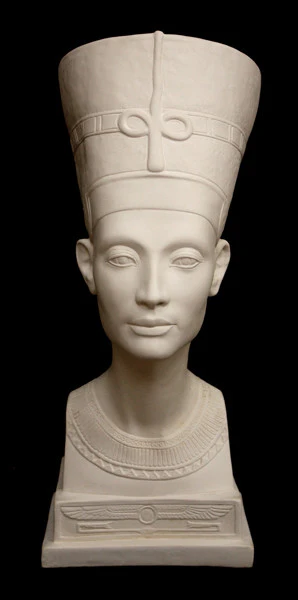
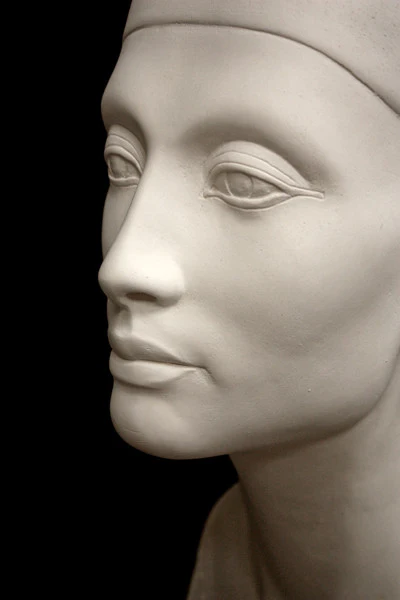
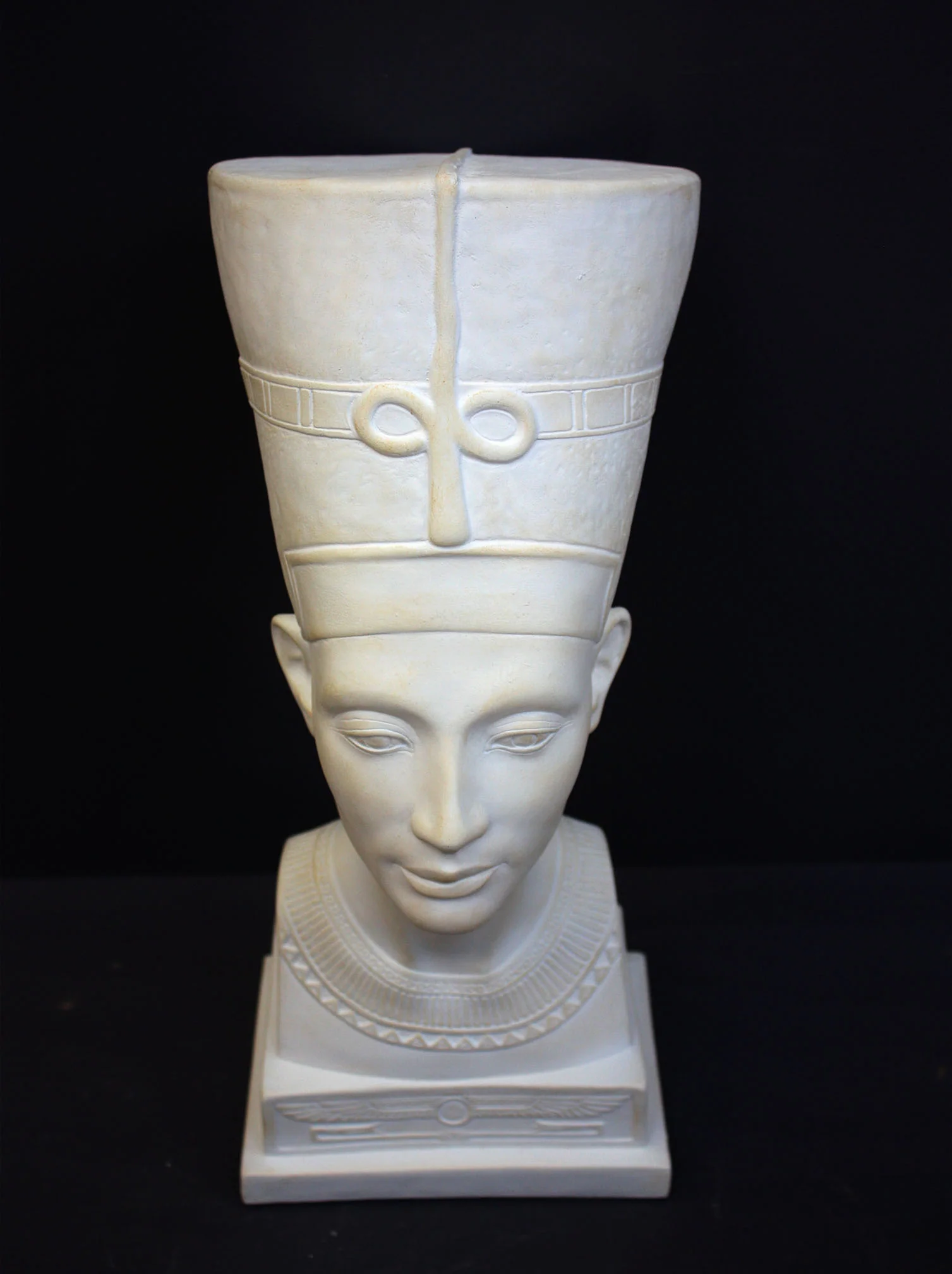
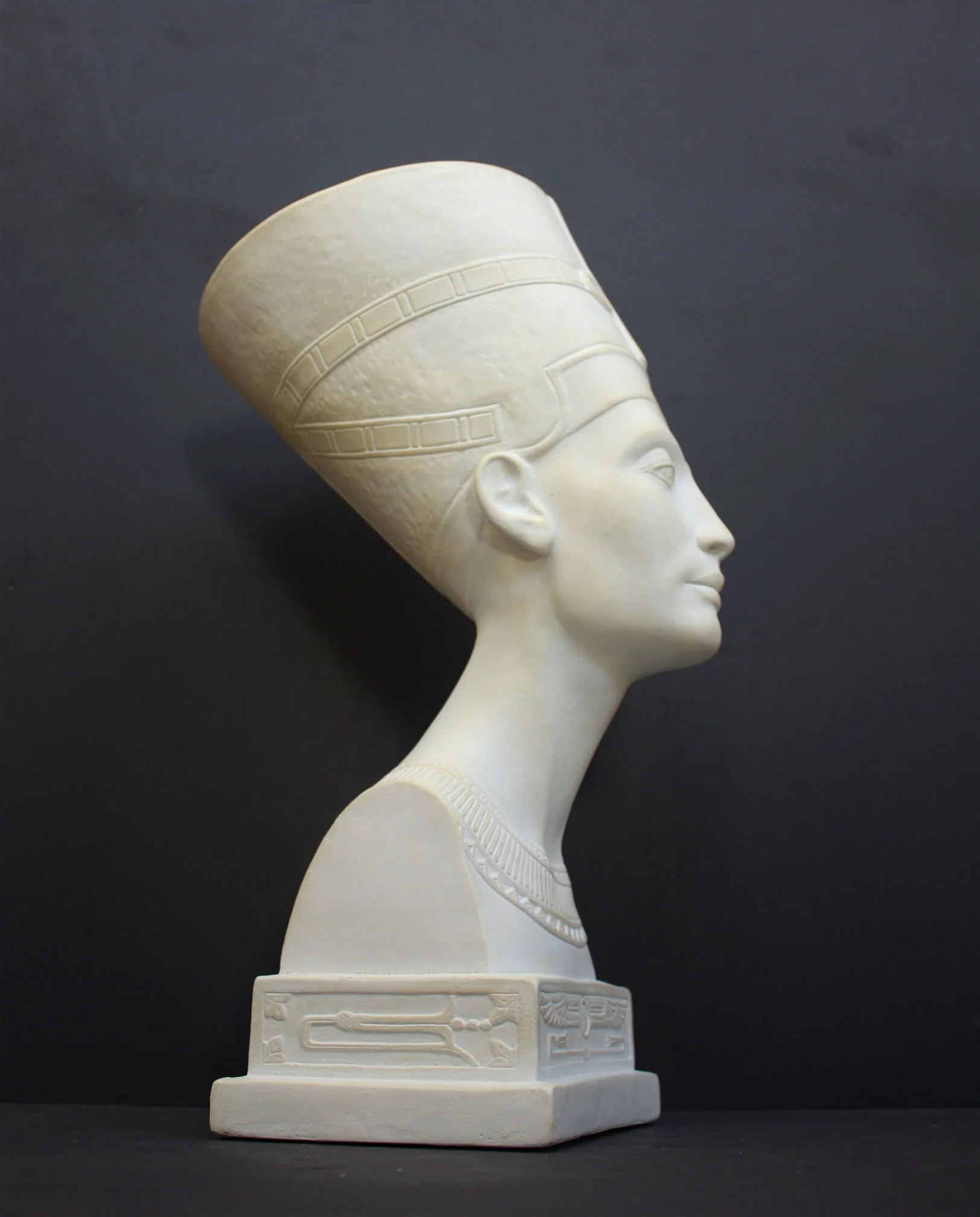
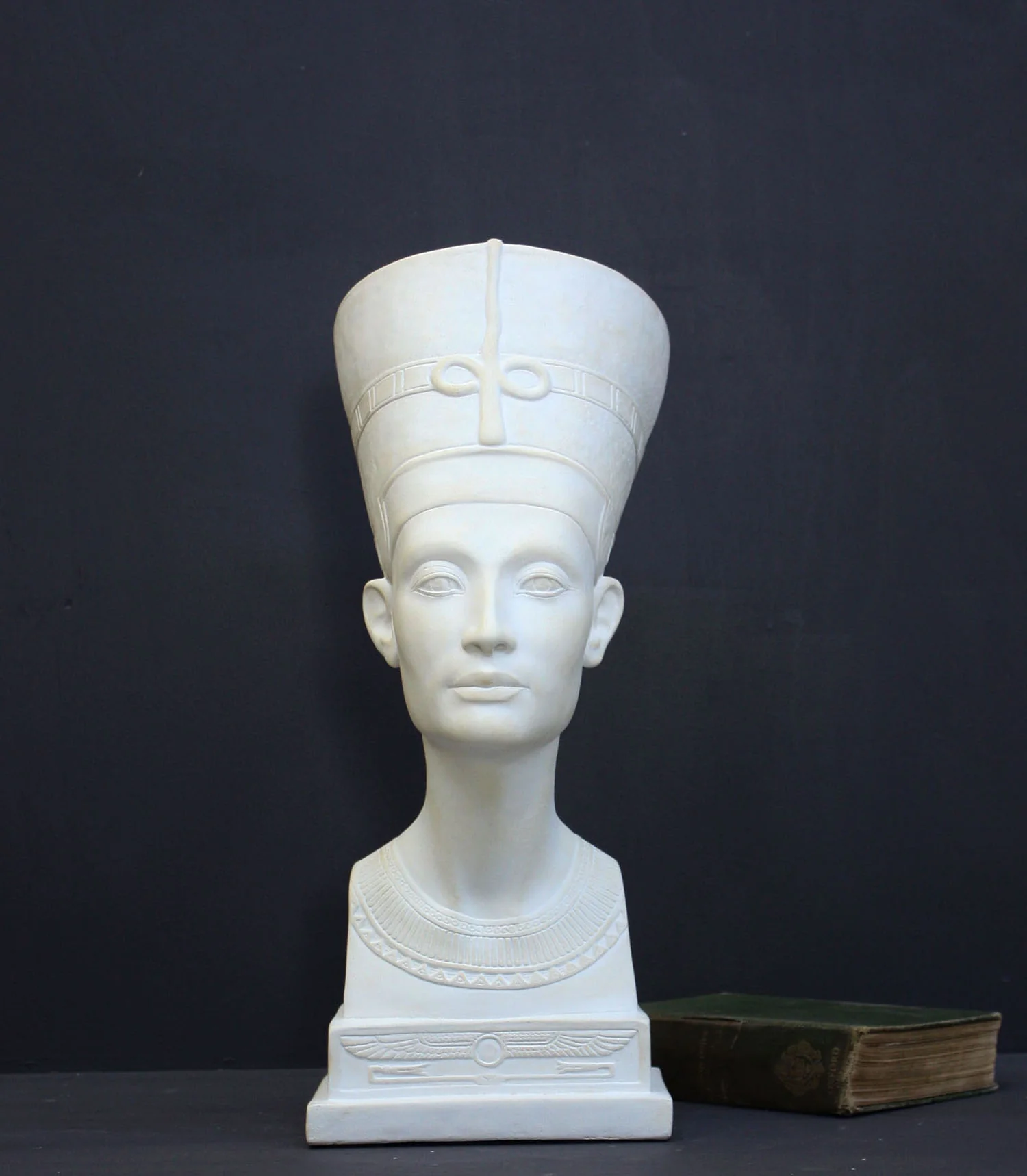
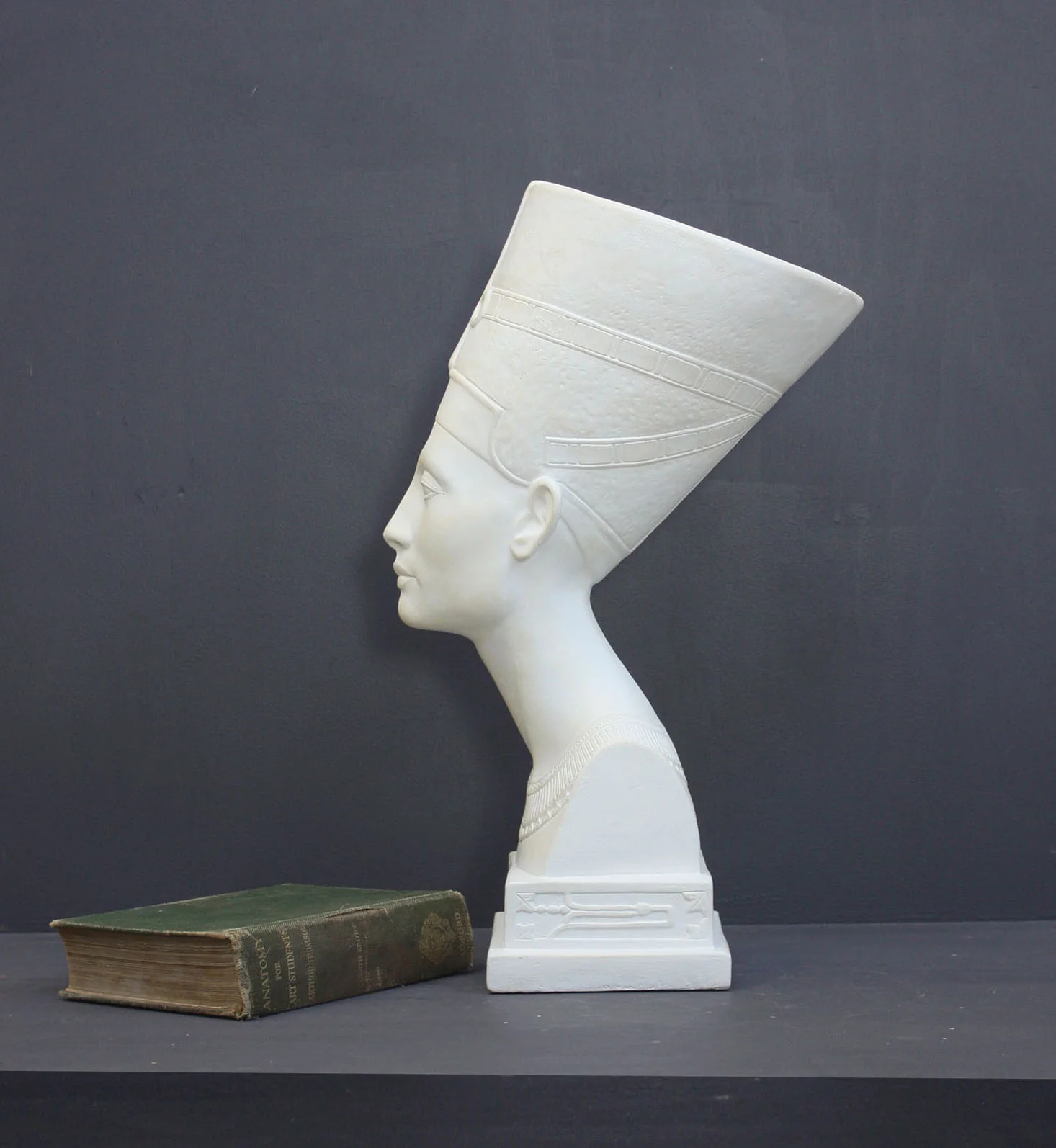
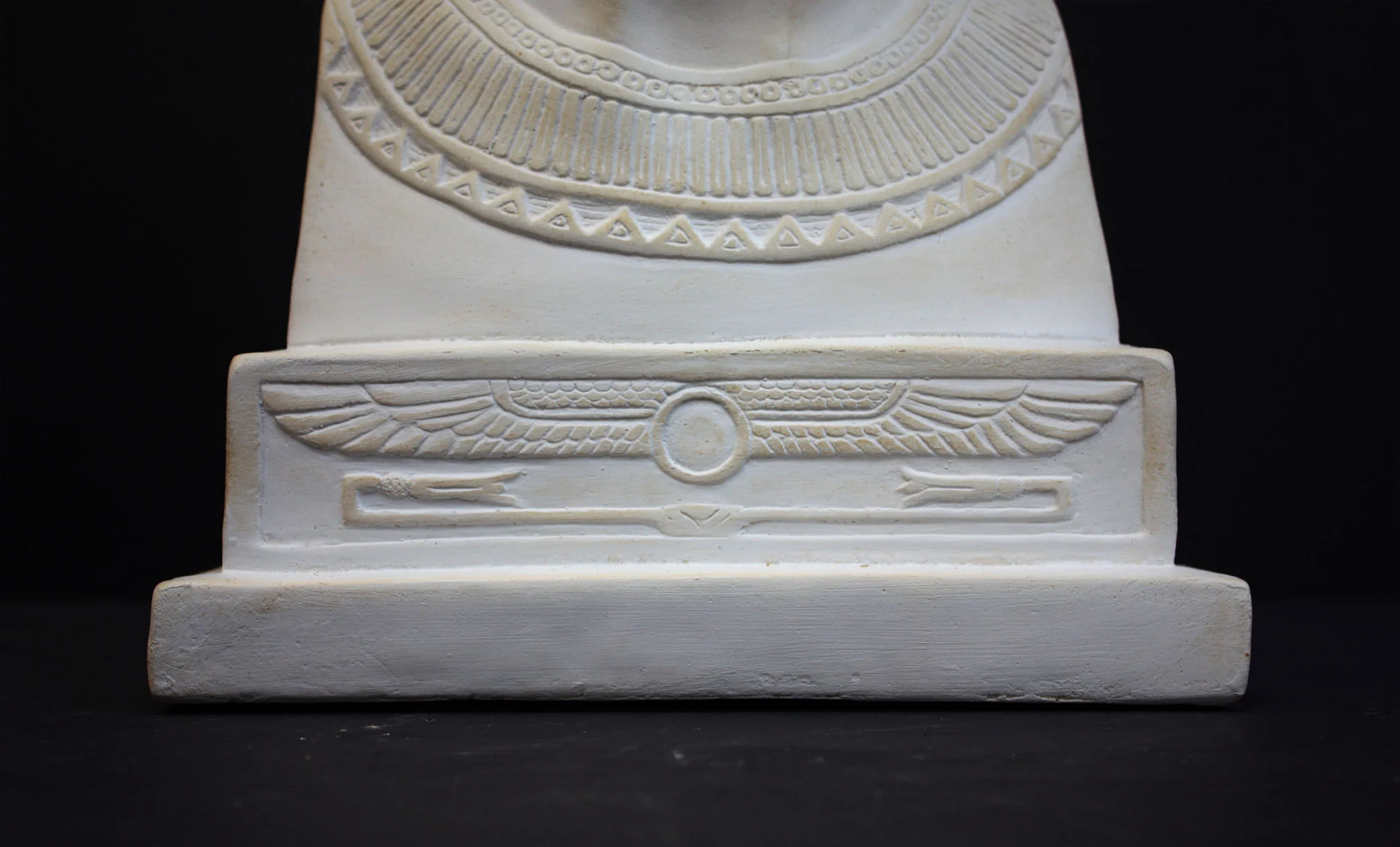
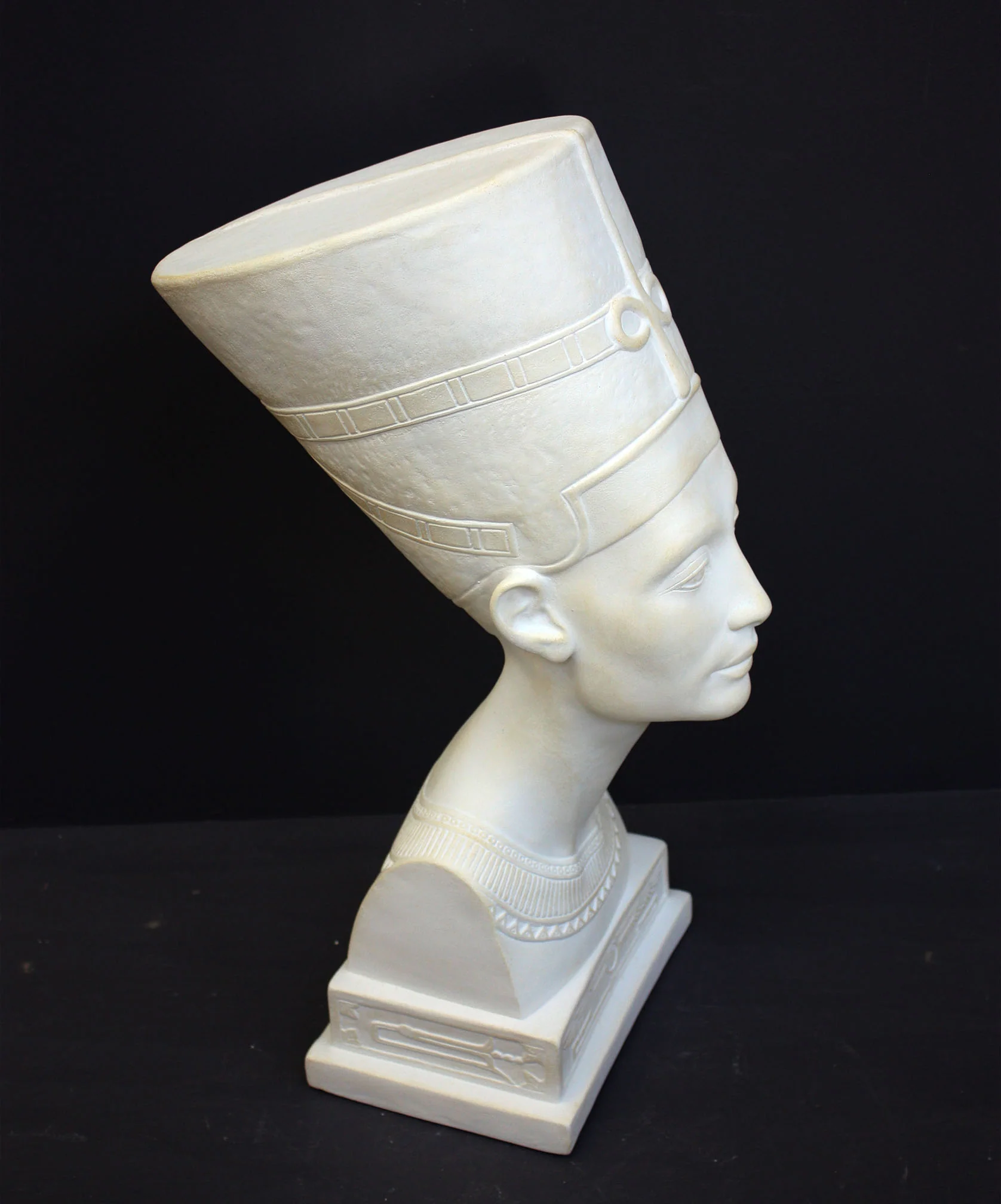
Nefertiti, the Egyptian queen of Akhenaten of the 14th century B.C.E., became famous the world over due to the discovery of this bust in 1912. The painted limestone sculpture shows Nefertiti in her blue crown with a patterned band wrapped around it and the remnants of the uraeus (the upright cobra symbolizing royalty) on the front. These details aided in her identification. The court artist Thutmose covered the limestone with a thin layer of plaster that allowed him to achieve fine detail in her symmetrical face. Thutmose and other artists utilized the bust as a model on which to base portraits of the queen. On our slightly smaller reproduction, a decorative base was added and the broken ears were restored. Some artistic license was taken in the crown and collar.
Artist: After Thutmose
Museum: Egyptian Museum and Papyrus Collection, Neues Museum, Museum Island, Berlin
Origin: Thutmose's studio, city of Akhetaten (Amarna) in modern-day Minya Governorate, Egypt
Time Period: Ancient Egyptian- New Kingdom, 18th dynasty, Amarna Period, c.1340 B.C.E.
Sources and Further Reading:
Arnold, Dorothea, et al. The Royal Women of Amarna: Images of Beauty from Ancient Egypt. The Metropolitan Museum of Art, 1996. Google Books, https://books.google.com/books?id=sGLFwVkljQMC&newbks=1&newbks_redir=0&printsec=frontcover&source=gbs_ge_summary_r&cad=0#v=onepage&q&f=false.
Harris, Beth, and Steven Zucker. "Thutmose, Bust of Nefertiti (video)." Khan Academy, https://www.khanacademy.org/humanities/ancient-art-civilizations/egypt-art/new-kingdom/v/thutmose-bust-of-nefertiti-c-1340-bce.
"Nefertiti." Society for the Promotion of the Egyptian Museum Berlin, http://www.egyptian-museum-berlin.com/c53.php.
Staatliche Museen zu Berlin. Egyptian Museum and Papyrus Collection, 2019, https://www.smb.museum/en/museums-institutions/aegyptisches-museum-und-papyrussammlung/home.html.
Tyldesley, Joyce. "Nefertiti." Encyclopædia Britannica, https://www.britannica.com/biography/Nefertiti.
"Uraeus." The Metropolitan Museum of Art, https://www.metmuseum.org/art/collection/search/546039.
Original: $390.00
-65%$390.00
$136.50More Images



Nefertiti Reduction - Item #83
19.75 Inches High x 8.5 Inches Wide x 12 Inches Deep
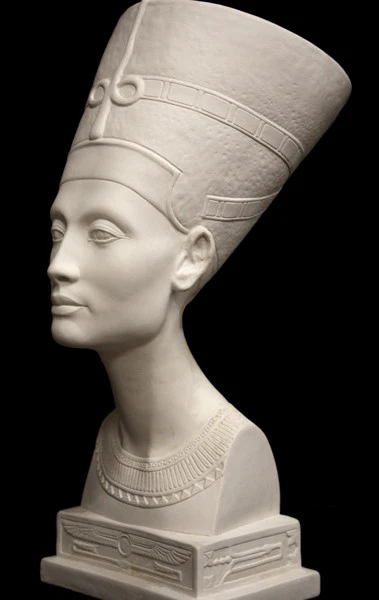
Nefertiti, the Egyptian queen of Akhenaten of the 14th century B.C.E., became famous the world over due to the discovery of this bust in 1912. The painted limestone sculpture shows Nefertiti in her blue crown with a patterned band wrapped around it and the remnants of the uraeus (the upright cobra symbolizing royalty) on the front. These details aided in her identification. The court artist Thutmose covered the limestone with a thin layer of plaster that allowed him to achieve fine detail in her symmetrical face. Thutmose and other artists utilized the bust as a model on which to base portraits of the queen. On our slightly smaller reproduction, a decorative base was added and the broken ears were restored. Some artistic license was taken in the crown and collar.
Artist: After Thutmose
Museum: Egyptian Museum and Papyrus Collection, Neues Museum, Museum Island, Berlin
Origin: Thutmose's studio, city of Akhetaten (Amarna) in modern-day Minya Governorate, Egypt
Time Period: Ancient Egyptian- New Kingdom, 18th dynasty, Amarna Period, c.1340 B.C.E.
Sources and Further Reading:
Arnold, Dorothea, et al. The Royal Women of Amarna: Images of Beauty from Ancient Egypt. The Metropolitan Museum of Art, 1996. Google Books, https://books.google.com/books?id=sGLFwVkljQMC&newbks=1&newbks_redir=0&printsec=frontcover&source=gbs_ge_summary_r&cad=0#v=onepage&q&f=false.
Harris, Beth, and Steven Zucker. "Thutmose, Bust of Nefertiti (video)." Khan Academy, https://www.khanacademy.org/humanities/ancient-art-civilizations/egypt-art/new-kingdom/v/thutmose-bust-of-nefertiti-c-1340-bce.
"Nefertiti." Society for the Promotion of the Egyptian Museum Berlin, http://www.egyptian-museum-berlin.com/c53.php.
Staatliche Museen zu Berlin. Egyptian Museum and Papyrus Collection, 2019, https://www.smb.museum/en/museums-institutions/aegyptisches-museum-und-papyrussammlung/home.html.
Tyldesley, Joyce. "Nefertiti." Encyclopædia Britannica, https://www.britannica.com/biography/Nefertiti.
"Uraeus." The Metropolitan Museum of Art, https://www.metmuseum.org/art/collection/search/546039.
Product Information
Product Information
Shipping & Returns
Shipping & Returns
Description
19.75 Inches High x 8.5 Inches Wide x 12 Inches Deep
Nefertiti, the Egyptian queen of Akhenaten of the 14th century B.C.E., became famous the world over due to the discovery of this bust in 1912. The painted limestone sculpture shows Nefertiti in her blue crown with a patterned band wrapped around it and the remnants of the uraeus (the upright cobra symbolizing royalty) on the front. These details aided in her identification. The court artist Thutmose covered the limestone with a thin layer of plaster that allowed him to achieve fine detail in her symmetrical face. Thutmose and other artists utilized the bust as a model on which to base portraits of the queen. On our slightly smaller reproduction, a decorative base was added and the broken ears were restored. Some artistic license was taken in the crown and collar.
Artist: After Thutmose
Museum: Egyptian Museum and Papyrus Collection, Neues Museum, Museum Island, Berlin
Origin: Thutmose's studio, city of Akhetaten (Amarna) in modern-day Minya Governorate, Egypt
Time Period: Ancient Egyptian- New Kingdom, 18th dynasty, Amarna Period, c.1340 B.C.E.
Sources and Further Reading:
Arnold, Dorothea, et al. The Royal Women of Amarna: Images of Beauty from Ancient Egypt. The Metropolitan Museum of Art, 1996. Google Books, https://books.google.com/books?id=sGLFwVkljQMC&newbks=1&newbks_redir=0&printsec=frontcover&source=gbs_ge_summary_r&cad=0#v=onepage&q&f=false.
Harris, Beth, and Steven Zucker. "Thutmose, Bust of Nefertiti (video)." Khan Academy, https://www.khanacademy.org/humanities/ancient-art-civilizations/egypt-art/new-kingdom/v/thutmose-bust-of-nefertiti-c-1340-bce.
"Nefertiti." Society for the Promotion of the Egyptian Museum Berlin, http://www.egyptian-museum-berlin.com/c53.php.
Staatliche Museen zu Berlin. Egyptian Museum and Papyrus Collection, 2019, https://www.smb.museum/en/museums-institutions/aegyptisches-museum-und-papyrussammlung/home.html.
Tyldesley, Joyce. "Nefertiti." Encyclopædia Britannica, https://www.britannica.com/biography/Nefertiti.
"Uraeus." The Metropolitan Museum of Art, https://www.metmuseum.org/art/collection/search/546039.