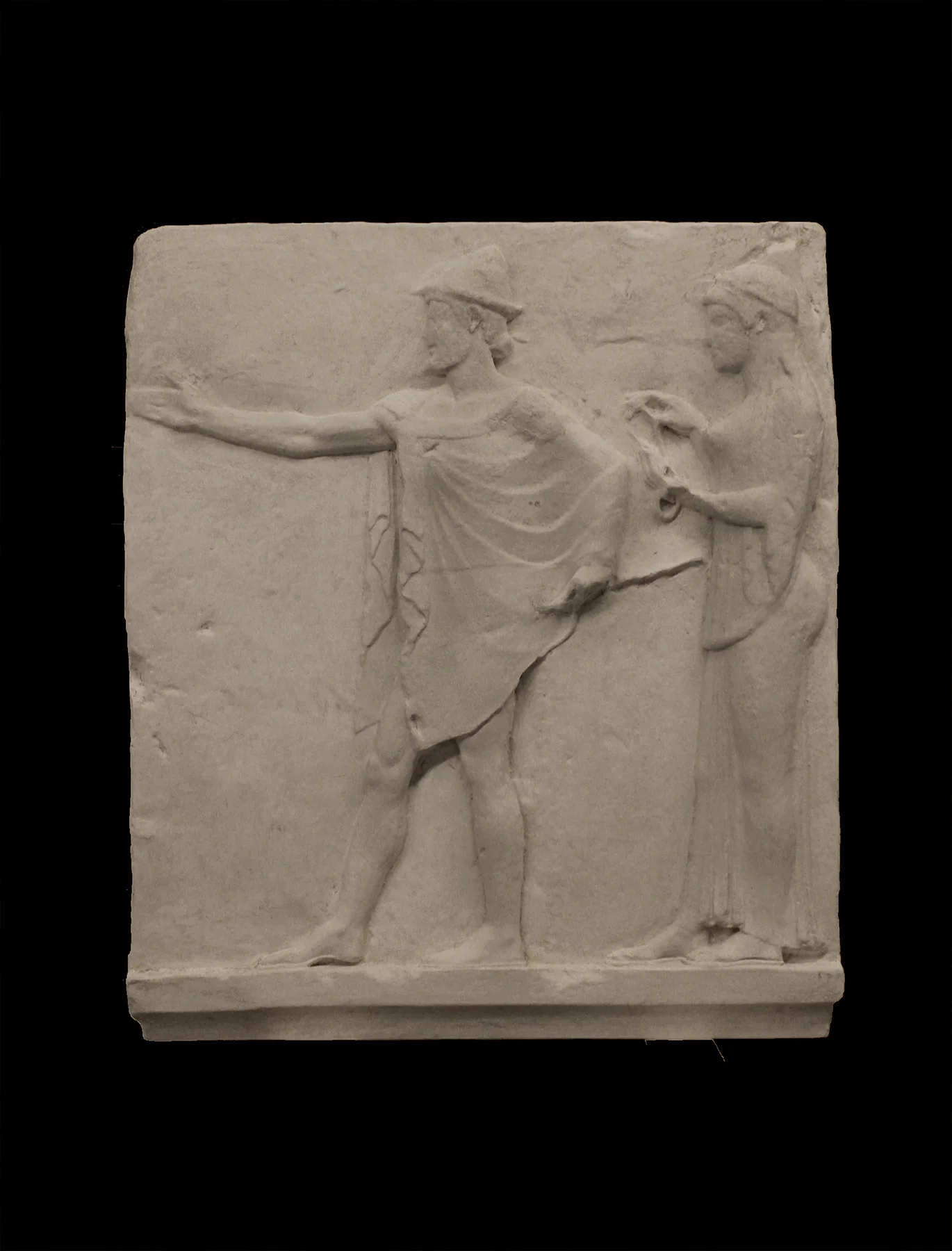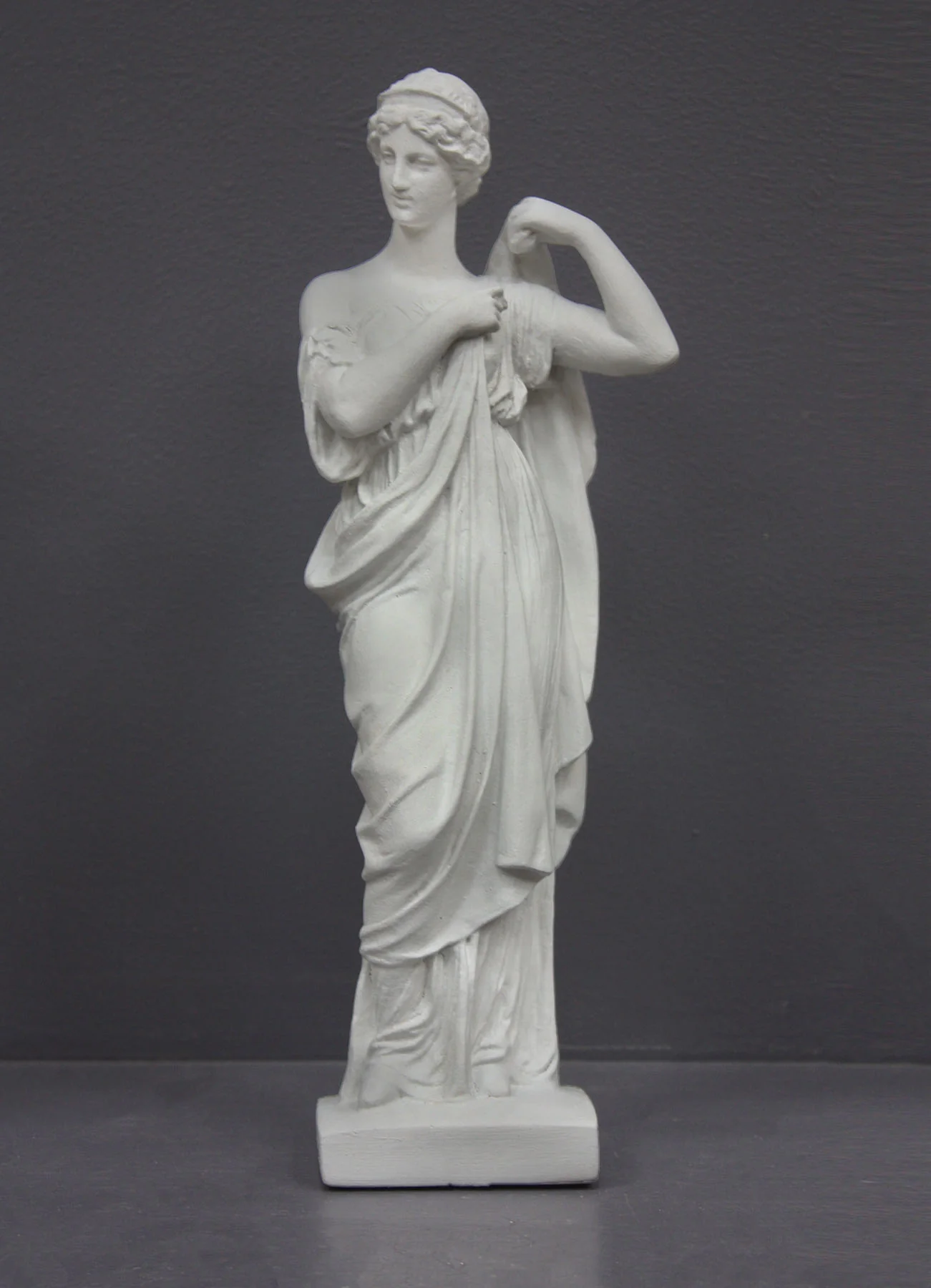
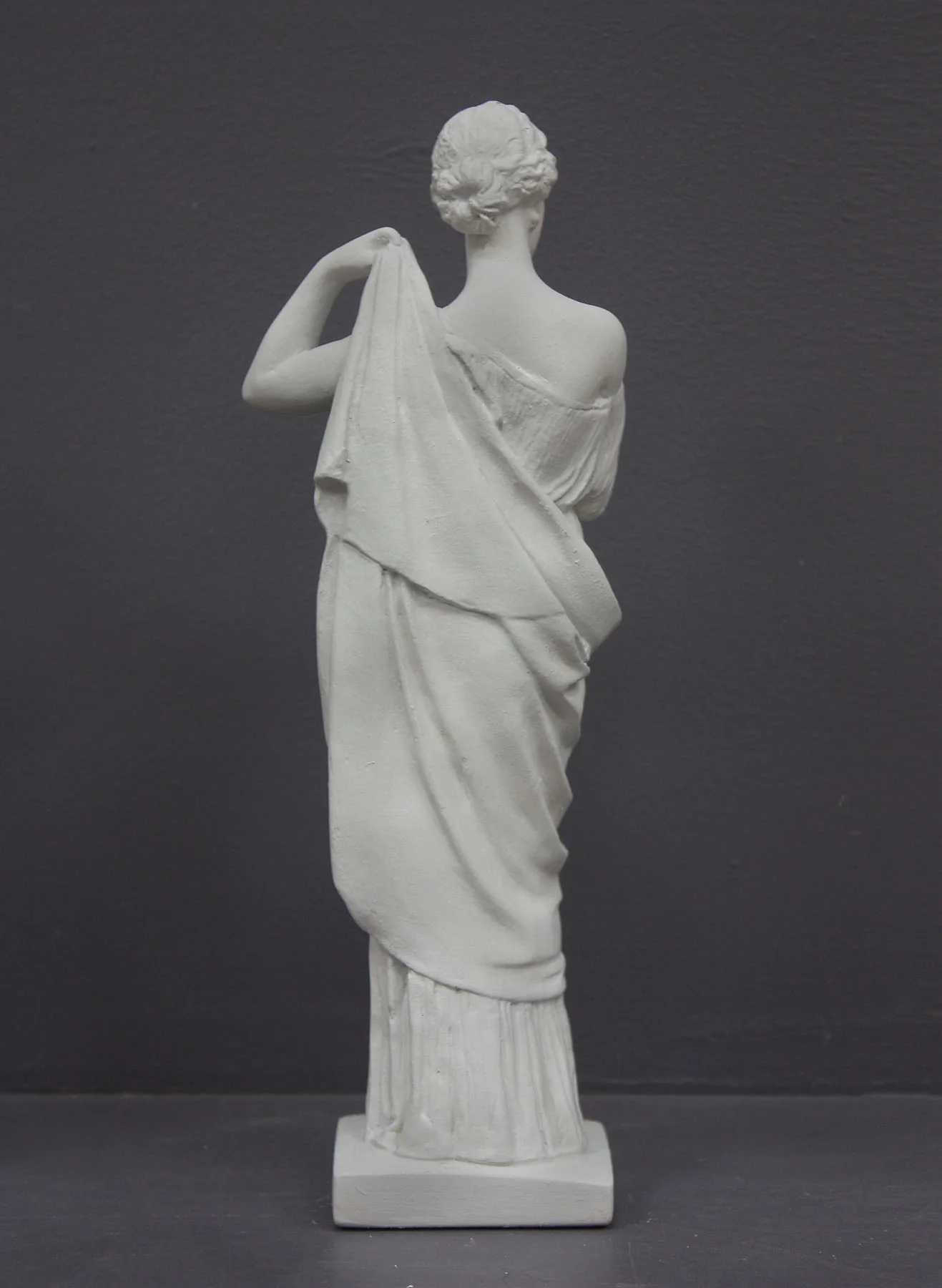
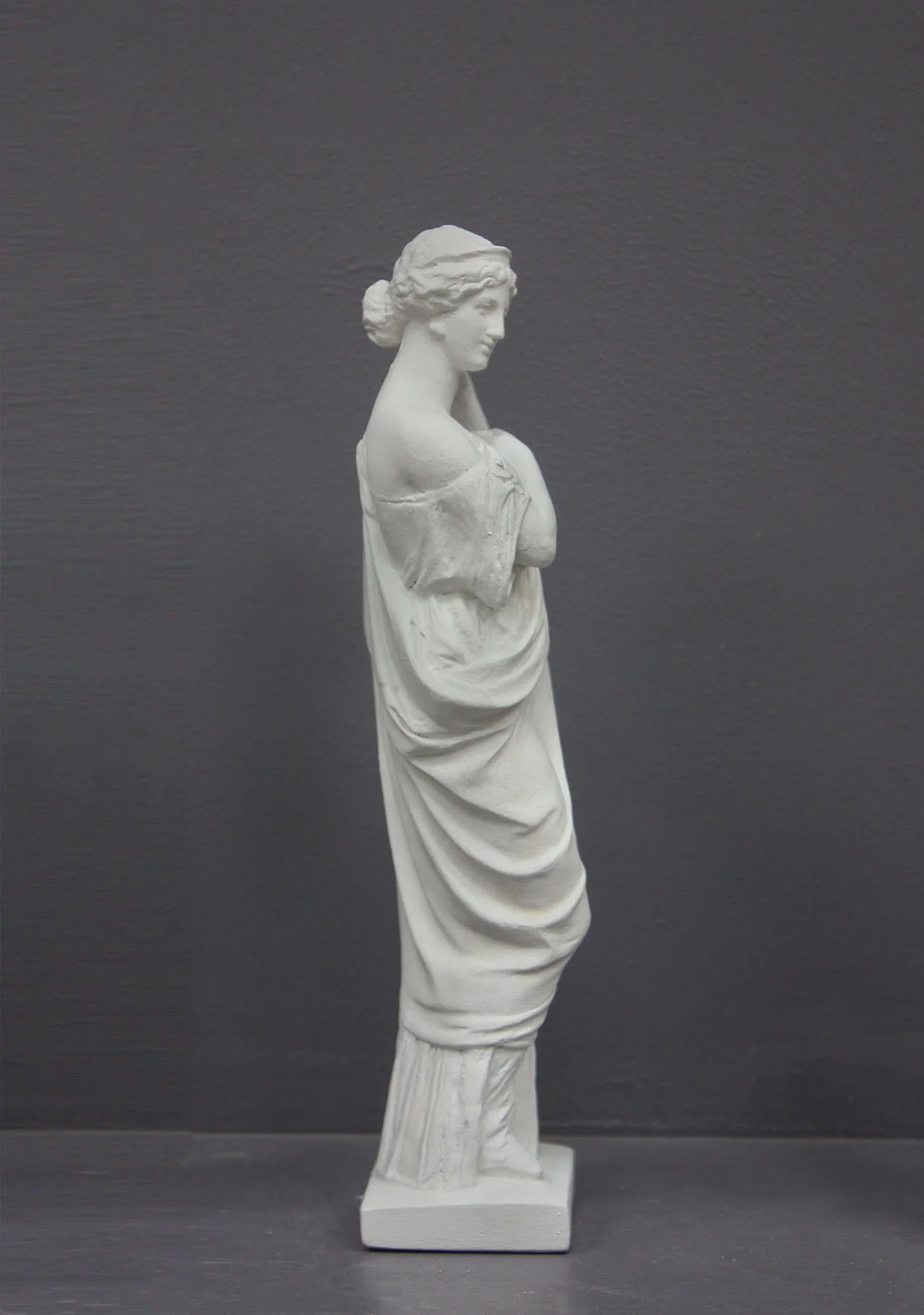
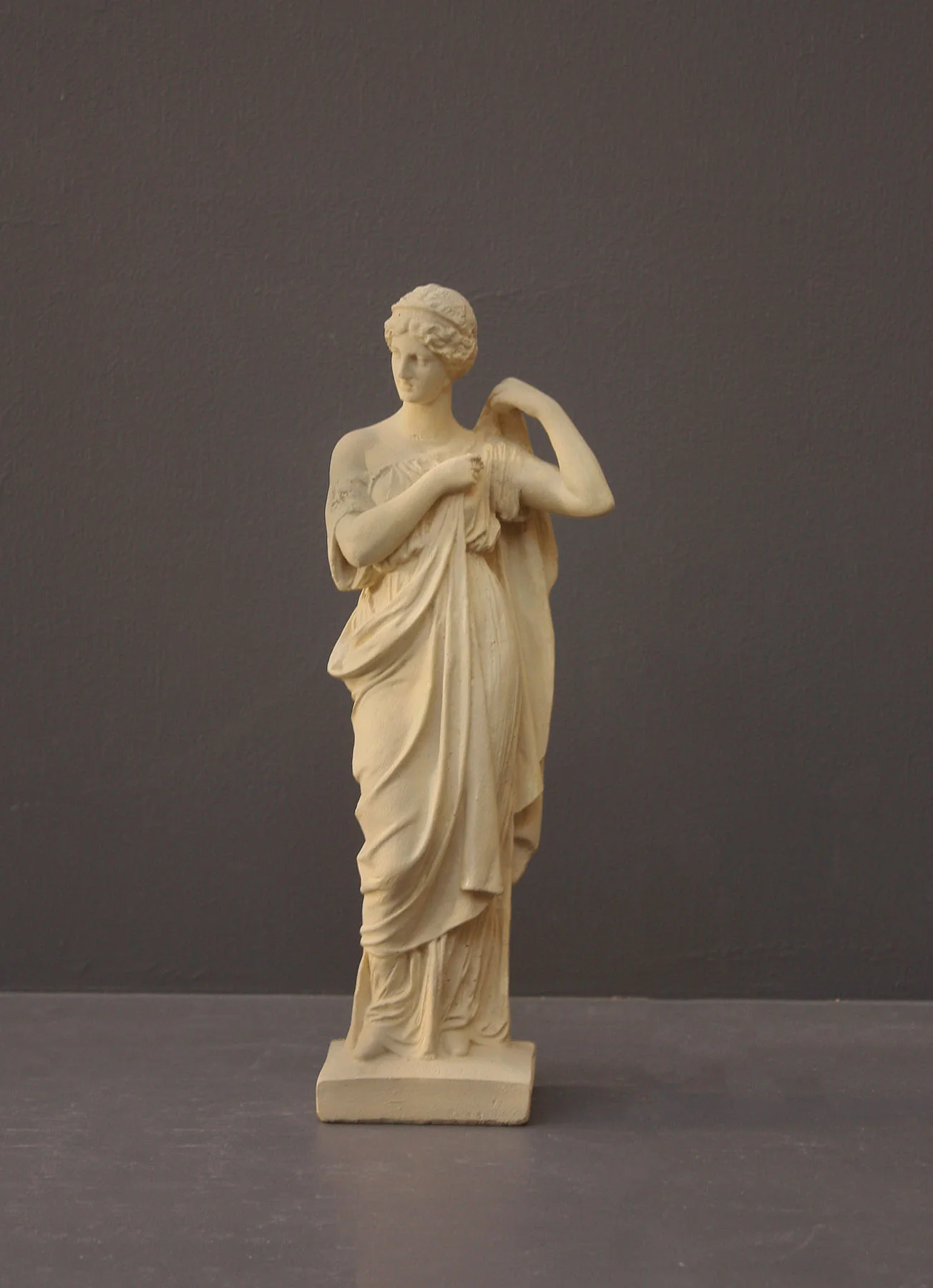
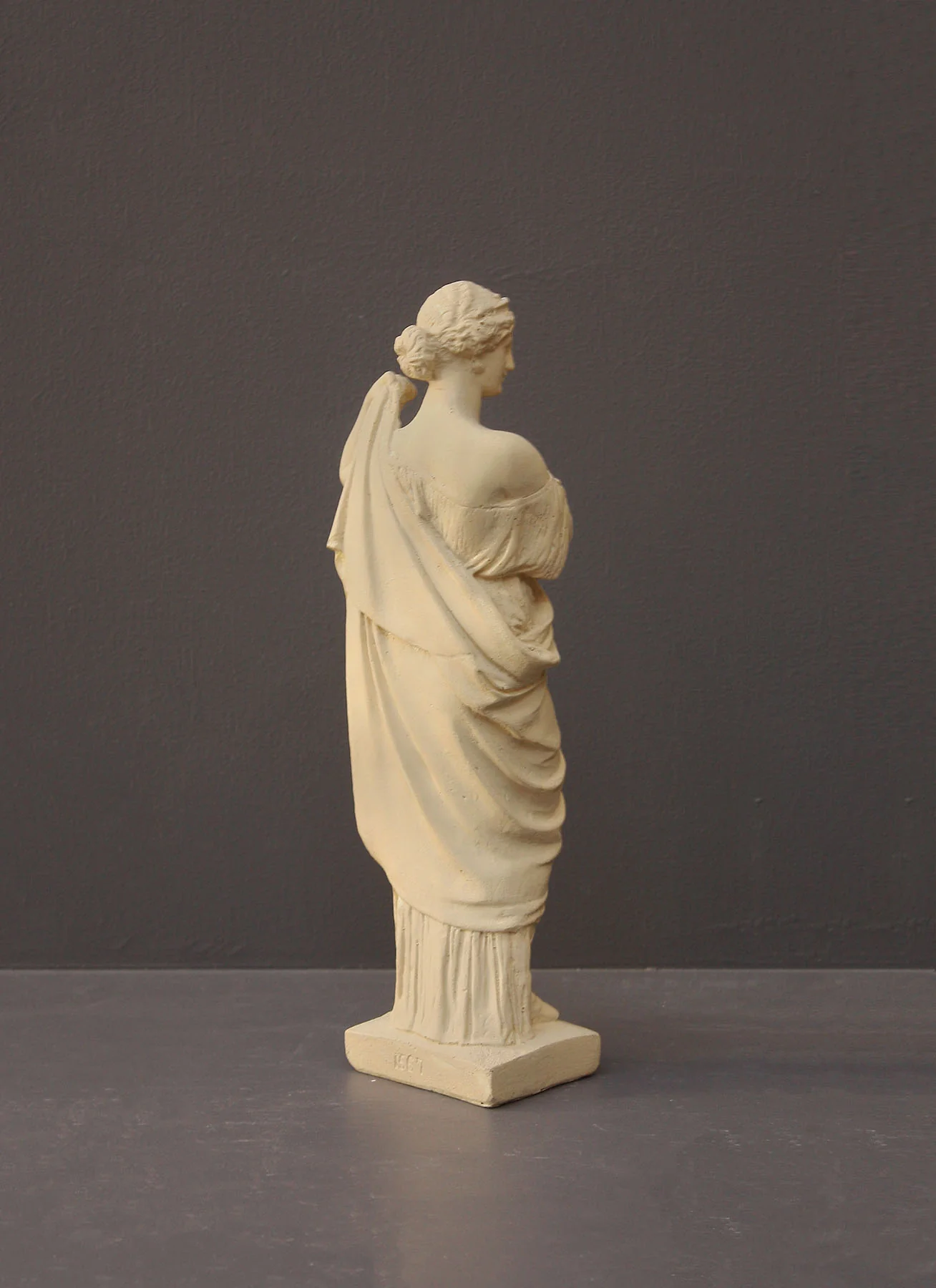
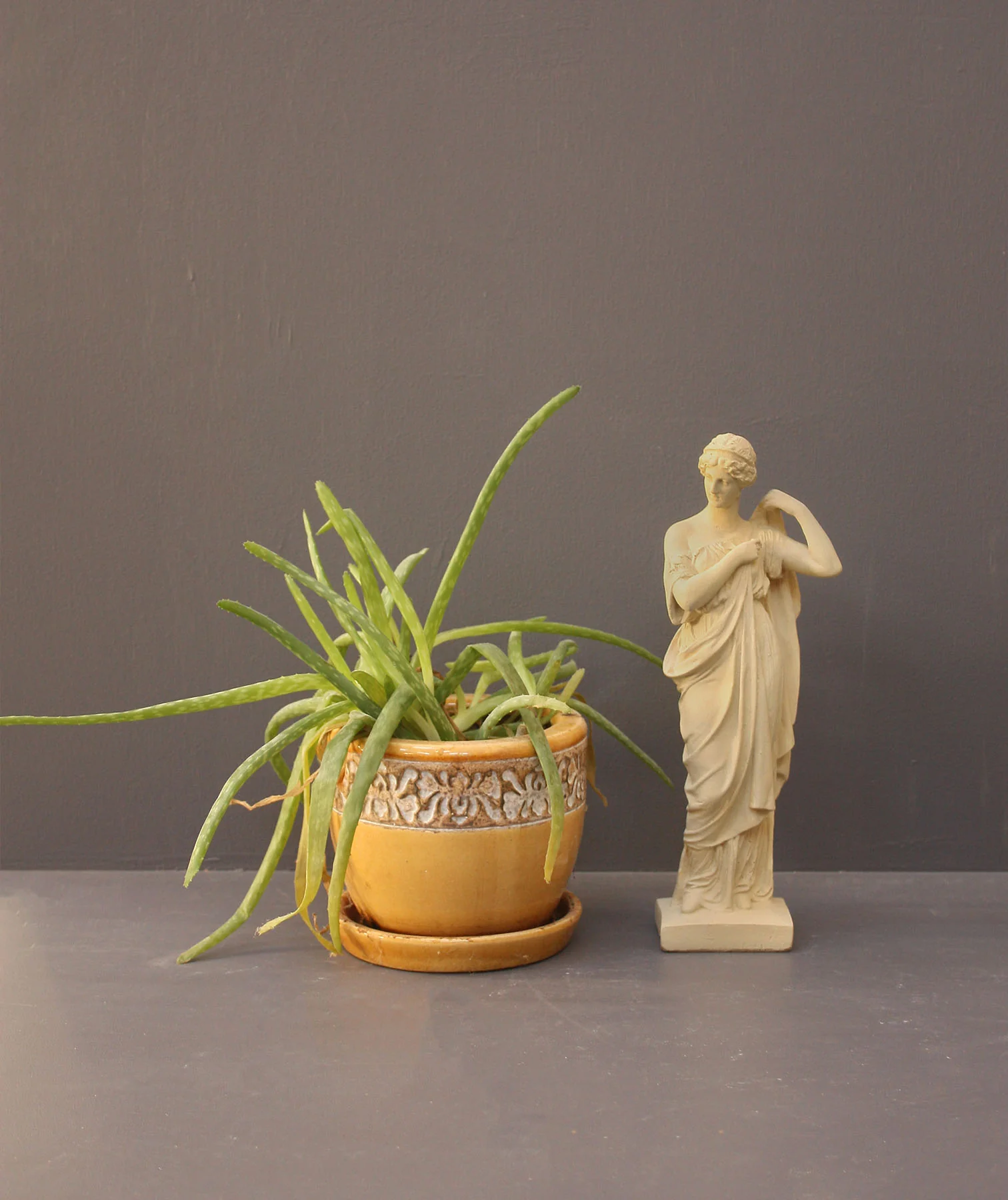
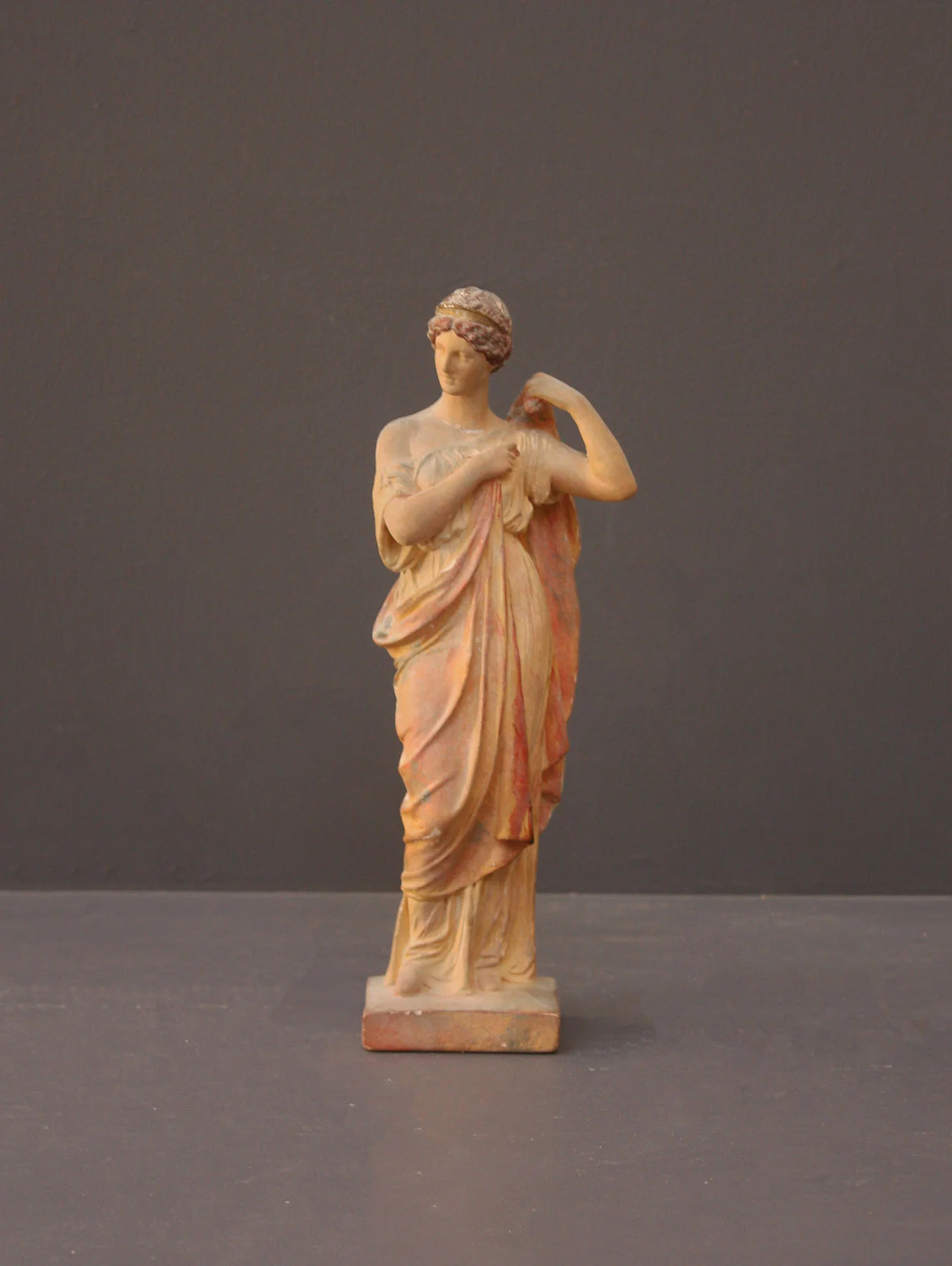
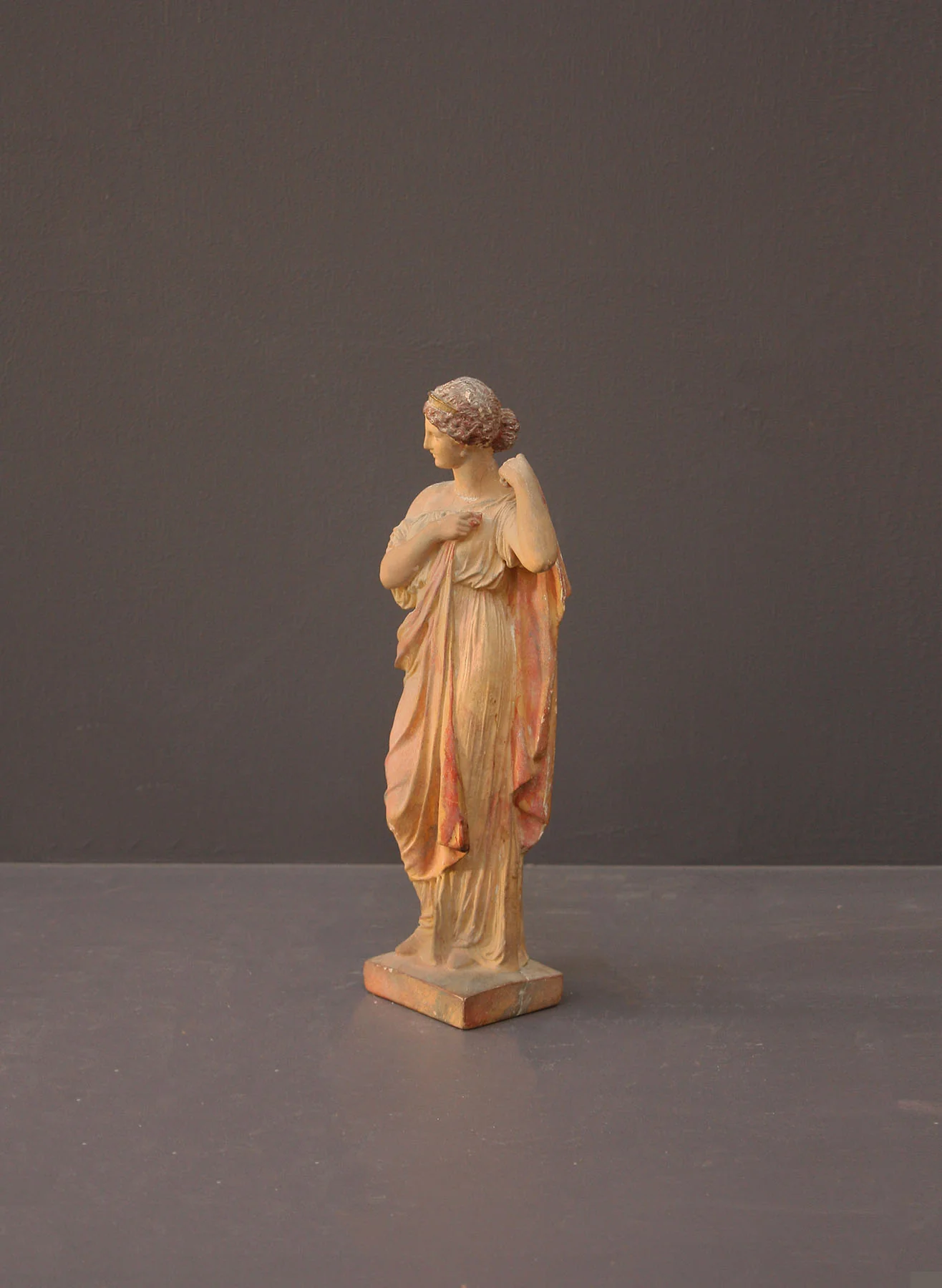
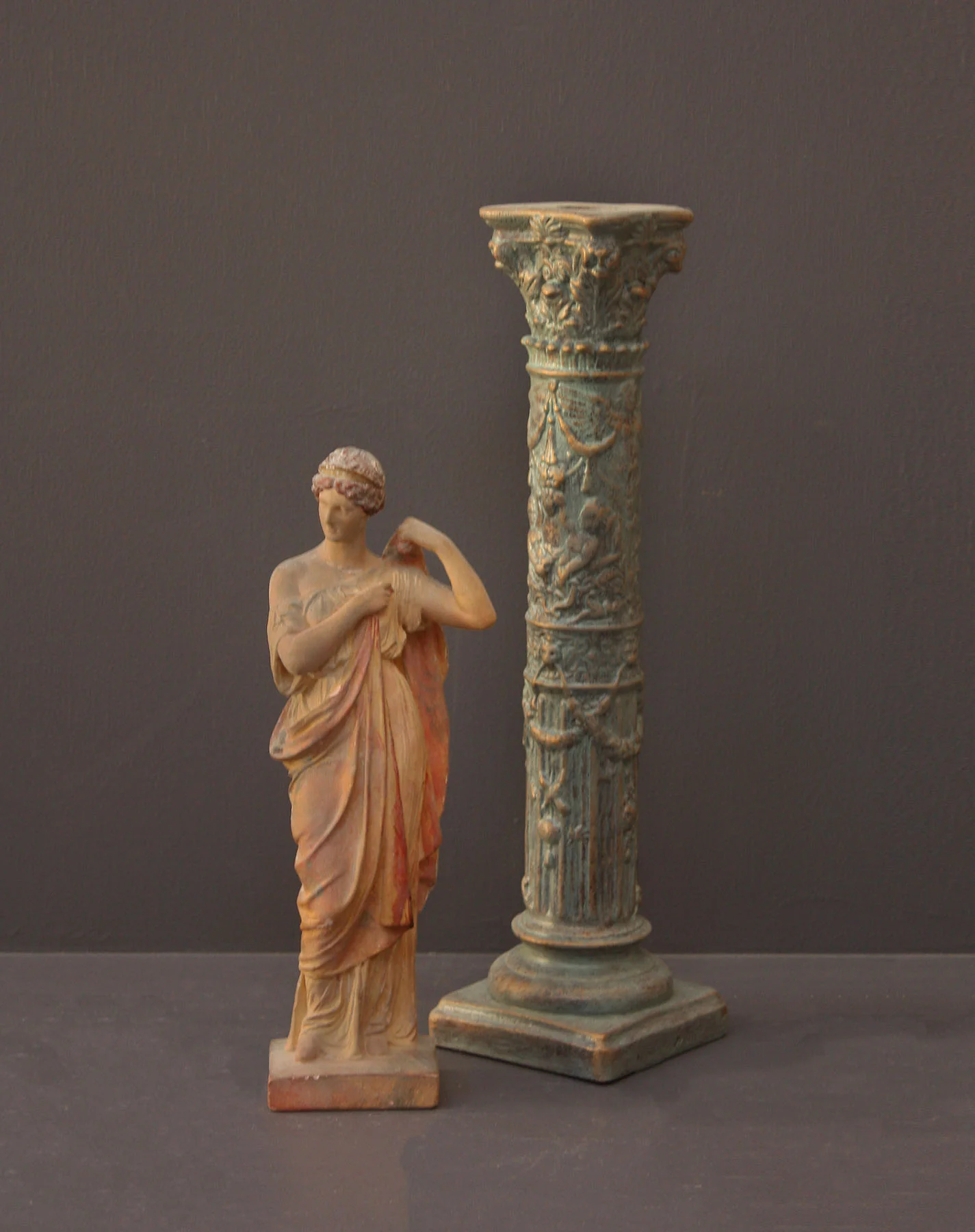
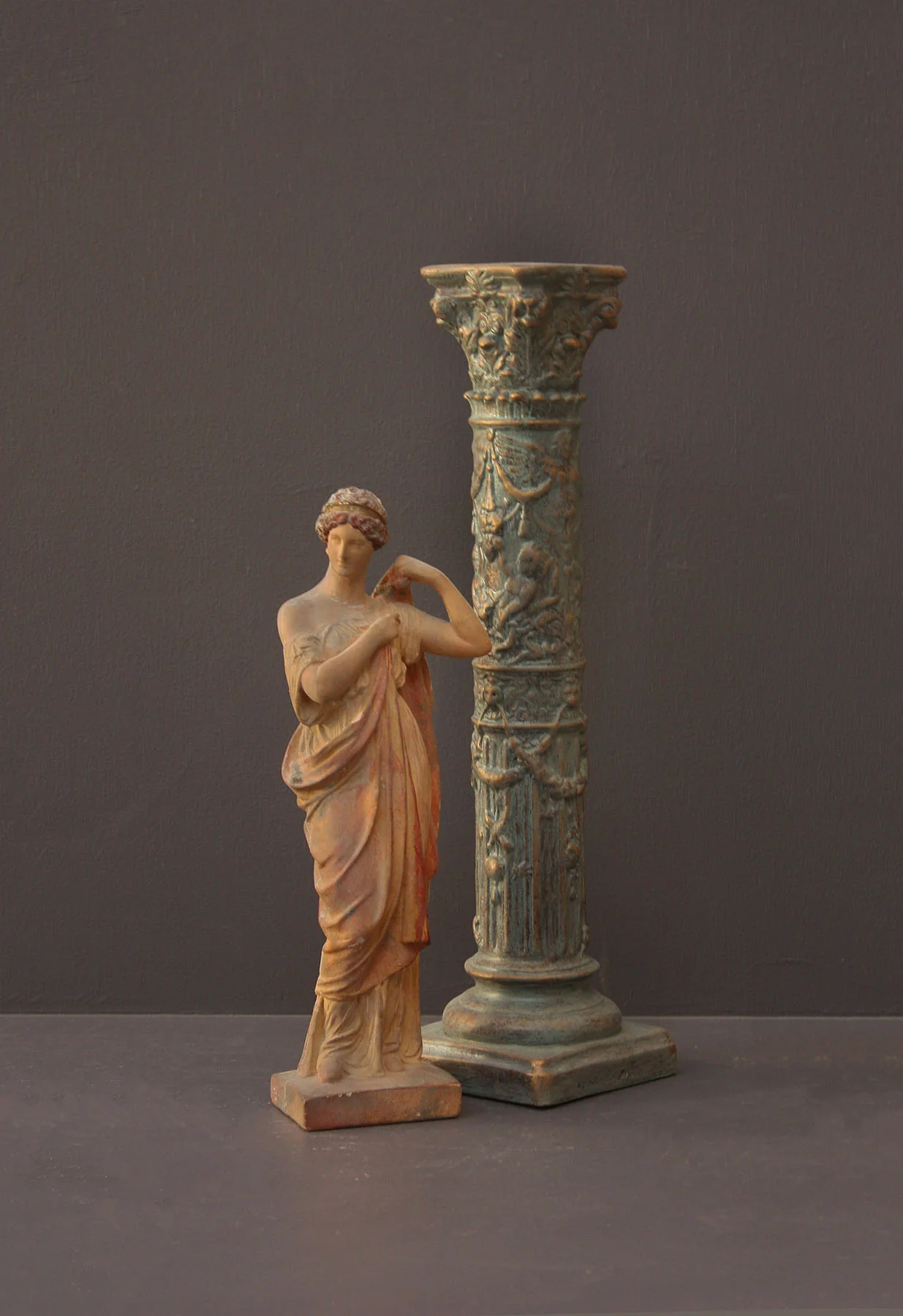
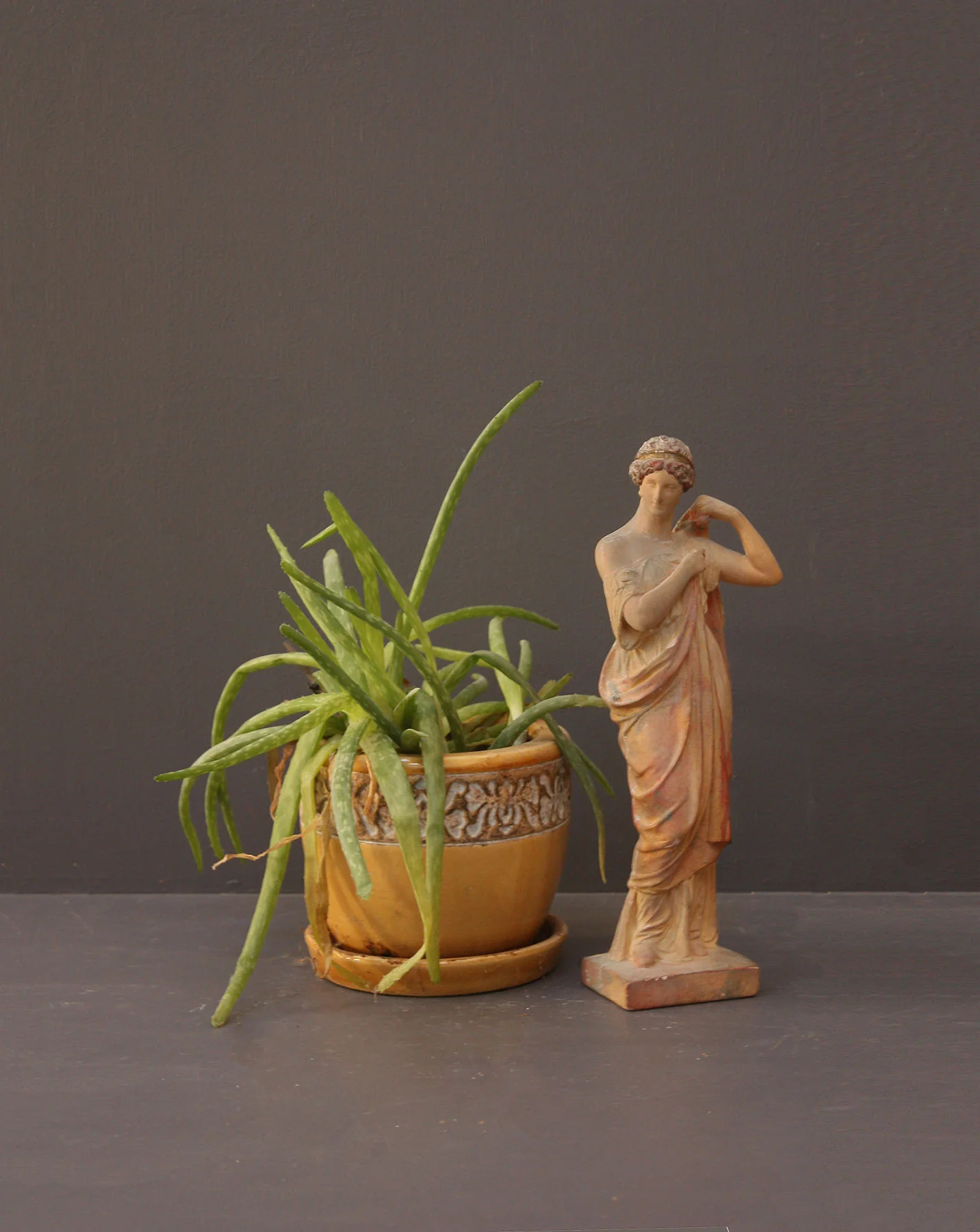
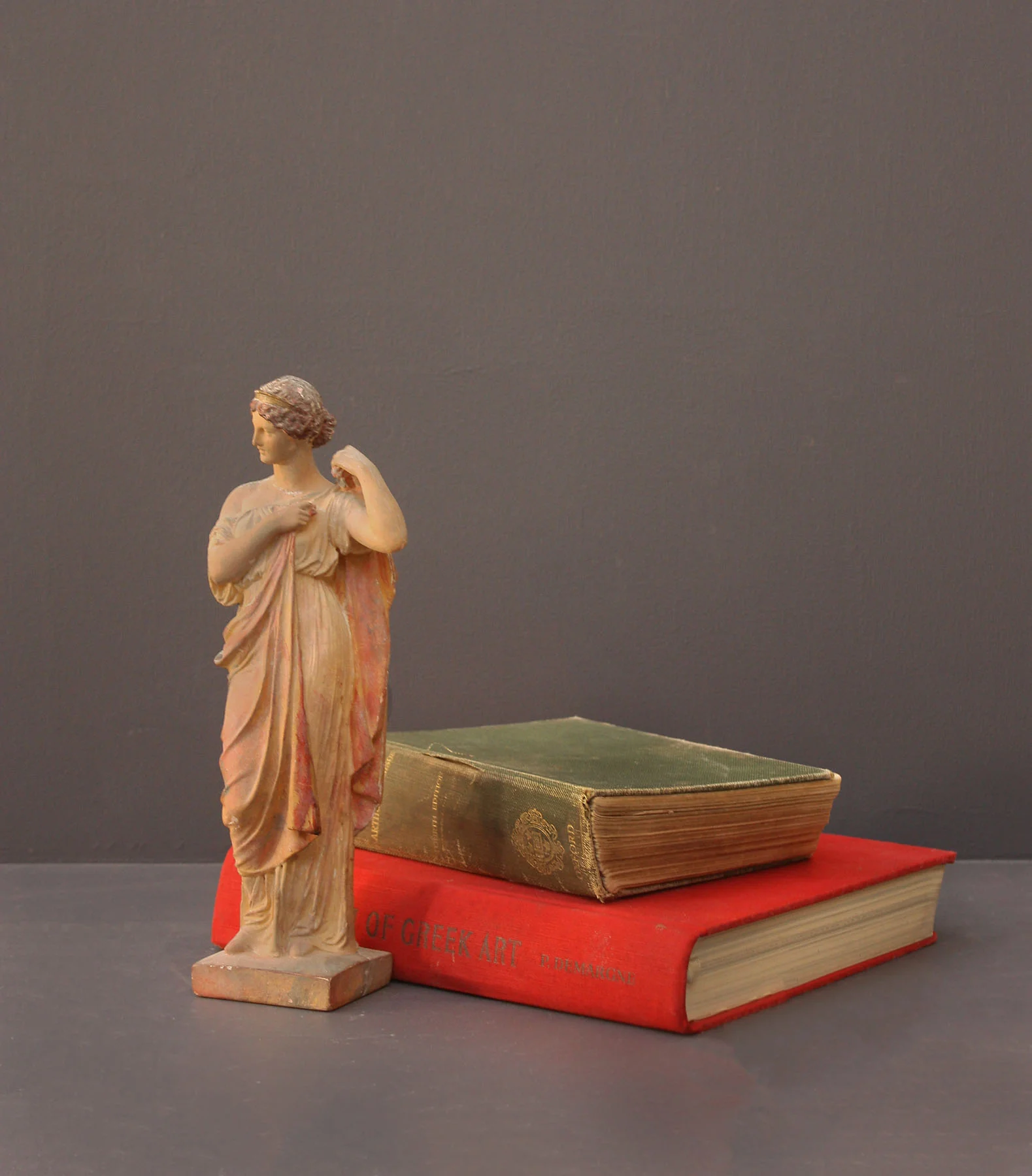
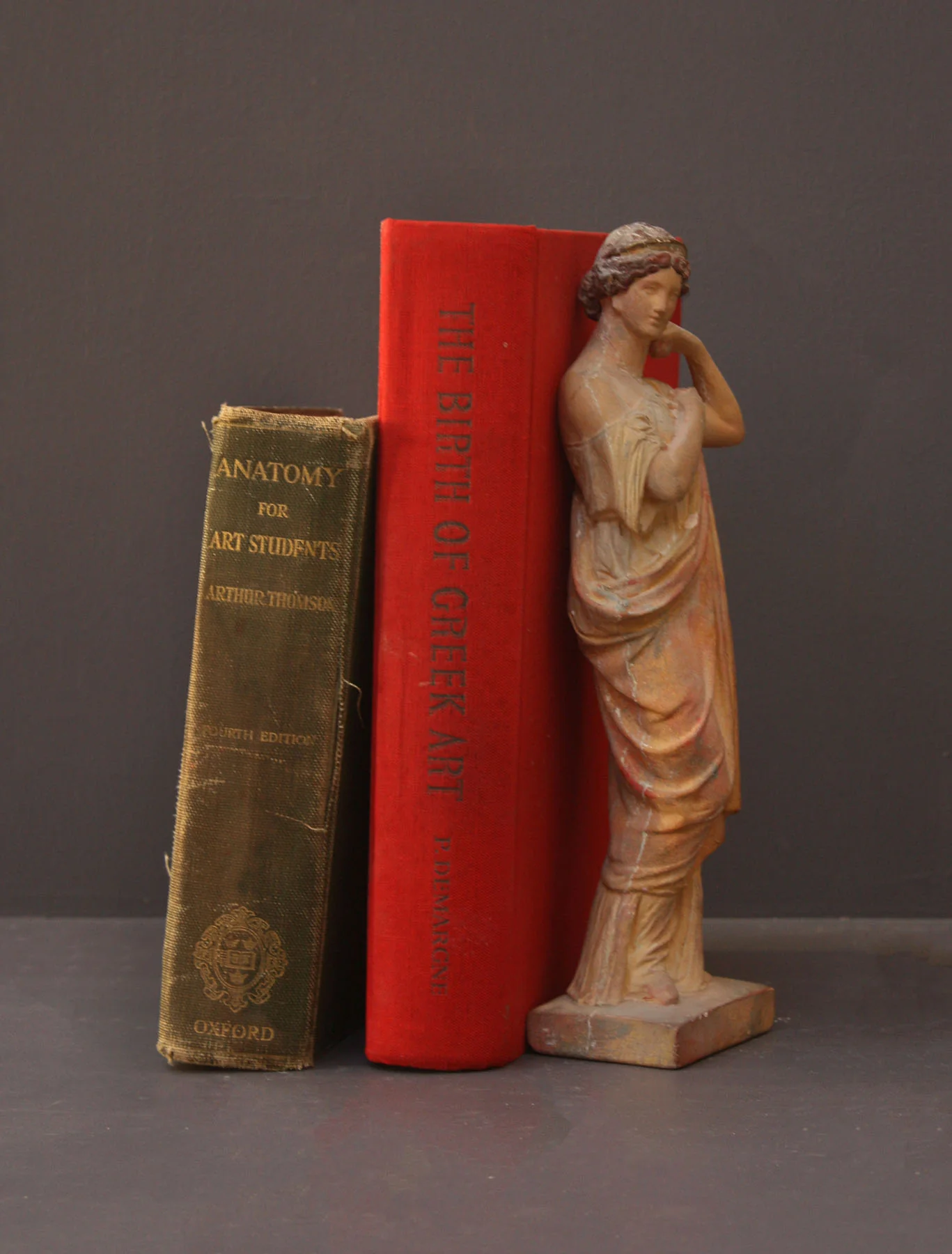
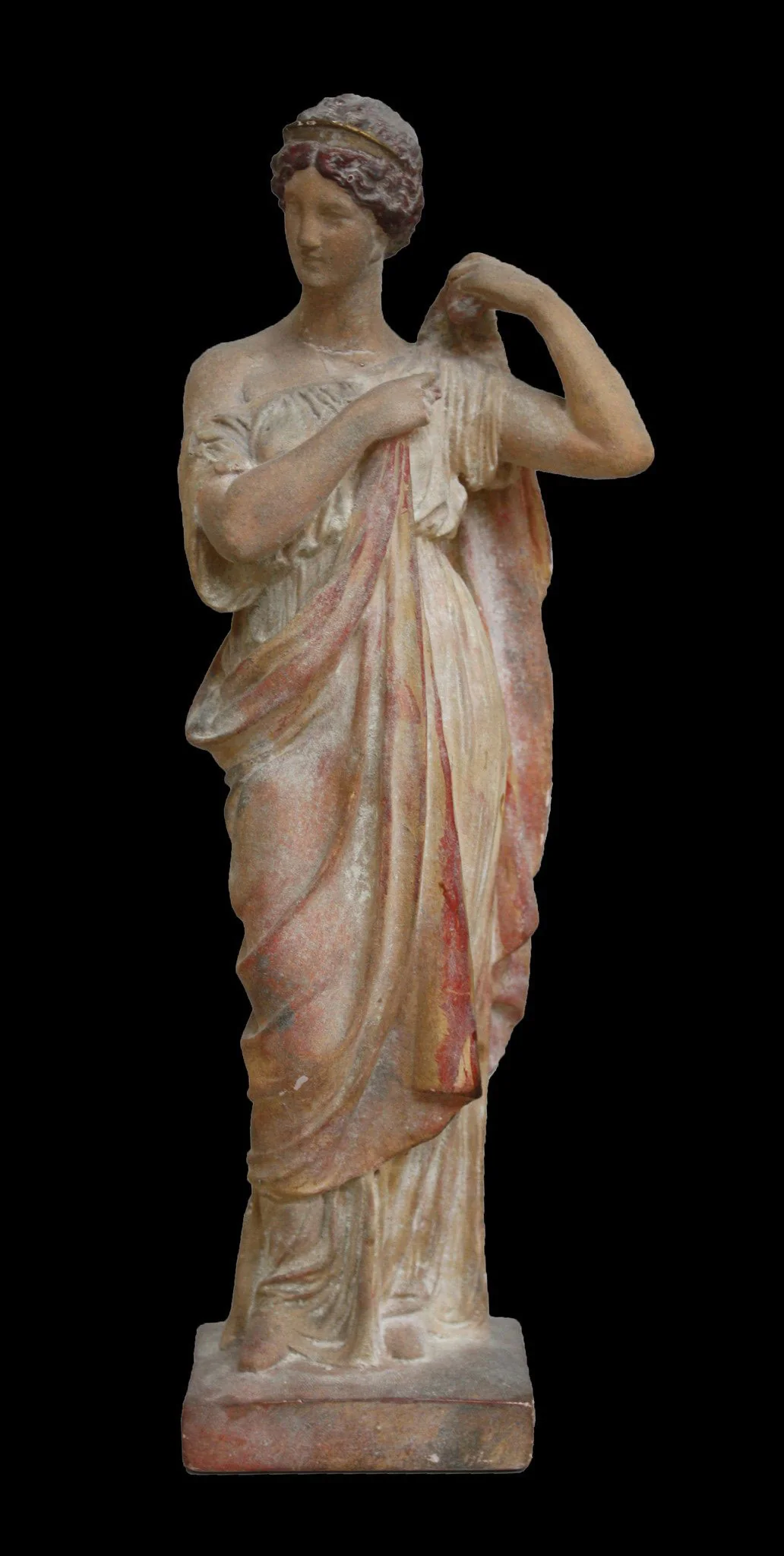
Tanagra Figurine Arranging Garments - Item #317
11 Inches High x 4 Inches Wide x 2.5 Inches Deep
The Tanagra Figurines were found in excavating the ancient City of Tanagra, from which they derive the name. The originals are of terracotta and were made using two-part molds - a mold for the front and a mold for the back. The heads and arms were often molded separately, and this technique allowed for variations of the same figure. After firing, each statuette was painted in several colors, remnants of which remain on some of the sculptures today. Tanagra Figurines feature mortal men, women, and children, but the majority are fashionable women who sometimes hold a fan, vase, or another object. Earlier terracotta statues made for tombs were of religious figures, but with the Tanagra group's introduction in the late 4th century B.C.E., the sculptures placed in tombs and infrequently in homes as decoration depicted contemporary Greeks.
Museum: National Archaeological Museum, Athens (?)
Origin: City of Tanagra, Boeotia, Greece
Time Period: Ancient Greek - Hellenistic, c. 3rd century B.C.E.
1911 Catalog ID # - 1567
Sources:
Department of Greek and Roman Art. "Heilbrunn Timeline of Art History: Tanagra Figurines." The Metropolitan Museum of Art, Oct. 2004, https://www.metmuseum.org/toah/hd/tafg/hd_tafg.htm.
"Tanagra." The Fitzwilliam Museum, https://www.fitzmuseum.cam.ac.uk/collections/greeceandrome/onlinegallery/places/tanagra.
Original: $215.00
-65%$215.00
$75.25More Images
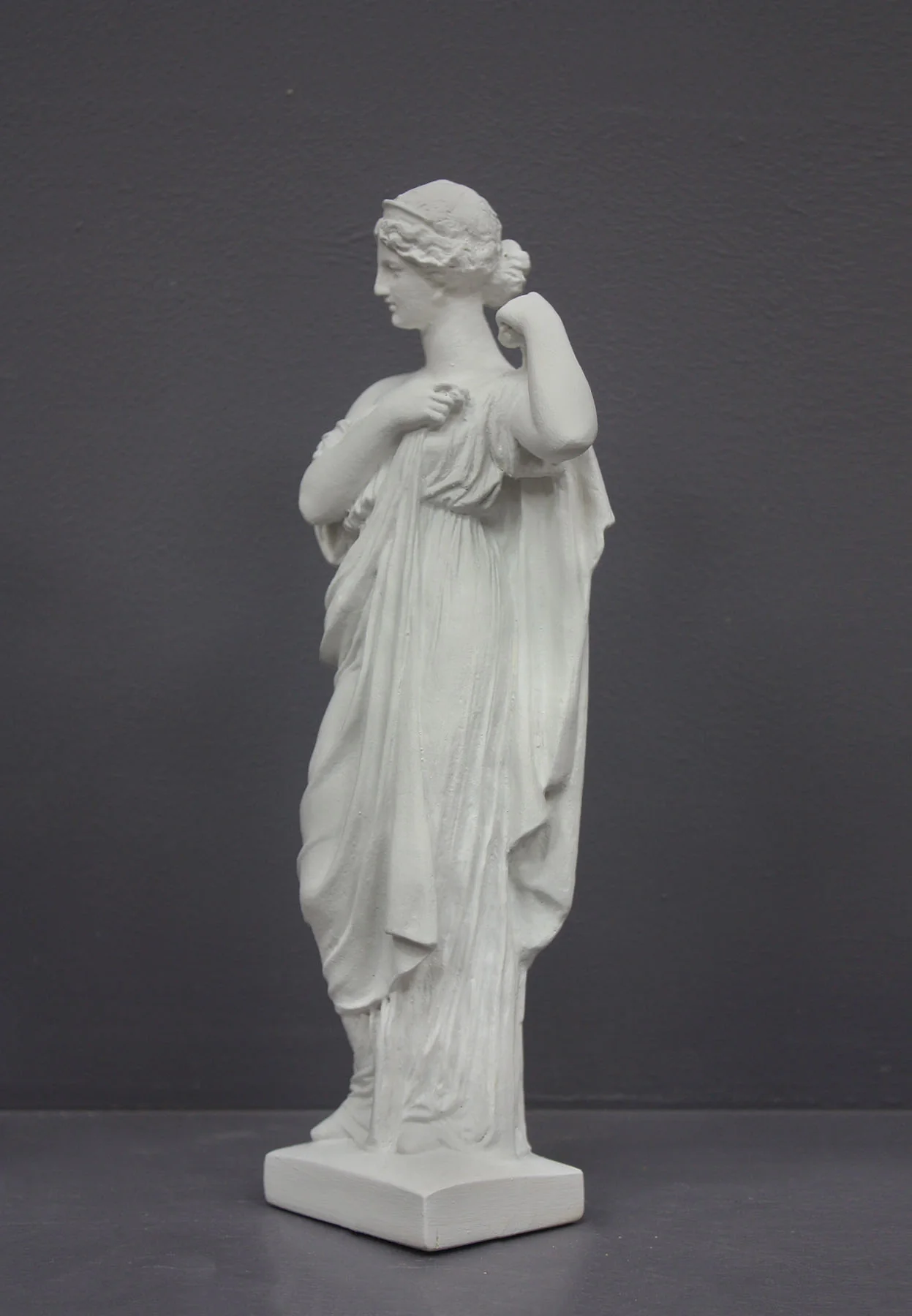

Tanagra Figurine Arranging Garments - Item #317
11 Inches High x 4 Inches Wide x 2.5 Inches Deep
The Tanagra Figurines were found in excavating the ancient City of Tanagra, from which they derive the name. The originals are of terracotta and were made using two-part molds - a mold for the front and a mold for the back. The heads and arms were often molded separately, and this technique allowed for variations of the same figure. After firing, each statuette was painted in several colors, remnants of which remain on some of the sculptures today. Tanagra Figurines feature mortal men, women, and children, but the majority are fashionable women who sometimes hold a fan, vase, or another object. Earlier terracotta statues made for tombs were of religious figures, but with the Tanagra group's introduction in the late 4th century B.C.E., the sculptures placed in tombs and infrequently in homes as decoration depicted contemporary Greeks.
Museum: National Archaeological Museum, Athens (?)
Origin: City of Tanagra, Boeotia, Greece
Time Period: Ancient Greek - Hellenistic, c. 3rd century B.C.E.
1911 Catalog ID # - 1567
Sources:
Department of Greek and Roman Art. "Heilbrunn Timeline of Art History: Tanagra Figurines." The Metropolitan Museum of Art, Oct. 2004, https://www.metmuseum.org/toah/hd/tafg/hd_tafg.htm.
"Tanagra." The Fitzwilliam Museum, https://www.fitzmuseum.cam.ac.uk/collections/greeceandrome/onlinegallery/places/tanagra.
Product Information
Product Information
Shipping & Returns
Shipping & Returns
Description
11 Inches High x 4 Inches Wide x 2.5 Inches Deep
The Tanagra Figurines were found in excavating the ancient City of Tanagra, from which they derive the name. The originals are of terracotta and were made using two-part molds - a mold for the front and a mold for the back. The heads and arms were often molded separately, and this technique allowed for variations of the same figure. After firing, each statuette was painted in several colors, remnants of which remain on some of the sculptures today. Tanagra Figurines feature mortal men, women, and children, but the majority are fashionable women who sometimes hold a fan, vase, or another object. Earlier terracotta statues made for tombs were of religious figures, but with the Tanagra group's introduction in the late 4th century B.C.E., the sculptures placed in tombs and infrequently in homes as decoration depicted contemporary Greeks.
Museum: National Archaeological Museum, Athens (?)
Origin: City of Tanagra, Boeotia, Greece
Time Period: Ancient Greek - Hellenistic, c. 3rd century B.C.E.
1911 Catalog ID # - 1567
Sources:
Department of Greek and Roman Art. "Heilbrunn Timeline of Art History: Tanagra Figurines." The Metropolitan Museum of Art, Oct. 2004, https://www.metmuseum.org/toah/hd/tafg/hd_tafg.htm.
"Tanagra." The Fitzwilliam Museum, https://www.fitzmuseum.cam.ac.uk/collections/greeceandrome/onlinegallery/places/tanagra.