The Titeux Dancer - Item #41
8.25 Inches High x 4 Inches Wide x 3 Inches Deep
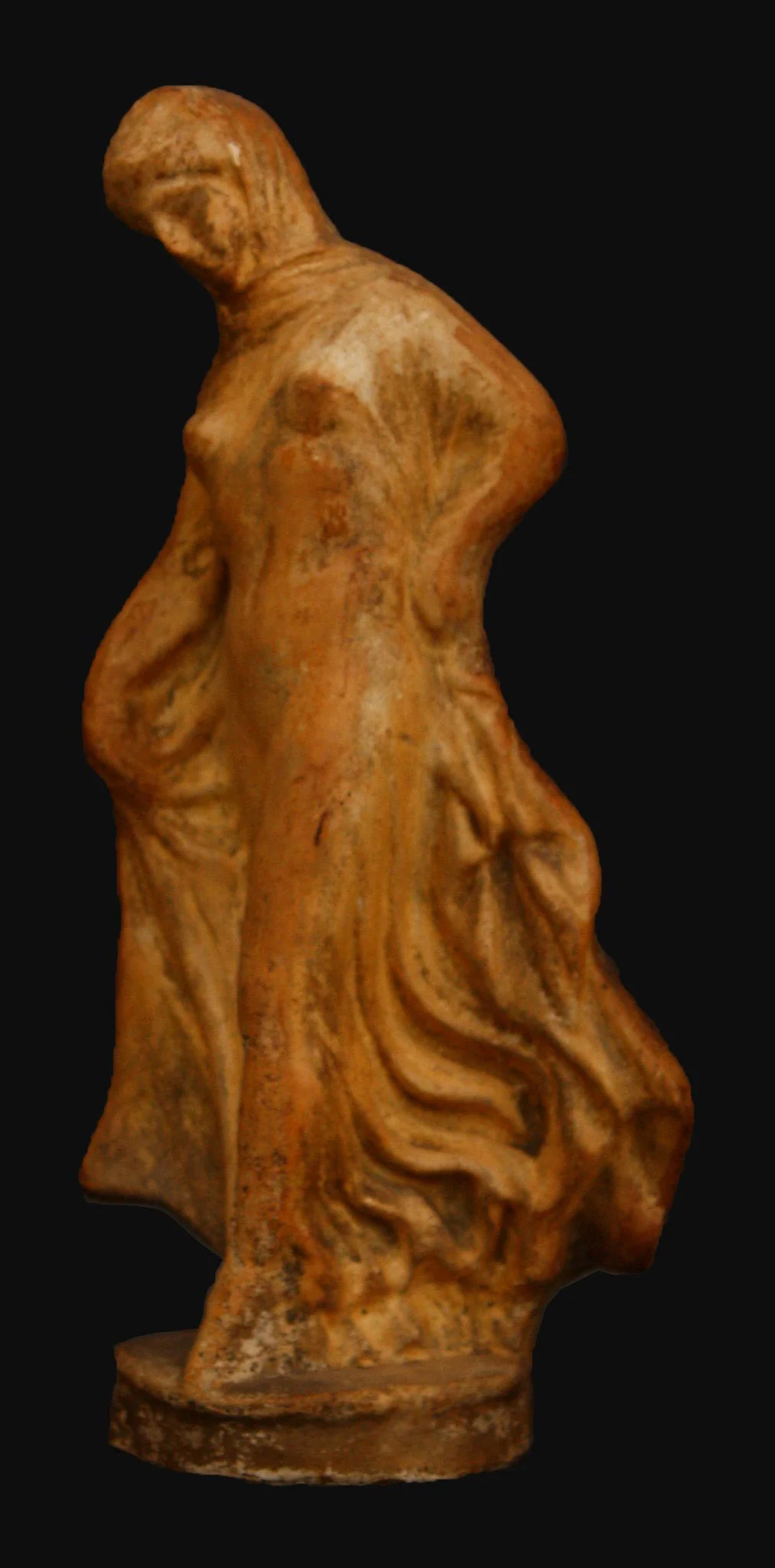
This piece was once thought to be a Tanagra Figurine, which were terracotta pieces found in excavating the ancient City of Tanagra. Numerous studies have determined that this statuette was created earlier, around 375-350 B.C.E., and was made in the historical Attic region of Greece which encompassed Athens. The subject may be a dancer, bride, or nymph, but in any case, its function and meaning are still debated today. "Titeux" is the name of the sculpture's first owner after its discovery in 1846 at the Acropolis.
Museum: Louvre Museum, Paris
Origin: The Acropolis, Athens, Greece
Time Period: Ancient Greek, 375-350 B.C.E.
1911 Catalog ID # - 1525
Sources:
Néguine, Mathieux. "The 'Titeux' Dancer." Louvre Museum, http://www.louvre.fr/en/oeuvre-notices/titeux-dancer.
Original: $100.00
-65%$100.00
$35.00The Titeux Dancer - Item #41
8.25 Inches High x 4 Inches Wide x 3 Inches Deep
This piece was once thought to be a Tanagra Figurine, which were terracotta pieces found in excavating the ancient City of Tanagra. Numerous studies have determined that this statuette was created earlier, around 375-350 B.C.E., and was made in the historical Attic region of Greece which encompassed Athens. The subject may be a dancer, bride, or nymph, but in any case, its function and meaning are still debated today. "Titeux" is the name of the sculpture's first owner after its discovery in 1846 at the Acropolis.
Museum: Louvre Museum, Paris
Origin: The Acropolis, Athens, Greece
Time Period: Ancient Greek, 375-350 B.C.E.
1911 Catalog ID # - 1525
Sources:
Néguine, Mathieux. "The 'Titeux' Dancer." Louvre Museum, http://www.louvre.fr/en/oeuvre-notices/titeux-dancer.
Product Information
Product Information
Shipping & Returns
Shipping & Returns
Description
8.25 Inches High x 4 Inches Wide x 3 Inches Deep
This piece was once thought to be a Tanagra Figurine, which were terracotta pieces found in excavating the ancient City of Tanagra. Numerous studies have determined that this statuette was created earlier, around 375-350 B.C.E., and was made in the historical Attic region of Greece which encompassed Athens. The subject may be a dancer, bride, or nymph, but in any case, its function and meaning are still debated today. "Titeux" is the name of the sculpture's first owner after its discovery in 1846 at the Acropolis.
Museum: Louvre Museum, Paris
Origin: The Acropolis, Athens, Greece
Time Period: Ancient Greek, 375-350 B.C.E.
1911 Catalog ID # - 1525
Sources:
Néguine, Mathieux. "The 'Titeux' Dancer." Louvre Museum, http://www.louvre.fr/en/oeuvre-notices/titeux-dancer.