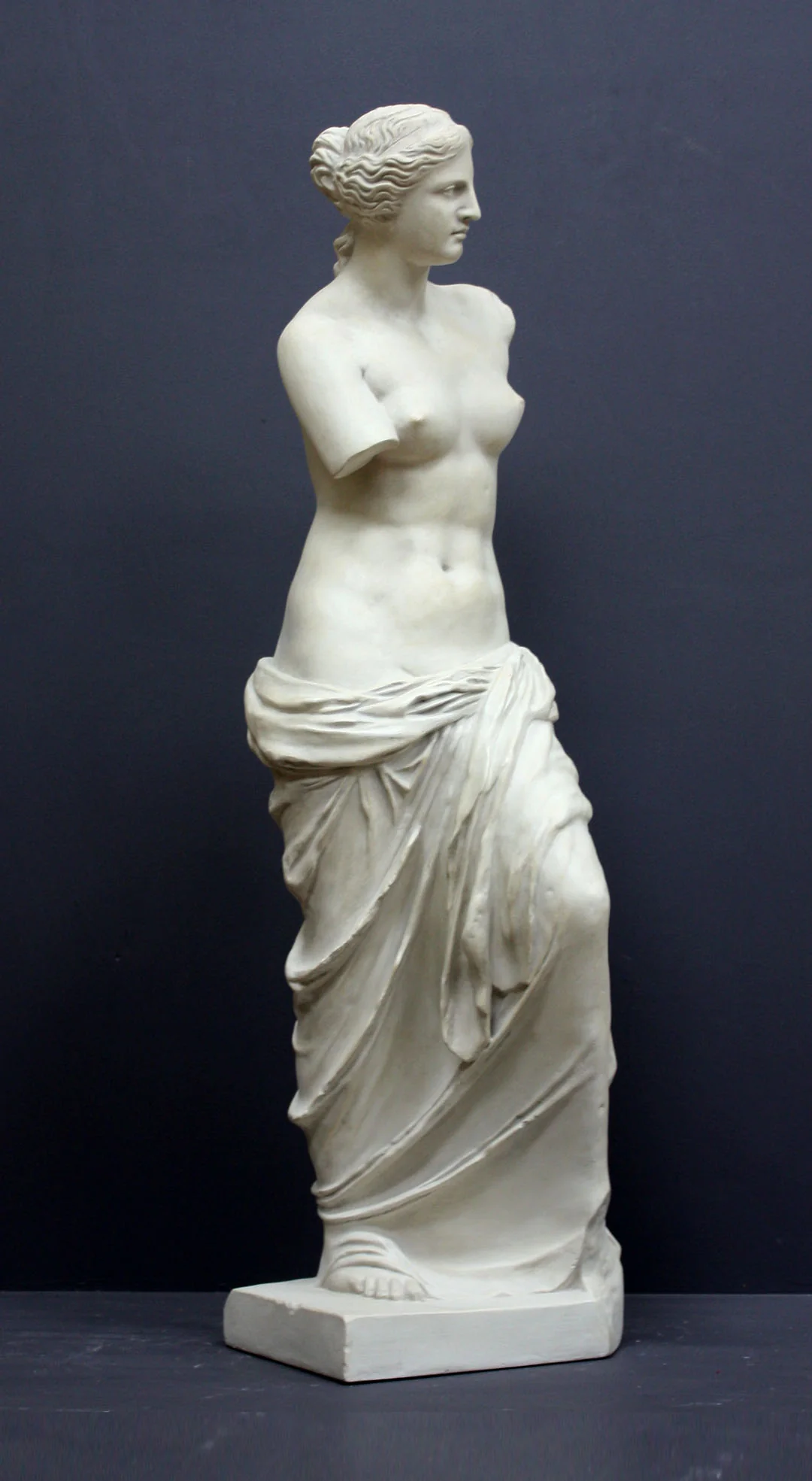
Venus de Melo 40" Reduction - Item #454
40 Inches High x 12 Inches Wide x 12 Inches Deep
Reduction of the full-sized sculpture (Item #117). Also known as the Aphrodite of Melos, this late 2nd century B.C.E. sculpture might be a replica due to its similarities with the Aphrodite of Capua in the National Archaeological Museum in Naples which dates from the late 4th century B.C.E. The sculpture was found on the island of Melos (Milo in modern Greek) in 1820, soon after which it was donated to the Louvre by King Louis XVIII. Although the statue shares characteristics with earlier sculptural aesthetics, its innovative features, such as the twist of the body and the drapery falling over the hips, helped in dating the sculpture to the Hellenistic period.
Artist: Unknown
Museum: Louvre Museum, Paris
Origin: Island of Melos, Cyclades, Greece
Time Period: Ancient Greek - Hellenistic, c. 100 B.C.E.
1911 Catalog ID # - 768
Sources:
Astier, Marie-Bénédicte. "Aphrodite, known as the 'Venus de Milo.'" Louvre Museum, http://www.louvre.fr/en/oeuvre-notices/aphrodite-known-venus-de-milo.
Original: $980.00
-65%$980.00
$343.00More Images
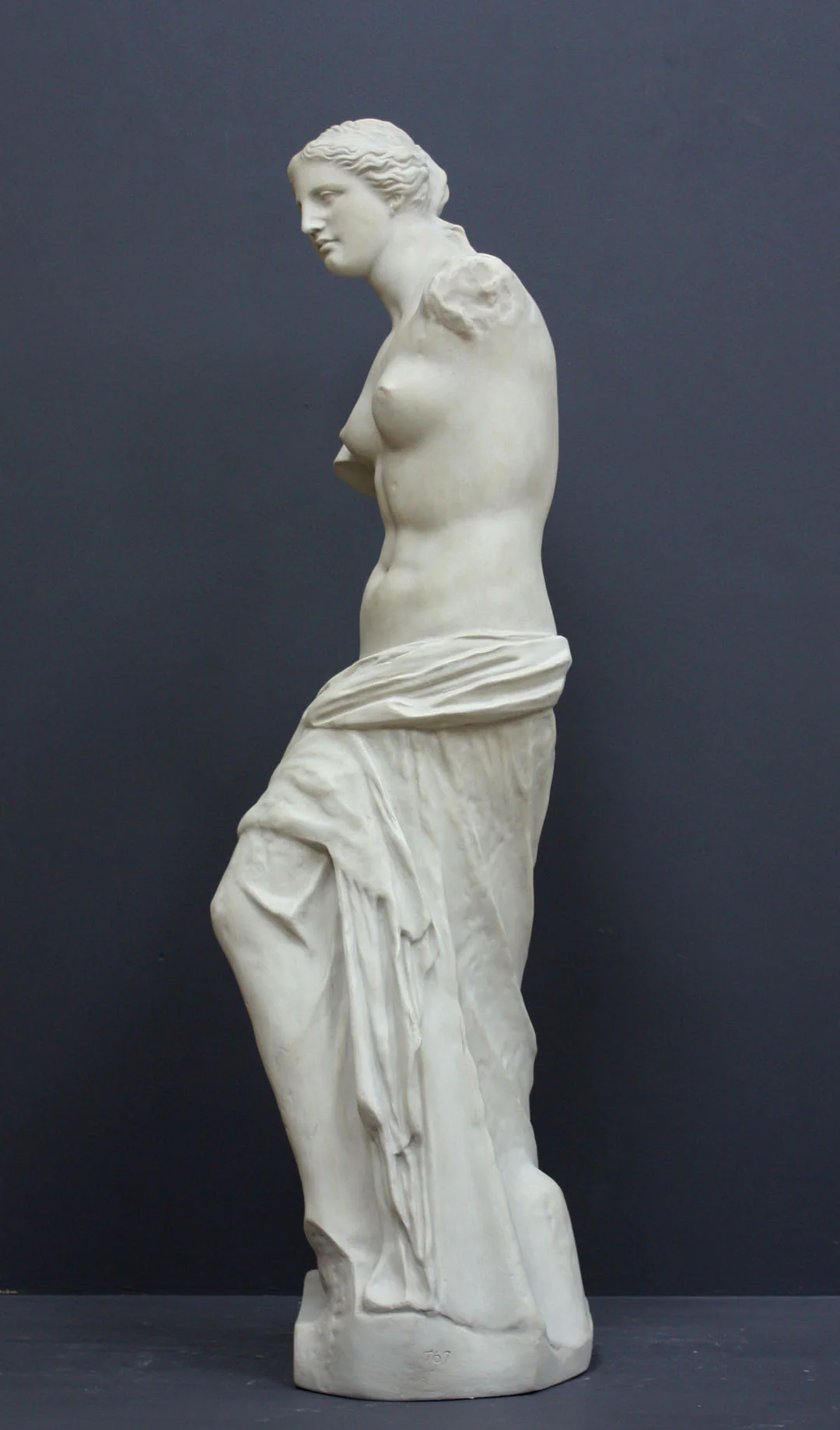
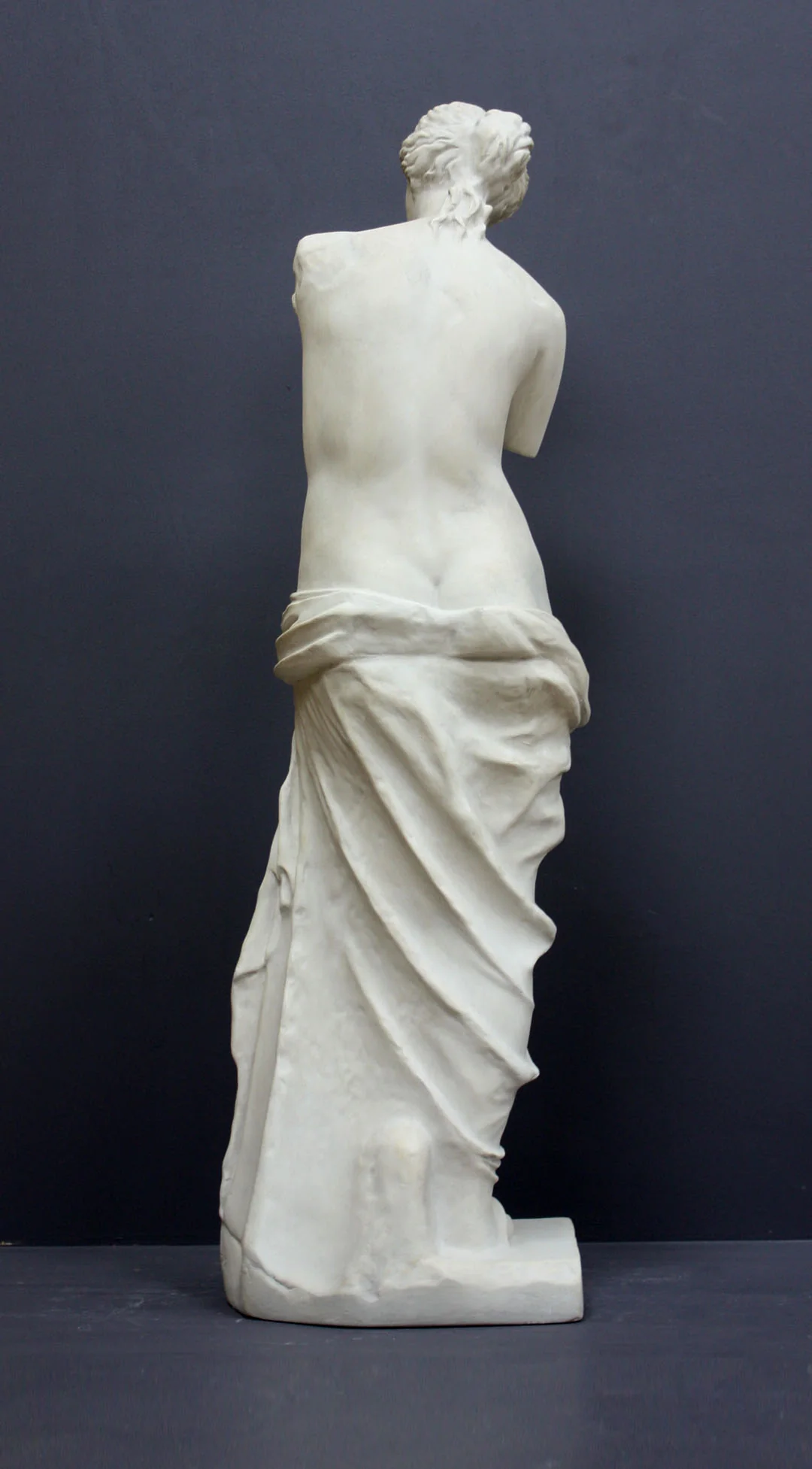
Venus de Melo 40" Reduction - Item #454
40 Inches High x 12 Inches Wide x 12 Inches Deep
Reduction of the full-sized sculpture (Item #117). Also known as the Aphrodite of Melos, this late 2nd century B.C.E. sculpture might be a replica due to its similarities with the Aphrodite of Capua in the National Archaeological Museum in Naples which dates from the late 4th century B.C.E. The sculpture was found on the island of Melos (Milo in modern Greek) in 1820, soon after which it was donated to the Louvre by King Louis XVIII. Although the statue shares characteristics with earlier sculptural aesthetics, its innovative features, such as the twist of the body and the drapery falling over the hips, helped in dating the sculpture to the Hellenistic period.
Artist: Unknown
Museum: Louvre Museum, Paris
Origin: Island of Melos, Cyclades, Greece
Time Period: Ancient Greek - Hellenistic, c. 100 B.C.E.
1911 Catalog ID # - 768
Sources:
Astier, Marie-Bénédicte. "Aphrodite, known as the 'Venus de Milo.'" Louvre Museum, http://www.louvre.fr/en/oeuvre-notices/aphrodite-known-venus-de-milo.
Product Information
Product Information
Shipping & Returns
Shipping & Returns
Description
40 Inches High x 12 Inches Wide x 12 Inches Deep
Reduction of the full-sized sculpture (Item #117). Also known as the Aphrodite of Melos, this late 2nd century B.C.E. sculpture might be a replica due to its similarities with the Aphrodite of Capua in the National Archaeological Museum in Naples which dates from the late 4th century B.C.E. The sculpture was found on the island of Melos (Milo in modern Greek) in 1820, soon after which it was donated to the Louvre by King Louis XVIII. Although the statue shares characteristics with earlier sculptural aesthetics, its innovative features, such as the twist of the body and the drapery falling over the hips, helped in dating the sculpture to the Hellenistic period.
Artist: Unknown
Museum: Louvre Museum, Paris
Origin: Island of Melos, Cyclades, Greece
Time Period: Ancient Greek - Hellenistic, c. 100 B.C.E.
1911 Catalog ID # - 768
Sources:
Astier, Marie-Bénédicte. "Aphrodite, known as the 'Venus de Milo.'" Louvre Museum, http://www.louvre.fr/en/oeuvre-notices/aphrodite-known-venus-de-milo.